Table of Contents
- What Is Commercial Window Film for Office Buildings?
- Key Benefits of Window Film for Modern Commercial Buildings
- Types of Window Film for Office Buildings
- Where Window Film Works Best in Office Buildings
- How Commercial Window Film Installation Works in an Occupied Office
- FAQs About Window Film for Office Buildings
Why Office Buildings Rely on Window Film in 2026
Energy costs have climbed steadily since 2022, glass-heavy building designs continue to dominate commercial construction, and tenants expect comfortable, glare-free workspaces with real privacy. These pressures create unique challenges for building managers and property owners who need practical solutions that don’t require gutting a facade or replacing every pane.
This guide covers what window film for office buildings actually is, how it improves energy efficiency and privacy, where it gets applied – from glass doors and glass partitions to exterior curtain walls – and what a professional installation looks like from start to finish. Commercial window film is a fast, non-disruptive upgrade compared to new glazing systems, and the examples and recommendations here draw from CoolVu’s real commercial projects in office towers, multi-tenant buildings, and corporate campuses across the U.S.
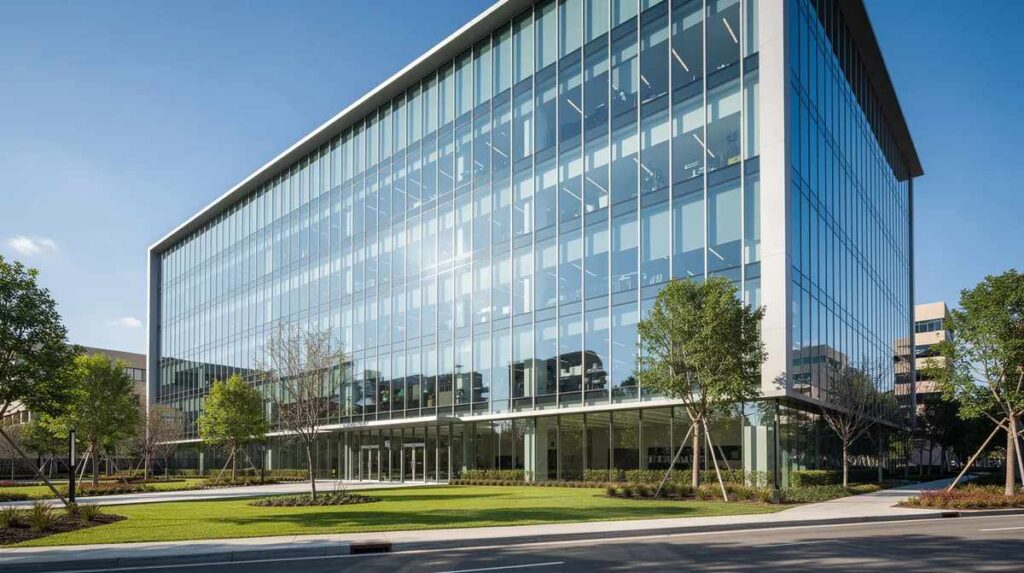
What Is Commercial Window Film for Office Buildings?
Commercial window film is a thin, multi-layer polyester or ceramic-based material applied directly to existing glass in office buildings. Window films are applied to existing glass without the need for replacements, making them one of the most accessible upgrades available to commercial spaces.
Films work through layered coatings engineered for specific purposes: solar control layers block heat and UV radiation, privacy layers diffuse or reflect light, and safety layers hold glass together on impact. Unlike automotive tinting, window film for office buildings must comply with building codes, fire/life safety standards, and performance ratings relevant to commercial applications.
Films can be installed on exterior glazing, interior glass partitions, conference room walls, sidelites, and full-height glass doors. Different types of window films include security, decorative, and solar control films – each addressing distinct needs from blocking heat to branding a lobby. The sections below break down each category and where they perform best.
Key Benefits of Window Film for Modern Commercial Buildings
Commercial window films support both building performance and tenant experience in Class A, B, and C office buildings. Here’s why facility teams across the country are making this a priority.
Energy efficiency and energy savings. Window film can reduce overall energy consumption by 10% to 30%, depending on climate, glass type, and sun exposure. Solar control films help lower cooling costs by reducing strain on air conditioning, and window films block a large amount of heat before it reaches interior spaces. In federal building evaluations, Low-E films produced roughly 29% savings on perimeter HVAC loads. Energy-efficient films can lower energy bills significantly, especially on south- and west-facing facades where solar heat gain is highest. Low-e films also improve insulation and reduce heating demand in winter, helping eliminate cold spots near perimeter windows.
Glare reduction and screen comfort. Knowledge workers spend six to eight hours daily on monitors, and uncontrolled sun glare drives complaints and workarounds like blinds permanently closed – which kills the daylight tenants actually want. Window films can reduce glare by up to 85%, keeping screens readable without sacrificing views.
UV protection and asset preservation. Window films can block up to 99% of harmful uv rays, protecting flooring, furniture, artwork, and technology from fading and degradation. Window films protect furniture from harmful UV rays over years of sun exposure, and that protection also matters for occupant health – prolonged UV exposure through office glass is a documented contributor to skin cancer risk.
Privacy and aesthetics. Decorative film and blackout films give tenants confidential workspaces and modern design without sacrificing natural light. Window films can enhance a building’s appearance, and quality films last 7 to 15 years, reducing replacement costs compared to etched glass or mechanical shades.
Safety, security, and business continuity. Security films hold shattered glass together to prevent injuries during break-ins, natural disasters, and even explosions. Thicker safety films delay intruders by keeping glass in the frame during forced entry attempts, and they reduce the risk of flying glass shards injuring occupants during storms or accidents.
Occupant comfort and productivity. Window films improve occupant comfort and productivity by regulating indoor temperatures, and window film can minimize disparities between hot and cold areas of a workspace – eliminating the hot spots near sunny windows and the cold spots along shaded perimeters. Window films can block up to 77% of solar energy, keeping the environment stable across open floor plans.
Types of Window Film for Office Buildings
Most commercial buildings combine several film types across different areas to balance light, privacy, branding, and security. CoolVu specifies films based on glass type, orientation, and occupant needs rather than a one-size-fits-all approach.
Solar Control and Energy-Saving Films
Solar control films target exterior windows and curtain walls where blocking heat and reducing glare are the primary goals. Reflective films deliver strong heat rejection but increase outward reflectance, which can affect neighboring buildings. Dual-reflective films balance interior and exterior reflectivity, while spectrally selective ceramic films reject infrared and UV while preserving natural light – ideal for skyline views. Commercial windows can achieve 50–70% reduction in solar heat gain with architectural window films, supporting corporate sustainability targets and LEED certification. Installing window film is typically a cost-effective retrofit for energy efficiency compared to full glazing replacement.
Decorative Film and Branded Glass Finishes
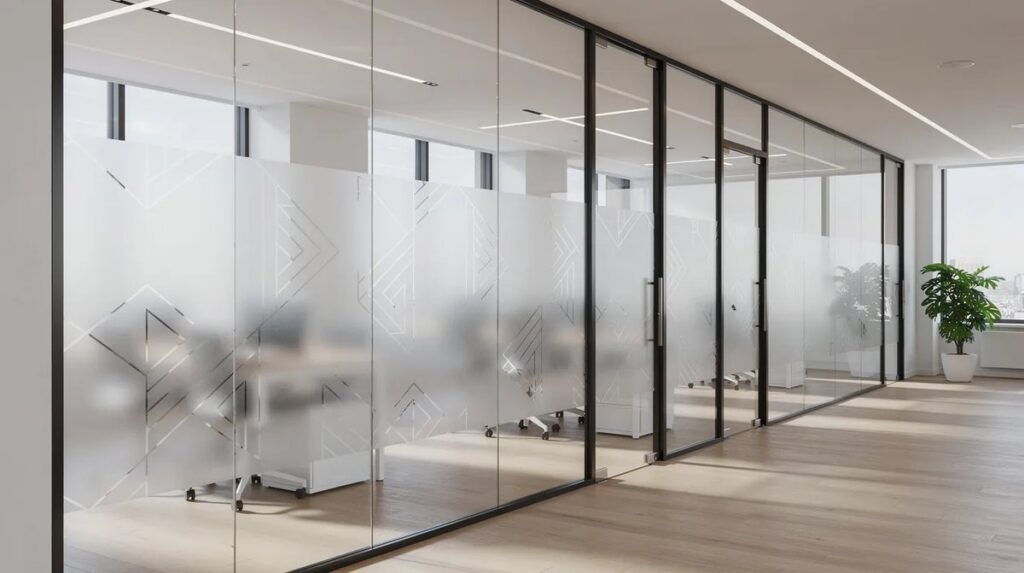
Decorative window film transforms clear glass partitions into design elements with frosted bands, gradients, geometric patterns, and custom-printed graphics. Decorative films can personalize internal glass walls and windows, and they can include custom logos and patterns for branding lobbies or wayfinding in multi-tenant commercial buildings. Decorative window films can include customizable colors, patterns, and textures to match any corporate identity. Modern films enhance aesthetics without blocking natural light, and architectural finishes can mimic natural materials at a fraction of the cost of replacing glass with specialty panels. When tenants rebrand or floor plans change, decorative films swap out far more easily than etched or acid-treated glass finishes.
Privacy, Frosted, and Blackout Films
Privacy window film is essential for conference rooms, HR offices, phone rooms, and wellness rooms. Frosted films blur details while allowing natural light to pass through, making them the most popular choice for spaces that need visual separation without feeling closed off. Reflective films offer daytime privacy by allowing out visibility while preventing inside views, and one-way mirror films block inside visibility during the day – though they reverse at night when interior lighting is brighter than exterior.
Blackout films completely block visibility and light, which makes them ideal for AV rooms, storage areas, or server rooms. Gradient and banded designs maintain daylight at the top of the glass while blocking views at eye level. Privacy films can last between 7 to 15 years, making them a durable investment for any commercial space.
Safety and Security Window Films
Security window film, typically 4 to 12 mils thick, pairs with proper attachment systems to hold glass fragments in place during impacts and forced entry attempts. Common commercial applications include lobby glass doors, ground-floor perimeter glazing, storefront windows in mixed-use buildings, and server-room glass partitions. These films are not bulletproof, but they delay intruders, reduce property damage from shattered glass, and can help meet risk-management or insurance objectives. Proper anchoring to the window frame is critical – without it, even thick film will fail during an event.
Specialty Films: Switchable, Bird-Safe, and Anti-Graffiti
Smart films switch from clear to opaque with electricity, making them ideal for executive conference rooms and boardrooms where privacy on demand matters. Bird-safe patterned films reduce bird collisions on large glass windows across corporate campuses, supporting ESG reporting requirements. Anti-graffiti films protect exterior-facing glass and elevator interiors by acting as a sacrificial layer – building managers peel off vandalized film and replace it instead of replacing an entire pane.
Where Window Film Works Best in Office Buildings
A walkthrough with a CoolVu consultant, such as a local expert from CoolVu of Lower Fairfield County, typically identifies the highest-impact locations first. Commercial window films are effective on both exterior and interior glass, and prioritizing the right surfaces makes the difference between a good project and a great one.
Exterior office windows and curtain walls. East, west, and south exposures receive the most solar rays, making corner offices and upper floors prime targets for solar control film. Reducing glare and blocking heat on these facades has the biggest impact on energy bills and occupant comfort.
Glass doors and sidelites. Safety, privacy, and branding opportunities converge at main lobby doors, conference suite entrances, and tenant entries. Film on glass doors can protect against breakage while reinforcing corporate identity, and solutions from regional providers like CoolVu of North Milwaukee are often tailored to high-traffic commercial entryways.
Interior glass partitions. Open-plan layouts depend on glass walls to maintain visual connection, but decorative film and frosted privacy film support sensitive discussions and reduce distractions without building walls.
Conference rooms and huddle spaces. Full frost, banded, and gradient designs prevent the “aquarium effect” while showcasing a modern office environment. Tenants consistently rate these upgrades among their most valued improvements.
Specialty zones. IT and server areas, wellness and mothers’ rooms, HR departments, legal suites, and medical tenants inside office buildings each present distinct needs for privacy, security, or light control that the right film addresses efficiently.
How Commercial Window Film Installation Works in an Occupied Office
Most commercial window film installation projects are completed with minimal disruption to tenants. CoolVu coordinates work during normal business operations or after-hours as the building requires.
Site assessment. Technicians review glass type – tempered, laminated, insulated glass units – measure windows, assess sun exposure by orientation, and identify any existing coatings or damage that could affect adhesion or performance.
Product recommendation. CoolVu matches specific films to performance targets: a target visible light transmission for reducing glare, code-compliant security upgrades for ground-floor glass, or custom designs for corridor privacy.
Installation logistics. Crews protect floors and furniture, clean glass thoroughly, apply film wet, squeegee out moisture, and precision-trim edges. Installers coordinate directly with property managers and facility teams to minimize disruption to the business.
Timeline expectations. A single office suite typically takes one to two days. Multi-floor commercial building projects run one to three weeks depending on scope, access, and whether exterior installation with lifts is required.
Aftercare and warranties. Films need cure time – minor haziness or small water spots dissipate within days to weeks. Basic cleaning uses non-abrasive cloths and mild cleaners. CoolVu provides both manufacturer performance warranties and workmanship warranties for every commercial window film installation.
Cost, ROI, and Energy Savings for Office Window Film
Commercial window film is typically a fraction of the cost of glass replacement or new high-performance glazing systems.
Cost drivers. Price varies by film type (solar vs. decorative vs. security), total glass surface area, building height and access requirements, and customization like printed graphics or architectural finishes. Exterior weatherable films and thicker security films carry a higher price point.
Energy savings and payback. Blocking heat reduces peak cooling loads, directly cutting energy costs. A south-facing office facade in Dallas or Atlanta can realistically achieve payback in three to five years. One Southern California office building documented over $19,000 in annual AC energy savings after installing solar control film. A Northeast multi-tenant building with single-pane windows saw roughly 10% electricity bill reduction.
Operational ROI. Beyond lower energy bills, films extend the life of furnishings, reduce tenant glare complaints, eliminate the need for blinds in many areas, and improve lease renewal rates. These operational benefits make the purchase decision straightforward for building managers focused on long-term value.
Phased budgeting. Property managers can prioritize high-sun or high-complaint floors first, measure results, then expand to the rest of the building. CoolVu can help document performance specifications – SHGC, TSER, NFRC ratings – to qualify for any available utility rebate programs or energy conservation technologies incentive programs.
Common Mistakes to Avoid When Choosing Window Film for Office Buildings
Poor product selection or installation can cause bubbling, seal failure, or dissatisfied tenants. Here are the pitfalls that cost building owners the most.
Choosing film by price alone. The cheapest film rarely delivers the performance needed. Specifications like TSER, VLT, and SHGC matter far more than cost per square foot for long-term results.
Over-reflective films on regulated facades. Some municipalities restrict exterior reflectance in historic districts or dense urban areas. Selecting a highly reflective film without checking local ordinances can mean removing and replacing it.
DIY or unqualified installation. Commercial windows demand precision. Thermal stress can occur if window films are improperly matched with glass types, potentially cracking tempered or insulated glass. Professional installers understand IGU compatibility and edge-sealing requirements.
Ignoring building codes. Building managers should consider local building codes when selecting window films, especially fire/life safety glazing requirements on interior walls and doors. Films on rated assemblies need to meet standards like ASTM E-84 for flame spread.
Overlooking nighttime privacy. One-way mirror films work during the day but reverse at night. If 24/7 privacy matters – for a department handling confidential data, for example – frosted or blackout films are the right choice.
CoolVu reviews manufacturer guidelines before every project to avoid voiding glass warranties and ensures each product is appropriate for the specific commercial window system.
Why Choose CoolVu for Your Commercial Window Film Project
CoolVu is a national franchise network focused on window film solutions and architectural surface solutions for commercial buildings, educational institutions, and government facilities, backed by a long history as a leading provider of window film and surface solutions.
Every CoolVu franchise owner completes hands-on training covering manufacturer certifications, building code compliance, and proper installation techniques for solar control film, decorative film, blackout films, security window film, and architectural finishes. That training means your project gets done right – whether it’s a single conference room or a 20-story office tower.
Local franchise owners understand regional climate, building stock, and code requirements, backed by CoolVu’s centralized product knowledge. Whether you’re working with CoolVu of Northeast Columbus or another local team, they coordinate directly with property managers, facility directors, and general contractors on timelines, tenant communication, and phased installations. In 2025, CoolVu franchise teams completed retrofit projects ranging from lobby branding upgrades to full-building solar control installations across multiple climate zones.
For facility managers, owners, and corporate real estate teams who need a single partner for glass and surface upgrades, CoolVu delivers long-term commercial window film performance with local accountability.
FAQs About Window Film for Office Buildings
These FAQs address the most common questions property managers and tenants ask before installing office window film.
How long does commercial window film last on an office building?
Quality interior-applied films typically last 10 to 15 years, with some ceramic films lasting longer depending on sun exposure, glass orientation, and maintenance. CoolVu specifies films with manufacturer warranties appropriate for commercial use and the specific climate where your building operates.
Will window film make my office too dark?
Many modern solar control films focus on blocking heat and UV rather than visible light, maintaining a bright interior filled with natural light while significantly reducing glare. CoolVu provides film samples and mockups so decision-makers can evaluate light transmission levels before committing to a full installation.
Can window film be installed on double-pane or low-E glass?
Yes, many films are compatible with insulated and low-E glass. However, using the wrong film can risk seal failure in the insulated glass unit, so professional assessment is essential. CoolVu evaluates glass type and uses manufacturer-approved products to protect warranties and long-term performance.
Does commercial window film really reduce energy bills?
Properly specified solar control films can significantly reduce cooling costs by lowering solar heat gain, especially on sun-exposed facades. Actual savings depend on building design, climate, and glass area, but documented cases show 10–30% reductions in energy consumption. Independent metrics like NFRC ratings help verify expected performance.
What maintenance does office window film require?
After the recommended cure time, films need only non-abrasive cloths and mild cleaners. Avoid sharp tools near filmed glass edges. Window film generally requires less upkeep than blinds or shades and is easily maintained by standard janitorial staff with proper instructions from the installer.
Can window film be removed or changed later?
Most commercial films can be professionally removed without damaging or replacing the glass, allowing for redesigns, tenant turnover, or technology upgrades. This flexibility is a major benefit over permanent solutions like etched glass or laminated privacy panels.
Conclusion & Next Steps
Window film for office buildings delivers measurable improvements in energy efficiency, occupant comfort, privacy, and aesthetics – all at a fraction of the cost of replacing glass. Whether the goal is significantly reducing energy costs on a sun-baked facade, adding decorative branding to a lobby, or upgrading ground-floor security on storefront windows, commercial window films can be tailored to solve the specific problems your building faces.
The right film, properly specified and installed, protects your tenants, your assets, and your operating budget for years. CoolVu serves both single-tenant offices and large multi-story commercial buildings across the U.S., with window tinting and window film installation services delivered by local franchise teams ready to walk your space and identify the highest-impact opportunities.
Contact CoolVu today for a free on-site assessment, energy-savings estimate, or design consultation for your office building. A short conversation now can mean lower energy bills, happier tenants, and a better-performing building for the next decade.