
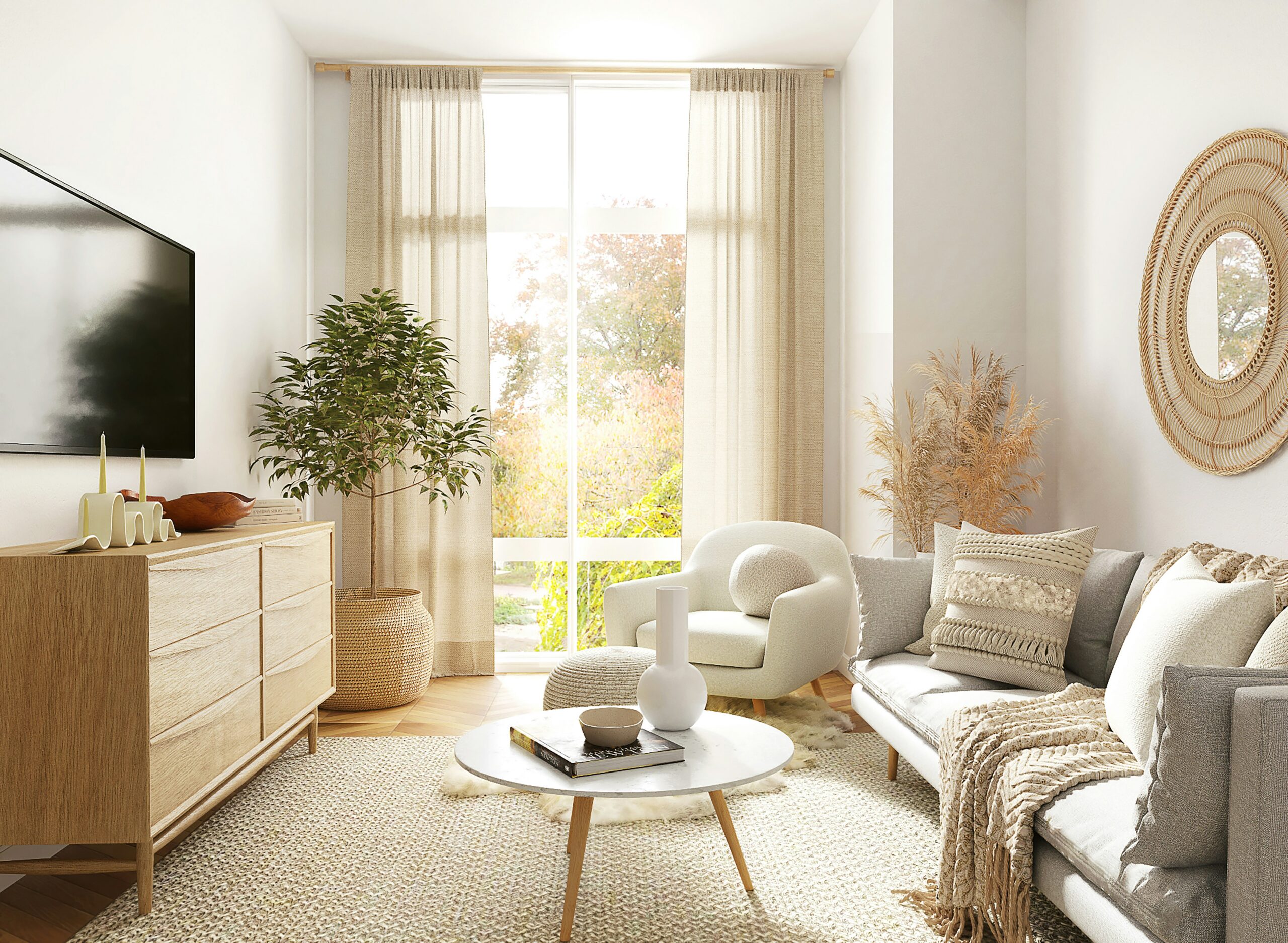
Don’t Let Your Guard Down: September Sunlight Still Does Damage
September 2026
Summer is winding down. The heat has broken. You’ve survived another August, and somewhere in the back of your mind you’re filing “sun damage” under “problems I’ll think about again next May.”
This is the assumption worth examining.
The UV calendar doesn’t follow the weather calendar.
When people think about UV damage to floors, furniture, and fabrics, they picture July. Intense sun, scorching afternoons, obvious heat pouring through glass. The mental model is reasonable but incomplete because UV-A radiation (the wavelength responsible for the vast majority of interior fading and material degradation) doesn’t disappear when summer ends.
What changes in September isn’t whether UV-A is present. What changes is the angle at which it arrives.
Here’s what the angle change actually means for your home.
In summer, the sun travels a high arc across the sky. At its peak, it sits nearly overhead. This is particularly true for homes in the southern and central United States. High-angle sunlight strikes south-facing windows at a steep trajectory, meaning most of the energy hits the floor just inside the window and dissipates relatively close to the glass.
As September begins and October approaches, the sun’s arc drops. The solar elevation angle decreases measurably with every passing week. A lower sun means light entering through south-facing windows travels at a shallower angle, and shallow-angle light penetrates deeper into a room.
Building science research confirms this directly: in wintertime, the sun will be at a lower angle, resulting in high solar penetration into a structure, with substantial sunshine and brightness on south and east orientations from at least 10 AM to 2 PM. The technical documentation for automated shade systems notes that lower solar angles require more protection precisely because the allowable solar penetration increases and higher brightness and veiling glare levels affect more of the structure’s interior.
What this means practically: the back wall of your living room, the far edge of your dining room table, and the area rug in the middle of the room (surfaces that summer’s high-angle sun never directly touched) are now being reached by September and October light. And those surfaces contain the items that may have had no UV exposure history up to this point.
UV-A doesn’t take a seasonal break.
This is the part that catches most homeowners off guard.
UV-A radiation, the 320-400 nanometer wavelength that penetrates glass and drives interior fading, is present year-round. UV radiation follows a bell-shaped seasonal curve, with peak values in summer, but UV-A remains active and damaging well into autumn and continues through winter at levels capable of causing cumulative material degradation.
Unlike UV-B (the sunburn-causing wavelength that largely disappears in autumn at northern latitudes), UV-A maintains meaningful intensity into fall. The fading processes it triggers- breaking down lignin in wood, destroying dye bonds in fabric, degrading leather oils- don’t pause because the temperature has dropped.
Standard window glass transmits approximately 70-75% of UV-A radiation regardless of season. That number doesn’t change in September. But that angle changes. The depth of penetration changes. The mechanism of damage, which is UV-A moving through glass and working on whatever it finds, continues without interruption.
The furniture you moved this spring is now the problem.
Think about what you may have rearranged since last autumn.
A sofa repositioned for a different room layout. An area rug moved to cover a worn spot. A reading chair shifted closer to a south-facing window for better light in winter. These common changes put objects in the path of September’s lower-angle sun that were previously in shadow or behind other furniture during summer’s high-angle light.
This seasonal exposure shift is one of the least-noticed contributors to interior fading. Materials that survived summer’s heat with minimal damage because they were shielded by window overhangs designed to block high-angle summer sun are now fully exposed to lower-angle autumn rays that clear those same overhangs entirely.
Architectural overhangs are specifically designed for this: they use summer’s high sun angle to shade windows while allowing winter’s low sun in for passive solar heating. They do this job well. What they don’t account for is UV-A transmitting through the glass regardless of whether the overhang blocks direct light from reaching the floor.
The glare is different too.
Low-angle autumn sun creates a specific visual problem that high-angle summer sun doesn’t: horizontal glare.
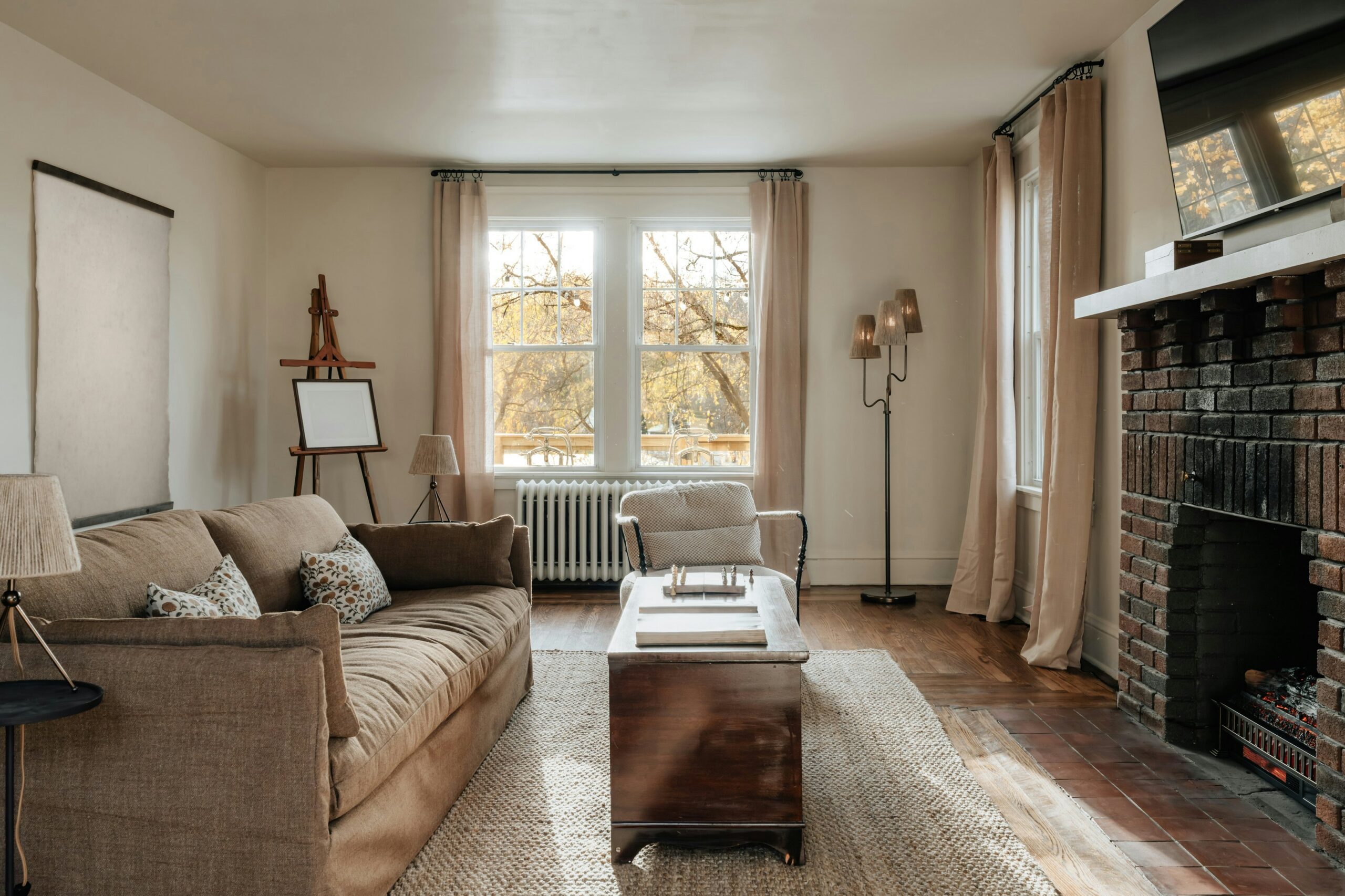
When the sun sits high in the sky, light enters windows and illuminates the room from above. When the sun drops toward the horizon, particularly during morning hours in east-facing rooms and late afternoon in west-facing ones, it enters windows nearly horizontally. This creates a shaft of intense, low-angle light that moves slowly across the room throughout the morning or afternoon.
That horizontal shaft:
Creates glare on screens and surfaces that weren’t problematic in summer. Reaches areas previously in shadow under overhangs or awnings. Causes significantly more eye strain for people working near windows. Is difficult to manage with window treatments designed for vertical light.
Anyone who has driven east into a morning sun just above the horizon understands the intensity of low-angle light. The same dynamic plays out inside homes during autumn mornings in east-facing rooms.
What “sun damage season is over” actually costs.
Let’s be specific about what continues to happen through autumn in an untreated home.
Hardwood floors in south-facing rooms that were already experiencing UV exposure continue to absorb UV-A throughout September and October — now reaching areas that summer’s angle never quite hit, creating new differential fading patterns that will become visible by spring.
Fabrics — sofas, chairs, drapes, area rugs — continue to experience dye bond degradation at the molecular level. The process that began in spring doesn’t conclude because the weather changes. A fabric that has been fading since April has been fading for six months before October even arrives.
Leather continues to lose oils and elasticity from UV exposure, contributing to the drying and surface checking that appears as premature aging.
Artwork, photographs, and paper goods near south and west-facing windows continue to experience photodegradation through autumn at meaningful UV-A intensity levels.
None of this registers as dramatic seasonal damage. That’s precisely the issue. Interior UV damage accumulates the way interest compounds — each individual day immeasurable, the aggregate over years significant.
The practical response.
If you addressed solar heat gain through film installation in spring or summer, it’s already working through autumn. UV-A blocking is a continuous function of the film, not a seasonal one. The same 99%+ UV-A rejection that protected your floors in July is protecting them in September.
If you’ve been considering window film and have been putting it off until “next summer,” September is worth reconsidering. Autumn installation:
Protects against low-angle autumn UV penetration, which reaches deeper into rooms than summer light. Provides UV protection through the remaining damage-prone months of the year. Gets installation done during a lower-demand period when contractor availability is typically better. Means the film is already performing before the winter sun angle creates the deep-penetration scenario described above.
There’s no off-season for UV-A. The light that’s entering through your south-facing windows on a clear September afternoon is doing the same thing it was doing in June, just at a different angle, reaching different surfaces, but governed by the same physics.
The assumption that summer ending means the damage problem pauses is not supported by what actually happens inside homes in autumn.
The sun doesn’t know it’s September.
Don’t Wait for Next Summer
CoolVu offers residential and commercial assessments that evaluate UV exposure patterns year-round — including the lower-angle autumn and winter light that reaches deeper into interior spaces than summer sun.
Find your local CoolVu installer: www.coolvu.com
UV-A doesn’t take a season off. Your protection shouldn’t either.