Table of Contents
- What Is CoolVu Transitional Window Film & Why It Matters in 2026
- How CoolVu Transitional Window Film Works (Photochromic Technology Explained)
- Key Benefits of CoolVu Transitional Window Film for Everyday Living
- CoolVu Transitional Window Film for Homes
- CoolVu Transitional Window Film for Commercial & Institutional Buildings
- Frequently Asked Questions About CoolVu Transitional Window Film
What Is CoolVu Transitional Window Film & Why It Matters in 2026
CoolVu transitional window film is a next-generation window film that automatically darkens when exposed to direct sun and returns toward clear when sunlight fades. Unlike static window tinting or traditional window coverings that force you to choose between light and shade, coolvu transitional window film adapts continuously throughout the day, giving you the right amount of tint exactly when you need it.
If you’ve spent any time in a modern home or office with large glass, you already know the struggle. Open-plan living rooms become ovens by mid-afternoon. Home office screens wash out in glare. Hardwood floors near south-facing windows fade years ahead of schedule. And the usual solutions, heavy blinds, roller shades, or permanently dark tinted windows, all come with their own compromises: lost views, dark interiors, or constant fiddling with cords and controls.
Photochromic window films solve this by embedding light-responsive molecules directly into the film. When UV and infrared intensity climbs, the film darkens. When it drops, the film lightens. No electricity, no apps, no motors. The glass itself becomes responsive. CoolVu pioneered this approach for architectural glass and remains the category leader heading into 2026, offering the world’s only stable photochromic window film engineered specifically for buildings rather than eyeglasses.
This article walks through everything you need to know before investing in transitional window films: how the technology works, what measurable benefits it delivers for heat control, energy efficiency, glare, UV protection, and daytime privacy, and how it performs across residential, commercial, and institutional settings. You’ll also learn what to watch out for during the selection process, how installation actually works, and what kind of return on investment to expect. Whether you’re a homeowner with one problematic room or a facility manager responsible for a 40-story glass tower, the information here will help you make a confident, well-informed decision.
How CoolVu Transitional Window Film Works (Photochromic Technology Explained)
Understanding the science behind transitional film doesn’t require a chemistry degree. The core concept is straightforward, and knowing the basics will help you evaluate whether this solution fits your building.
CoolVu transitional films use a patented photochromic molecular structure embedded within the film’s layers. These molecules react to UV radiation and infrared energy from sunlight. When the intensity of sunlight coming through your glass increases, the photochromic molecules change shape, absorbing more visible light and causing the film to darken into a tinted state. When the sun moves, clouds roll in, or evening arrives, the molecules relax and the film returns to a lighter state. CoolVu films adapt to sunlight intensity for optimal tinting, and CoolVu films transition from light to dark based on sunlight exposure throughout the day.
This is fundamentally different from what happens with standard dyed or metallic window tinting. Traditional dyed films apply a fixed shade that never changes. They’re dark on cloudy mornings and dark on blazing July afternoons, with no ability to respond to conditions. Metallic films add reflectivity but can interfere with cell signals and Wi-Fi. Neither adapts. Transitional window films, by contrast, give you clear and tinted states from a single product on a single pane of glass, and CoolVu’s photochromic adaptive window tint showcases how this technology delivers automatic UV protection, glare reduction, and heat control in real-world applications.
The construction of CoolVu’s film is a multi-layer laminate, not a simple sheet. From the outside in, you’ll find a scratch-resistant top coat for durability, then spectrally selective ceramic coatings composed of advanced ceramics that handle the heavy lifting of infrared heat rejection. Beneath that sits the photochromic interlayer where the adaptive tinting happens. Finally, a clear adhesive bonds the entire assembly to your existing glass. Each layer has a specific function, and together they block heat, filter UV, reduce glare, and adapt to light conditions without any of the color instability problems that plagued earlier photochromic products.
Here’s what the experience actually looks like. Imagine a south-facing living room in midsummer with the July sun pouring in. Within about 30 seconds of strong UV exposure, the CoolVu transitional film begins darkening visibly. Over the next few minutes, the glass shifts to a comfortable tint that rejects significant solar heat gain and cuts glare dramatically. You can still see outside clearly, but the room no longer feels like a greenhouse. Now picture that same window on a cloudy November morning. The film stays near its lightest state, allowing generous daylight to fill the space so you enjoy clear windows and a bright, welcoming room without manually adjusting anything.
CoolVu is the world’s first stable photochromic window film, meaning its molecules are engineered to resist the performance drift that dooms lesser products. Older photochromic films would yellow, turn purple, slow down, or lose their darkening range after a few years of sun exposure. CoolVu’s chemistry avoids these failure modes, maintaining consistent transitions and optical clarity across years of real-world conditions. The company tests its films for long-term sun exposure to verify that the transition function remains reliable well beyond the warranty period.
Key Benefits of CoolVu Transitional Window Film for Everyday Living
Most window treatments solve one problem while creating another. Blinds block glare but kill your view. Dark tint reduces heat but makes rooms feel like caves on cloudy days. Low-e glass helps with insulation but doesn’t adapt to changing sun angles. CoolVu transitional window film is unusual because a single product addresses multiple pain points simultaneously, and it does so without any user intervention, fitting into a broader portfolio of architectural window film solutions designed to improve comfort, efficiency, privacy, and aesthetics across homes and buildings.
CoolVu’s tinting happens automatically without requiring electricity or manual adjustments. That’s worth emphasizing because it sets transitional films apart from motorized shades, electrochromic smart glass, and every other “smart” window solution on the market. There’s nothing to plug in, nothing to program, and nothing to break down. The film simply responds to the sun, all day, every day, for years. Below are the specific benefits that matter most in daily living.
Heat Control & Energy Efficiency
CoolVu blocks over 80% of infrared heat gain through your glass. Infrared radiation is the invisible energy that makes you feel warm standing near a sunny window, and it’s the primary driver of those frustrating hot spots near glass walls and patio doors. By rejecting that problematic radiation before it enters your space, transitional films keep indoor temperatures more stable and reduce the load on your air conditioning system.
CoolVu films can contribute to energy efficiency by lowering cooling loads, and the impact is measurable. Commercial clients in hot climates have reported cooling cost reductions of up to 30% during summer months. Residential projects with large sun-exposed glass areas typically see payback periods of three to five years from energy savings alone. CoolVu window films reduce energy costs by maintaining temperature balance, which means your HVAC system cycles less frequently, wears out more slowly, and uses less electricity.
What makes this different from simply replacing windows? Cost and disruption. A full window replacement with high-performance low-e glazing can run $800 to $1,500 per window or more. CoolVu transitional film, professionally installed, typically costs $12 to $25 per square foot, delivering performance that brings your existing glass close to modern high-performance glazing standards at a fraction of the price. You keep your existing frames, avoid construction debris, and the installation takes hours rather than weeks. For building owners who no longer suffer temperature imbalances after installation, the difference is immediate.
CoolVu blocks over 80% of infrared heat energy, and combined with total solar energy rejection (TSER) values reaching 64–66% in the darkest state for premium models, these films function as impressive solar heat blockers that meaningfully change how a building performs thermally.
Glare Reduction & Screen Comfort
Anyone who has tried to watch a TV in a bright family room at 4 PM or work at a laptop near a west-facing window knows the frustration. CoolVu films provide glare reduction for comfort by automatically increasing tint density during peak sun hours. In the darkened state, glare reduction ranges from about 60% to nearly 80%, depending on the film model selected.
The film can help reduce eye strain by mitigating glare from bright sunlight, which translates into fewer headaches for home-office workers, less squinting for students in glass-heavy classrooms, and a more enjoyable viewing experience for anyone watching screens near windows. Unlike pulling blinds or drapes, the transitional film doesn’t eliminate your view or your connection to the outdoors. You still see the yard, the street, the skyline. The harsh edge of the glare is simply gone.
On overcast days or during evening hours, the film returns to a lighter state where visible light transmission stays high, sometimes above 50% depending on the model. This means your space doesn’t feel artificially dim when the sun isn’t a problem. You get the tint only when you need it and clear windows when you don’t. That adaptability is what separates transitional window films from the permanent compromise of conventional dark tint.
Consider a home office with a large sliding door glass facing southwest. From about 2 PM onward in summer, the desk becomes unusable without closing blinds. With a CoolVu transitional film like the CV25/15, the glass gradually darkens as the sun angle intensifies, keeping the workspace comfortable and screen-readable while maintaining full visibility to the backyard. When a cloud passes, the film lightens within minutes. When the sun sets, it clears. No intervention needed.
UV Protection & Fade Control for Interiors
Ultraviolet radiation is invisible, but its effects on interiors are unmistakable. Walk into any room with large, unprotected windows and you’ll often see the evidence: faded hardwood flooring near the glass, discolored upholstery on the sofa arm that catches afternoon sun, bleached curtain edges, and dulled artwork. UV is responsible for a significant portion of material degradation in building interiors, and it accumulates relentlessly over months and years.
CoolVu films block 99% of harmful UV rays, including both UVA and UVB wavelengths. In certain models and configurations, CoolVu films block 99.9% of UV radiation, providing museum-grade protection for interiors. This dramatically slows the fading process for carpets, furniture, artwork, leather, wood finishes, and retail merchandise. CoolVu films can prolong furniture life by up to 300%, which means that sofa, those hardwood floors, and that heirloom rug near the window last years longer before showing sun damage. Over the lifetime of expensive furnishings, the savings on replacement and refinishing can easily exceed the cost of the film itself.
It’s also worth noting that visible light and infrared heat contribute to fading too, not just UV. Because CoolVu’s transitional technology also reduces visible light transmission during peak sun and blocks over 80% of infrared energy, you get a multi-layered defense against fading that goes beyond simple UV filtering. This is particularly valuable for retail storefronts displaying merchandise, gallery spaces with original artwork, and historic homes where preserving original finishes is a priority.
Beyond materials, there’s a human health dimension. Prolonged UV exposure through glass contributes to skin damage and increases risk of skin-related conditions. For people who spend hours near windows, whether at a desk, a reading chair, or a patient bed in a healthcare facility, CoolVu’s UV blocking adds a layer of everyday protection that most occupants never think about but genuinely benefit from.
Daytime Privacy Without Sacrificing Views
CoolVu films enhance daytime privacy by 60%, a meaningful improvement for ground-floor rooms, street-facing offices, and any glass that feels uncomfortably exposed during daylight hours. As the film darkens in response to direct sun, it becomes harder for people outside to see in, while occupants inside retain a clear view outward. The effect is similar to wearing sunglasses: you can see out, but others have difficulty seeing in.
This is a substantial upgrade over the binary choice that most privacy solutions offer. Blinds and window coverings give you privacy but eliminate your view and your daylight. Frosted glass or privacy film gives you permanent obscurity, which defeats the purpose of having windows in the first place. CoolVu’s transitional approach preserves the openness and connection to the outdoors that modern architecture is designed to provide, while adding a layer of visual screening when sunlight is strongest and privacy concerns are highest.
It’s important to set realistic expectations. Daytime privacy is strong when the sun is shining on the glass, but at night with interior lights on and no sun activating the film, the film returns to a clearer state and people outside may be able to see in. For rooms where nighttime privacy is critical, like bedrooms, bathrooms with clear glass, or ground-floor conference rooms used for evening meetings, pairing CoolVu transitional film with sheer curtains, roller shades, or other window coverings gives you complete coverage around the clock.
For open-concept living rooms facing neighbors, glass-walled home offices on busy streets, or commercial lobbies at street level, CoolVu’s adaptive privacy delivers exactly the right amount of screening during the hours when foot traffic and sun exposure are highest.
CoolVu Transitional Window Film for Homes
Residential spaces present a unique set of challenges. Unlike commercial buildings with centralized HVAC systems and facilities teams, a house relies on its occupants to manage comfort, and most homeowners don’t want to spend their days adjusting blinds and shades. CoolVu transitional window film addresses this by turning your glass into an active comfort layer that works on its own.
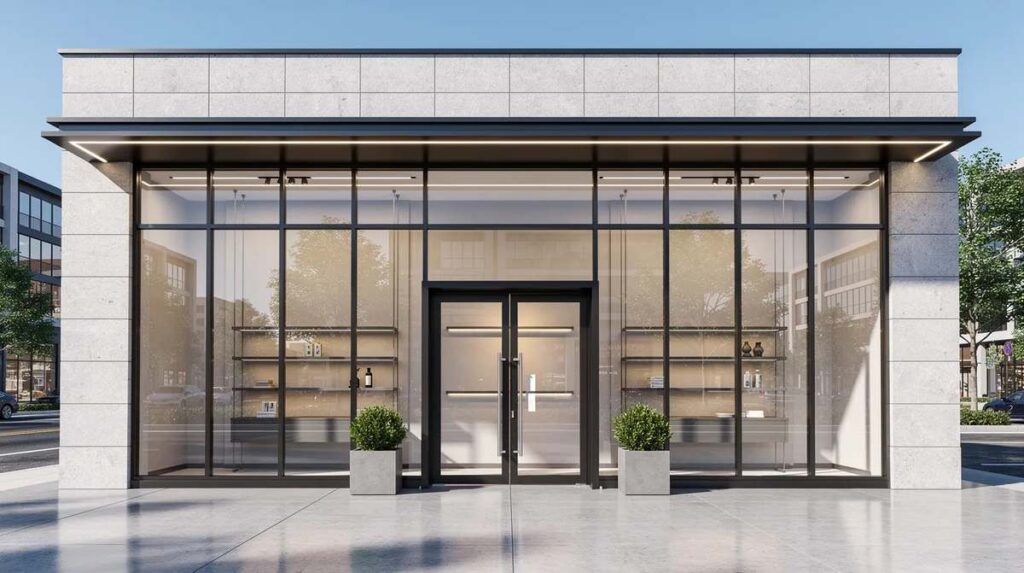
The most common residential applications include living rooms and family rooms with large windows or sliding door glass, home offices where screen glare is a daily frustration, two-story foyers and entryways that act as solar collectors, sunrooms that are gorgeous in spring but uninhabitable in August, and bedrooms where morning sun arrives before you do. Each of these scenarios benefits from a film that automatically transitions between clear and tinted states based on sun conditions.
CoolVu integrates easily with existing window coverings. If you already have sheer curtains for aesthetics, roller shades for nighttime privacy, or decorative drapes, the film doesn’t replace them. Instead, it creates a layered light-control system where the film handles solar heat, UV, and daytime glare automatically, and your soft treatments handle nighttime privacy and room darkening when wanted. This is especially relevant for homeowners who enjoy the look of their current window treatments and simply need better thermal and glare performance from the glass itself.
For condos, townhomes, and homes governed by HOA rules, CoolVu transitional film has a practical advantage over static dark tint or exterior modifications. Because the film appears relatively clear when the sun isn’t hitting it, it maintains a neutral exterior appearance that typically satisfies community guidelines. Your house doesn’t look like it has aftermarket tinted windows from the street. It just looks like glass.
CoolVu films enhance energy efficiency in residential and commercial settings, but the residential impact is often felt most personally: a room that was previously avoided becomes the favorite spot in the house, energy bills drop noticeably during cooling season, and furnishings that were fading rapidly begin to hold their color for homeowners working with CoolVu of Tucson residential window tinting and similar regional providers.
Solving Hot Rooms, Faded Floors & Blinding Glare
Every home has at least one problem room. Maybe it’s the west-facing great room that turns into a furnace after 3 PM. Maybe it’s the bonus room over the garage where the temperature is always five to eight degrees hotter than the rest of the house. Or maybe it’s the sunroom with beautiful views and completely unusable furniture because the fabric has faded to a shadow of its original color.
CoolVu transitional window films can make these spaces livable during peak summer without requiring blackout shades that defeat the purpose of having windows. CoolVu films reduce over 80% of infrared heat gain, so the radiant heat that makes you feel like you’re sitting under a heat lamp near the glass drops dramatically. Combined with the glare reduction that kicks in automatically, you get a room that feels comfortable and looks bright without the greenhouse effect.
Consider a large window wall next to a sectional sofa and hardwood floors. Without protection, you’d expect noticeable fading within two to three years and significant degradation within five. CoolVu films prolong furniture life by up to 300%, meaning those floors and that upholstery could look fresh for a decade or more with the film in place. Over the lifetime of a $3,000 sofa and $10,000 in hardwood flooring, the film pays for itself in preserved assets alone, before you factor in energy savings.
For rooms where you need blackout conditions at night, perhaps a media room or a bedroom, pairing CoolVu with motorized roller shades or even simple curtains gives you the best of both worlds. The film handles the sun during the day. The shades handle darkness at night. Neither solution alone covers every scenario, but together they’re comprehensive.
Comparing CoolVu Transitional Film to Traditional Residential Window Tinting & Coverings
Conventional residential window tinting applies a fixed shade to your glass, which is why many homeowners in service areas like CoolVu of North Milwaukee now consider adaptive alternatives when upgrading their windows. You choose a darkness level at installation, and it stays that way forever. On a bright July afternoon, that might feel perfect. On a gray February morning, the same tint makes your living room feel dim and closed off. You’re locked into one setting regardless of conditions.
CoolVu transitional film avoids this trade-off entirely. In bright sun, it darkens to provide heat control, glare reduction, and privacy. In low light, it returns to near-clear, letting you maximize daylighting and maintain the open, airy feeling that most homeowners invest in large windows to achieve. You don’t have to choose between comfort in summer and brightness in winter.
Compared to traditional window coverings like blinds, cellular shades, or roller shades, transitional film offers several practical advantages. Blinds collect dust, require regular cleaning, and create a visual barrier even when partially open. Cord-operated shades pose safety concerns for children and pets. Motorized shades work well but add cost, require electrical connections, and can malfunction. CoolVu film has no moving parts, no cords, no motors, and no maintenance beyond occasional cleaning with a soft cloth.
That said, window films complement rather than replace soft treatments in most homes. Drapes add texture and design. Sheer curtains soften light in the evening. Blackout shades handle nighttime privacy. CoolVu handles the heavy lifting of solar management during daylight hours, which is the part that traditional coverings do poorly because they require someone to actively open and close them in response to changing sun conditions, and most people simply don’t bother.
The bottom line: if you wanted a window solution that works around the clock with zero effort from you, transitional film is the foundation. Everything else is optional layering for aesthetics and nighttime control.
CoolVu Transitional Window Film for Commercial & Institutional Buildings
Commercial buildings with extensive glass facades face solar challenges at a much larger scale than homes, and the consequences are more expensive. Hot perimeter offices drive up HVAC costs. Glare complaints lead to ad-hoc solutions like taped-up cardboard or permanently closed blinds, which waste the daylight and views that the architect designed into the building. Fading interiors require more frequent renovation cycles. And occupants who are uncomfortable are less productive.
CoolVu’s national franchise model provides consistent quality and installation standards across multiple locations, which matters for property management companies, multi-site retailers, and institutional clients that need uniform performance and appearance across their portfolio, all supported by a glass and surface solutions team with deep experience and national reach. A CoolVu installed project in Phoenix follows the same quality standards as one in Boston.
Adaptive window films align directly with the sustainability and ESG goals that commercial building owners increasingly prioritize. By lowering cooling loads and reducing peak electricity demand, transitional films contribute to carbon reduction targets without the massive capital expense of full glass replacement. In cities with aggressive building emissions regulations, like New York, Boston, and Washington DC, CoolVu transitional window film offers a practical retrofit path that helps buildings meet energy mandates and avoid penalties.
For buildings pursuing LEED certification or incorporating WELL Building Standard principles, CoolVu films support both energy performance credits and occupant comfort metrics, especially when specified as part of a comprehensive architectural films package that balances solar control, privacy, and design. The ability to maximize daylighting while controlling glare and heat is precisely the balance these standards are designed to reward.
Workplace Comfort, Productivity & Glare Control
Research consistently shows that thermal comfort and glare are among the top environmental complaints in office buildings, particularly in open-plan layouts with floor-to-ceiling glass. When perimeter zones are too hot or too bright, employees move away from windows, cluster in interior zones, and avoid collaborative spaces with daylight access. The building’s most expensive real estate, the window line, goes underutilized.
CoolVu transitional window films directly address this by reducing glare and heat at the perimeter without blocking the daylight and views that make those spaces desirable. In a typical office floor with glass on two or three sides, the film darkens on whichever facade is receiving direct sun at any given hour, while the shaded sides remain lighter. The result is more even light and temperature distribution across the floor plate, fewer complaints, and less reliance on closed blinds that turn daylit offices into artificially lit ones.
Imagine a meeting room with a glass wall facing west. Without film, afternoon meetings in that room require pulling blinds, which eliminates the view and makes the space feel like a closet. With CoolVu, the glass adapts automatically. Presenters can project screens without washout. Participants can see each other and enjoy the view. The HVAC system isn’t fighting a losing battle against solar gain. It’s a subtle change that meaningfully improves how people experience the space.
For companies with existing commercial blinds or shading systems, CoolVu doesn’t require removing those systems. The film works as a base layer that handles most of the solar load, and blinds can remain available for situations that need additional control, like video production or sensitive displays.
Retail, Healthcare, Education & Public Buildings
Retail storefronts with large display windows face a constant tension between visibility and merchandise protection. Shoppers need to see in. Products need to be protected from fading. Store staff need comfortable working conditions. CoolVu transitional film addresses all three: the glass stays inviting and transparent when the sun isn’t bearing down, darkens to protect displays and reduce interior heat during peak hours, and blocks 99% of harmful UV rays that degrade fabrics, paints, and materials on display.
Healthcare facilities present a different set of priorities. Patient rooms benefit from natural light for mood and recovery, but glare on monitors at nursing stations creates readability problems and contributes to errors. Waiting areas with large glass walls become uncomfortably hot. CoolVu’s adaptive tinting keeps patient rooms bright when skies are overcast and comfortable when the sun is strong, while glare reduction on diagnostic and nursing station screens improves visual clarity. Privacy during daytime hours is an added benefit in street-facing or ground-floor clinical spaces.
Educational institutions, schools, universities, and libraries, deal with glass-heavy designs where sunlight is needed for learning environments but becomes a problem when it creates glare on whiteboards, projectors, and student devices. CoolVu transitional film lets classrooms and library reading rooms function comfortably throughout the day without staff constantly adjusting blinds that students will override anyway.
Public and government buildings often need to balance welcoming transparency with security and privacy on ground floors, making professionally installed window tinting and security window film an important part of the overall glazing strategy. CoolVu’s daytime tinting provides a visual buffer that makes it harder to observe interior activities from outside, while the glass still looks open and inviting. For facilities that need additional protection, CoolVu’s product range includes security window film options that can be specified alongside or independently of transitional films.
CoolVu Transitional vs. Other Transitional & Static Window Films
The window film market includes dozens of manufacturers and hundreds of products, but not all films are created equal, and “transitional” doesn’t mean the same thing across every brand. Understanding what sets CoolVu apart helps you avoid products that underperform, degrade quickly, or fail to deliver on their marketing promises.
CoolVu holds a distinctive position as the world’s first stable photochromic window film for architectural glass. The “stable” part is critical. Earlier photochromic films suffered from molecular fatigue: after a year or two of sun exposure, they’d slow down, shift color (often turning purple or yellow), and lose their darkening range. CoolVu’s proprietary chemistry addresses this with molecules specifically engineered for the sustained, high-intensity UV exposure that building glass receives, which is far more demanding than what eyeglass lenses encounter.
The ceramic-based construction of CoolVu films, composed of advanced ceramics rather than dyes or metals, provides several advantages over generic films. Ceramics offer superior infrared rejection without the signal interference caused by metallic films. They maintain color neutrality better over time. And they allow CoolVu to achieve high heat rejection even in the lighter state, so you’re getting solar heat blockers that work around the clock, not just when the film is dark.
In terms of visible light transmission, CoolVu offers a range of models (CV55/35, CV35/20, CV25/15) that cover different preferences, from barely noticeable tint to strong solar shading. This range means a CoolVu consultant can match the product to your specific glass, orientation, and aesthetic preferences rather than forcing a one-size-fits-all approach.
When does a static, non-transitional film still make sense? For certain applications like full-time privacy glass in bathrooms, specialized security films where thickness and lamination are the priority, or situations where a consistent exterior appearance is mandated by building codes, a fixed film may be the right choice. CoolVu offers non-transitional films and other surface solutions for these scenarios as well, delivered locally through regional teams such as CoolVu of Northern Virginia that tailor specifications to climate, codes, and building use.
Photochromic Window Films vs. Traditional Solar & Security Window Films
It helps to understand three distinct categories. Transitional or photochromic window films, like CoolVu’s, actively change tint in response to sunlight. Conventional solar-control window films provide a fixed level of heat and glare reduction that doesn’t change. Security window films are thicker, laminated products designed primarily to hold glass together on impact, providing safety and intrusion resistance.
CoolVu transitional films excel at balancing daylight access with solar control. They’re ideal when you want maximum clarity at some times and maximum solar rejection at others. Traditional solar films are better when you need a constant, unchanging level of tinting, for example on a north-facing glass wall that never gets direct sun but still needs privacy tint.
Security films serve a completely different function. They’re about holding shattered glass in place during break-in attempts, severe weather, or accidental impacts. In some projects, CoolVu consultants recommend layering a security film on lower-floor windows and transitional film on upper floors, or specifying films that offer some degree of both solar performance and safety enhancement. The key is that these are complementary technologies, and a knowledgeable installer will help you select the right product or combination for each window in your project.
Trade-offs exist across all categories. Maximum heat rejection typically means darker tint. Maximum clarity means accepting some heat transmission. Maximum security means thicker, stiffer film. CoolVu’s consultation process helps navigate these trade-offs by evaluating each window individually rather than applying a blanket solution.
What to Know Before Choosing CoolVu Transitional Window Film
Before committing to any window film, there are several factors that will influence which product is right, how well it performs, and how satisfied you’ll be with the result. Taking time to understand these upfront will save you from surprises later.
Glass orientation is the single biggest variable. South and west-facing windows receive the most intense and sustained direct sun in the Northern Hemisphere, making them the highest-priority candidates for transitional film. East-facing glass gets morning sun that’s less intense. North-facing glass rarely receives direct sun at all and may not benefit from the adaptive tinting function, though the UV and IR rejection layers still add value.
Your existing glazing type matters significantly. Single-pane glass allows more solar energy through and benefits most dramatically from film. Double-pane insulated glass units (IGUs) are more common in newer construction and already provide some thermal insulation, but still benefit from the IR and UV blocking that CoolVu adds. Low-e coated glass already reflects some infrared energy, so the interaction between an existing low-e coating and an added film must be evaluated to avoid thermal stress. Large panes exceeding 25 to 30 square feet require a specific compatibility review because the absorbed solar energy in darker film states can create temperature differentials that stress the glass.
Climate zone influences the value equation. In hot, sunny climates like the Southwest, Texas, or Florida, the cooling-cost savings from transitional film are most dramatic. In northern climates, winters bring lower sun angles and less intense UV, so the film spends more time in its lighter state. That’s not a disadvantage, it means you keep maximum daylight during the months when you want it most, but it does mean the energy savings skew toward summer.
Aesthetic preferences should guide your model selection. If you value maximum brightness and only want tinting during the harshest sun, a lighter model like the CV55/35 (VLT approximately 54% in light, dropping to around 35% in sun) is a good fit. If you want stronger heat and glare control and are comfortable with a darker glass during peak hours, the CV25/15 (VLT approximately 28% light, dropping to around 18% in sun) delivers more aggressive performance. Seeing samples on your actual glass during a consultation is the best way to choose.
Transition speed is worth understanding. Darkening begins within about 30 seconds of strong UV exposure, but reaching full tint takes a few minutes. Clearing back to a lighter state after the sun moves takes several minutes. On days with rapidly moving clouds, you may notice subtle shifts in brightness, which most occupants find natural and unobtrusive but some notice initially.
Nighttime appearance is the most commonly misunderstood aspect of transitional film. When there’s no sun activating the photochromic molecules, the film returns to near-clear. If you have interior lights on at night, the film will not provide privacy. Plan accordingly with supplemental shades or drapes for rooms where nighttime privacy is needed.
Common Mistakes to Avoid with Transitional Window Films
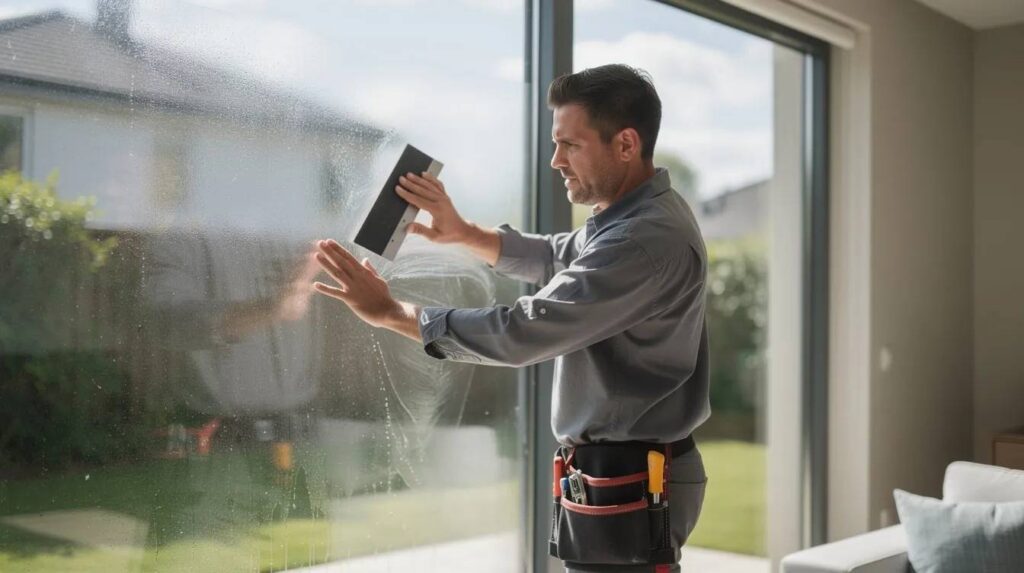
The most consequential mistake is attempting DIY installation on architectural glass. Unlike automotive windshield tint or small decorative films, architectural transitional film must be applied with precision to large, expensive panes. Trapped air bubbles, contamination between the film and glass, misaligned edges, and improper squeegee technique can all result in visible defects, premature failure, or voided glass warranties. Professional CoolVu installation is essential.
Choosing a film based solely on how dark it gets is another common error. The darkest film isn’t always the best film. A CV25/15 on a north-facing window will spend most of its life in a tinted state that makes the room feel unnecessarily dim, since that window rarely gets the intense sun needed to trigger full darkening. Matching the film model to the window’s actual sun exposure is far more important than chasing maximum darkness.
Ignoring glass type and solar absorption properties can lead to serious consequences. When a film absorbs solar energy, the glass heats up. On large, sealed IGU panels or glass with existing coatings, excessive heat absorption can cause thermal stress cracking. CoolVu’s professional assessment process includes a glass compatibility review specifically designed to prevent this. Skipping this step with a generic installer or a non-CoolVu product increases risk significantly.
Finally, don’t wait until after you’ve finished a major interior renovation to think about window film. If you’re planning new flooring, furniture, or interior finishes near large windows, involving a CoolVu professional early lets you coordinate film selection with your design decisions. The film’s color tone, tint level, and reflective properties interact with interior finishes, and getting this right upfront avoids costly adjustments later.
The CoolVu Consultation & Installation Process
The customer experience with CoolVu follows a structured process designed to eliminate guesswork and deliver results that match expectations. Whether your project is a single room in a house or an entire commercial building, the steps are consistent.
It starts with an inquiry. You contact CoolVu through their website, phone, or a local franchise, and a consultation is scheduled. CoolVu offers free estimates for both residential and commercial projects across its national franchise network. There’s no cost or obligation to get expert eyes on your glass and hear recommendations.
From there, the process moves through on-site consultation, product selection, a detailed proposal with pricing, professional installation, and post-install follow-up. The timeline from first contact to completed project varies: a typical residential job with five to ten windows can be quoted and installed within one to two weeks. Larger commercial projects with dozens or hundreds of panes require more planning and may take several weeks to complete, often scheduled in phases to minimize business disruption.
On-Site Assessment, Product Matching & Measurements
During the on-site visit, a CoolVu consultant evaluates the specific conditions of your glass. This includes assessing which windows are exposed to direct sun, at what times of day, and for how long. They measure each window precisely, note the glass type (single pane, double pane, low-e, tempered, laminated), and identify any panes that require special review due to size or coating.
The most valuable part of the consultation is seeing actual film samples on your glass. The consultant brings physical samples that can be held against the window so you can see the difference between clear, transitional, and darker options in real time, with your actual lighting conditions. This experience is far more useful than looking at a spec sheet, because how a film looks depends heavily on the glass it’s applied to and the light hitting it at that moment.
The consultant also listens to your priorities. Are you primarily trying to stop heat gain? Reduce glare? Protect an investment in new flooring? Improve privacy? The answers shape which film model is recommended for each window, and in many cases, different windows in the same building or home may get different films based on their orientation and the room’s function.
Recommendations may include a combination of products, and local providers like CoolVu of Northeast Columbus frequently design packages that blend transitional films with privacy, decorative, and security solutions. A south-facing great room might get transitional film, a bathroom might get decorative privacy film, and a ground-floor office might get a security film. CoolVu’s product range covers all of these scenarios, and the consultant can design a cohesive solution rather than forcing a single product type everywhere.
Professional Installation, Curing & Aftercare
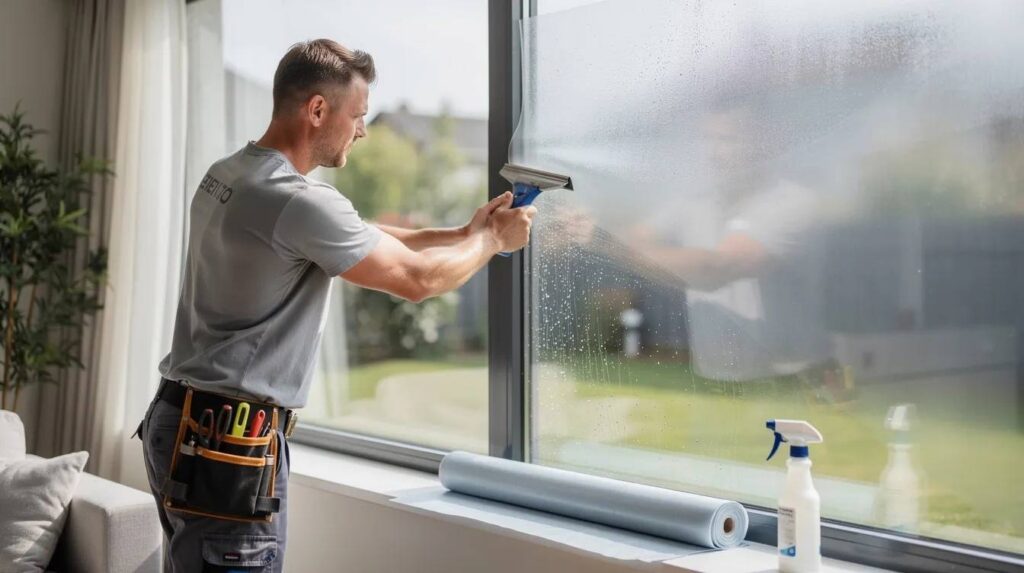
On installation day, the CoolVu team prepares the glass surface meticulously. Each pane is cleaned to remove any contaminants that could cause bubbles or adhesion failures. The film is cut precisely to fit each window, applied with professional-grade adhesive application techniques, trimmed to clean edges, and finished with a thorough quality inspection.
During installation, you can expect minimal disruption. Residential installations typically don’t require furniture removal, and commercial installations can often be done during business hours or scheduled for off-hours to avoid impacting operations. The team protects surrounding surfaces and cleans up thoroughly when the work is complete.
After installation, the film needs time to cure. Depending on climate and humidity, full curing takes anywhere from several days to a few weeks. During this period, you may notice slight haziness, small moisture pockets, or minor visual imperfections. These are normal and dissipate as the adhesive fully dries. Avoid cleaning the film during the first week or so, and don’t be alarmed by temporary cloudiness.
Once cured, maintenance is simple. Use a mild, non-ammonia cleaner and a soft microfiber cloth. Avoid abrasive pads, razor blades, or harsh chemicals. The scratch-resistant top coat handles normal wear well, but it’s not indestructible.
CoolVu’s warranty coverage is among the strongest in the industry. Residential installations carry a lifetime warranty on film and labor. Commercial installations are covered for approximately 15 years on film and labor. The transition function, the photochromic darkening capability, is warranted for 8 years for both residential and commercial applications. Glass breakage due to thermal stress, when film is properly installed on compatible glass, is covered for the lifetime of the installation in residential settings and 5 years in commercial settings. If any issues arise, your local CoolVu franchise handles the claim directly.
Frequently Asked Questions About CoolVu Transitional Window Film
These are the questions that homeowners, facility managers, and designers ask most frequently. Each answer reflects real product performance and realistic expectations.
How much does CoolVu transitional window film cost?
Installed pricing typically ranges from $12 to $25 per square foot, depending on the film model, the number and size of windows, accessibility, and whether old film needs to be removed. CoolVu provides free on-site estimates so you get accurate pricing for your specific project before making any commitment.
How long does CoolVu transitional window film last?
Quality CoolVu film is expected to perform well beyond its warranty period. With proper installation and normal maintenance, most installations maintain effective transition performance for 10 to 15 years or more. The photochromic transition function is specifically warranted for 8 years.
Does CoolVu film work at night for privacy?
At night with interior lights on and no sun activating the photochromic molecules, the film returns to a near-clear state and does not provide significant privacy. For rooms where nighttime privacy matters, pair the film with shades, drapes, or other window coverings.
Will CoolVu film damage my windows or void my glass warranty?
When professionally installed on compatible glass types, CoolVu film does not damage windows. The consultation includes a glass compatibility review specifically to prevent thermal stress issues. CoolVu’s warranty even covers glass breakage due to thermal stress when the film is installed according to their specifications.
How is CoolVu different from standard window tinting?
Standard window tinting applies a fixed shade that never changes. CoolVu transitional film dynamically adjusts between clear and tinted states based on sun exposure. You get darker glass when the sun is intense and lighter glass when it’s not, all without any manual or electrical controls.
How long does installation take for a typical home?
A residential project with five to ten windows generally takes a single day of on-site work. Larger homes or commercial projects may take multiple days. The CoolVu team handles everything from measurement and prep to application and cleanup, with minimal disruption to your daily routine.
Can CoolVu transitional film be applied to any glass?
CoolVu works on most standard residential and commercial glass types, including single pane, double pane, and tempered glass. Certain specialty glass, such as wired glass, some low-e coated units, or very large panes, requires a compatibility review during the consultation. This is one reason why professional assessment is essential before any installation.
What kind of energy savings can I expect?
Results vary based on climate, glass area, orientation, and existing glazing, but commercial clients in hot climates have reported cooling cost reductions of up to 30%. Residential payback periods typically fall in the 3 to 5 year range. CoolVu films are energy efficient solutions that reduce HVAC runtime and extend equipment life.
Why Choose CoolVu for Transitional Window Films & Architectural Solutions
CoolVu is more than a window tinting company, with local operations such as CoolVu window tinting in Columbus, Ohio demonstrating how franchise locations deliver full-service architectural film and surface solutions tailored to their regions. It’s a full-service architectural film and surface solutions partner offering window films, security film, decorative graphics, printed murals, and architectural surface finishes for homes, businesses, institutions, and government buildings. When you work with CoolVu, you’re accessing a national franchise network with factory-trained installers who specialize in the products they apply, including advanced transitional films that most general tinting shops have never handled.
The depth of CoolVu’s experience across diverse climates and building types in the U.S. translates into better recommendations, fewer installation problems, and more satisfied clients. A franchise serving coastal Florida understands salt air, hurricane glass, and relentless UV. A franchise in Denver knows altitude-intensified sun, dramatic temperature swings, and snow-glare. That localized knowledge, backed by national standards and training, delivers results that generic film installers struggle to match.
CoolVu’s many benefits extend beyond the product itself, as seen with regional specialists like CoolVu of Tucson window film installation, where a consultative process and trained installers ensure results that match expectations. The company’s consultation process is designed to educate rather than pressure, helping you learn what your options are, see samples on your own glass, and understand realistic outcomes before you commit. Repeat business from commercial property managers and facility directors, who manage buildings across multiple cities and consistently return to CoolVu for new projects, speaks to the reliability and trust the brand has earned.
For anyone evaluating window film solutions in 2026, whether you’re addressing one problem room or an entire building envelope, CoolVu offers the combination of proprietary technology, professional execution, and service breadth that this category demands.
Next Steps: Schedule Your CoolVu Transitional Window Film Consultation
If you’ve read this far, you likely have a specific space, a specific problem, or a specific goal in mind. The fastest way to turn that into a solution is to schedule a free on-site consultation with your local CoolVu franchise. There’s no cost, no obligation, and no pressure.
Here’s what happens when you reach out. A CoolVu representative contacts you to schedule a convenient time for an on-site visit. During that visit, they’ll evaluate your glass, discuss your priorities, show you film samples in your actual lighting conditions, and provide a detailed proposal with transparent pricing. If you decide to move forward, installation is typically scheduled within days, and most residential projects are completed in a single day.
Whether you’re a homeowner tired of fighting afternoon sun in the living room, a business owner looking to improve your shop or office comfort, a facility manager responsible for keeping occupants comfortable and energy costs in check, or a designer specifying window treatments for a new project, CoolVu has the experience, the technology, and the national reach to deliver through its window tinting and window film installation services. Reach out today to request your free estimate and see what coolvu transitional window film can do for your space.