
Something has shifted. You can feel it without being able to fully explain it.
The same house. The same thermostat setting. The same ceiling fans running on the same schedule. But August feels harder than it did five years ago. The rooms that were manageable in 2020 are genuinely uncomfortable in 2026. Your energy bills confirm it, even when you haven’t changed anything about how you use the house.
The instinct is to blame the weather; it’s partly responsible. But only partly. Understanding the rest of the explanation requires looking at where your home sits, how it was built, and what’s happening on the other side of your windows.
The Weather Part Is Real
U.S. summers have been warming measurably since 1970. Analysis by Climate Central found that summers have warmed in 97% of 243 U.S. cities analyzed. Over 60% of those cities now have at least two more weeks’ worth of hotter-than-normal summer days compared to 1970. The cities seeing the greatest change — places like Reno, Boise, and El Paso — have seen average summer temperatures rise by several degrees over that period.
2023 and 2024 were the two hottest years on record globally. 2025 ranked in the top five. The trajectory is consistent, and August — historically the hottest month in most U.S. markets — is where those trends are felt most acutely.
So yes: it is hotter outside. That’s real. But it doesn’t fully explain what’s happening inside your home.
The Urban Heat Island Part Is Separate, and Often Bigger
If you live in or near a city, you’re contending with a phenomenon layered on top of the broader warming trend: the urban heat island effect.
The U.S. Environmental Protection Agency defines it as a measurable increase in ambient urban air temperatures resulting from the replacement of vegetation with buildings, roads, and other heat-absorbing infrastructure. Asphalt, concrete, rooftops, and pavement absorb solar radiation during the day and release it slowly after sunset — suppressing the natural overnight cooling that rural areas experience.
Climate Central’s analysis of 60 major U.S. cities found that single-day urban temperatures in some metro areas were as much as 27°F higher than surrounding rural areas. On average across all 60 cities, the maximum single-day temperature difference was 17.5°F. Cities averaged at least 8 more days over 90°F each summer compared to adjacent rural areas.
The practical consequence for homeowners: the outdoor temperature your home is trying to cool against is higher than what the regional weather data suggests — sometimes significantly higher, depending on how dense and developed your immediate surroundings have become over the past decade.
And surroundings do change. Vacant lots get developed. Trees get removed for construction. New roads and parking lots appear. Your neighborhood’s heat island intensity today may be meaningfully different from what it was when you moved in — or when your home was built.
The Building Envelope Part Is the One You Can Actually Control
Here’s where the explanation shifts from atmospheric and environmental to architectural; and where something can be done about it.
Your home’s thermal performance depends on how well the building envelope controls the flow of heat between inside and outside. The wall insulation, roofing material, window glass, and weatherstripping around doors and frames. These are the systems that determine how much of the outdoor heat problem becomes an indoor comfort problem.
Most of these systems degrade over time. Weatherstripping compresses and cracks. Window seals fail. Attic insulation settles. Each of these failures increases the rate at which heat moves from a hotter outdoor environment into a cooler interior space.
But the most significant factor — and the one most often overlooked — isn’t degradation. It’s a design characteristic that was always there: window glass.
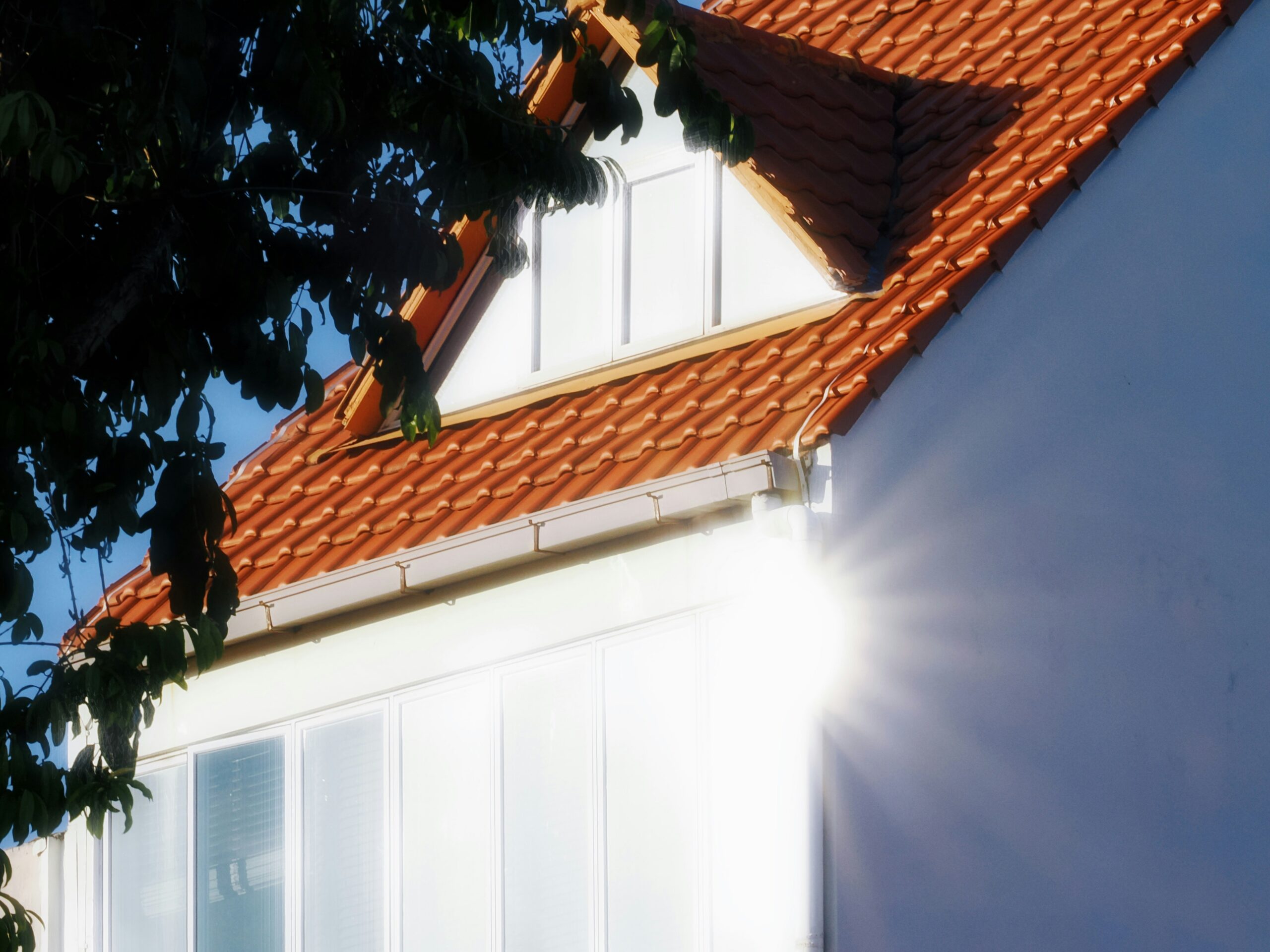
Standard residential glass transmits approximately 70-75% of solar radiation. Not conducted through the wall. Not convected through gaps in the building envelope. Transmitted directly, the way light passes through a lens, striking interior surfaces and converting to heat. This has always been true of glass. What’s changed is the thermal environment on the other side of it.
When outdoor temperatures ran several degrees cooler, the thermal load through windows was proportionally smaller. As outdoor temperatures — both from climate trends and urban heat island effects — increase, that same glass transmits proportionally more heat into the space. The physics of the glass hasn’t changed. The severity of the problem it creates has.
Why the HVAC Response Has Limits
The natural response to a hotter home is to run the air conditioning more. This works — up to a point — and then it creates its own problems.
A cooling system running at higher duty cycles ages faster. Energy costs increase nonlinearly: the hardest hours of cooling work are also the most expensive, because they coincide with peak grid demand. And depending on how your home’s windows are oriented, the system may simply not be able to overcome solar heat gain during peak afternoon hours — running continuously without ever bringing the temperature to the target set point.
This last scenario is increasingly common in homes with significant south or west-facing window area. The HVAC isn’t broken. It’s competing against a continuous incoming heat source that it wasn’t designed to overcome. The glass keeps adding heat; the system keeps trying to remove it; the room stays warm; the bill climbs.
Adding HVAC capacity helps, but it’s treating the symptom rather than the source. A more efficient system running against the same solar heat gain through the same glass will consume more energy, not less, if the baseline load has increased.
The Building Response That’s Often Overlooked
The HVAC industry has responded to rising temperatures with more efficient equipment, smarter thermostats, and better refrigerants. The roofing industry has developed cool roofs that reflect solar radiation rather than absorbing it. The insulation industry continues to advance material performance.
The window treatment industry, particularly solar control window film, has offered a direct response to solar heat gain for decades in commercial buildings, and increasingly in residential applications. The mechanism is straightforward: when applied to existing glass, solar control film reduces the percentage of solar radiation passing through the window from roughly 70-75% to as low as 25-40%, depending on the film type. The glass doesn’t change. What changes is how much of the outdoor heat problem it transmits into the interior.
This matters more as outdoor temperatures rise. The same film that reduced heat gain moderately in 2010 reduces a larger absolute amount of heat in 2026, because the solar load it’s working against is greater. The percentage reduction is constant; the degree of reduction grows with the outdoor environment.
It also compounds with the urban heat island effect. Homes in urban cores — where the heat island effect adds the most degrees above regional averages — benefit more from solar heat gain reduction than homes in rural settings, because their thermal baseline is already elevated.
The Question Worth Asking
The homes that felt comfortable in 2018 and feel strained in 2026 haven’t necessarily changed. The environment around them has. Outdoor temperatures are higher, urban heat islands are more intense in many metros, and the cumulative effect of those changes is showing up in comfort levels and energy bills.
The question isn’t whether your home needs to respond to a warmer world. It does. The question is which responses address the source of the problem and which ones simply run harder against it.
Running the AC harder addresses the symptom. Improving the building envelope (reducing how much outdoor heat gets inside in the first place) addresses the source. For most homes, the largest remaining gap in that envelope is the glass.
The weather has changed. The city around you has changed. Your home’s response to both of those changes is still within your control.
Find Out What Your Windows Are Letting In
CoolVu offers free residential assessments that identify solar heat gain through existing glass and match film options to your specific exposure, window type, and comfort goals.
Find your local CoolVu installer: www.coolvu.com
It’s not just the weather. And the part that isn’t the weather — you can do something about.