

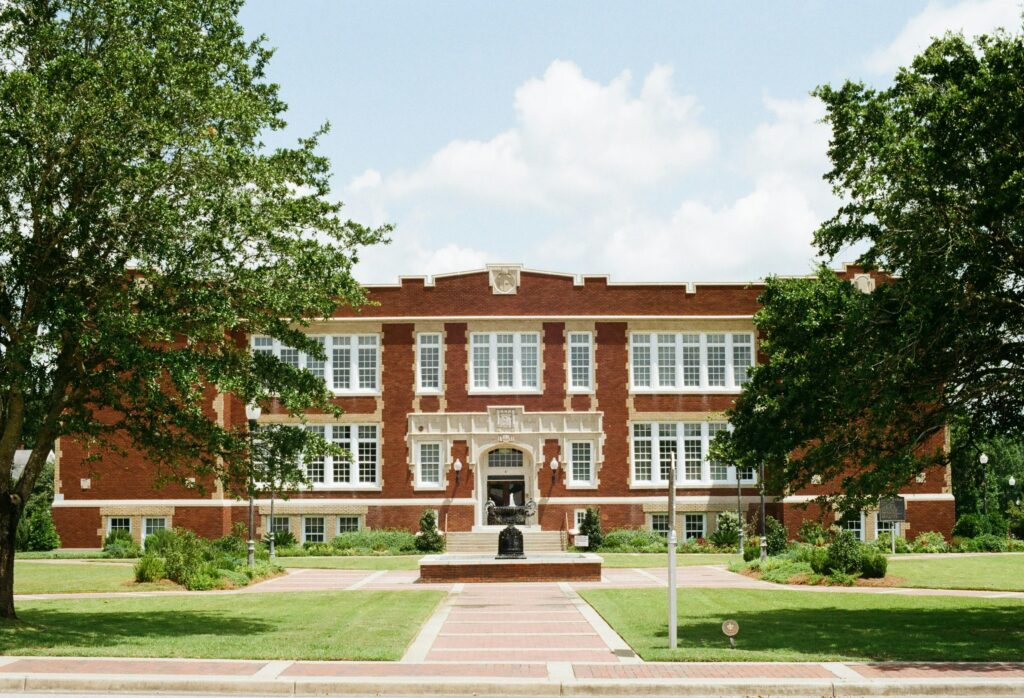
Think about what a school building has been doing since late May.
No students. Reduced staff. Minimal HVAC operation to cut summer energy costs. And windows — south-facing, west-facing, all-glass gymnasium walls — absorbing solar radiation every day for two to three months straight.
The building isn’t resting over summer. It’s heating up.
By the time late August arrives and the first day of school approaches, certain classrooms have been cycling through the same thermal pattern for months: warming throughout the day, releasing heat overnight, warming again the following morning. The floors, the walls, the ceiling tiles, the furniture — everything has been accumulating and radiating heat in a slow, repetitive loop that nobody has been present to complain about.
Then the students arrive.
The Timing Problem
The school calendar has shifted earlier over the last several decades. Districts across the country have pushed start dates into August — sometimes early August — driven by standardized testing preparation schedules, instructional time requirements, and academic calendar preferences.
This means the first weeks of school now consistently fall during the hottest stretch of the year.
Many U.S. cities, from Los Angeles to Houston, are oppressively hot when the new school year begins in August or September — and they are only getting warmer. Arizona State University researchers studying the HeatReady Schools program note that the challenge of managing hot school days has intensified, as many U.S. schools have moved the start of the academic year earlier into the summer over the last several years.
The result is a collision between two trends moving in opposite directions: school years starting earlier, and August temperatures rising. The classrooms caught in the middle of that collision are often the ones nobody thought to address before summer.
What the Research Says About Heat and Learning
This isn’t a comfort question with soft implications. The connection between classroom temperature and academic performance has been studied rigorously, and the findings are consistent.
Research cited across multiple studies finds that math scores among students aged 10-12 improved by 2.8% when classes were held in cooler temperatures — 67°F compared to 78°F. Each 1°F increase in temperature across the school year has been shown to lower learning outcomes by about 1%, with more severe impacts in high-stakes testing environments.
Student absence rates in K-12 schools are 16% higher on days when temperatures exceed 90°F. Taking an exam on a hot day is linked to lower test scores. And children are more physiologically vulnerable than adults to heat stress — with more limited recognition of heat stress symptoms and dependence on adults to implement protective measures.
The first weeks of school — when students are reestablishing routines, teachers are establishing classroom culture, and early assessments are being conducted — are among the most academically consequential days of the year. They’re also, in an August-start district, the hottest.
The Classroom That Gets Overlooked
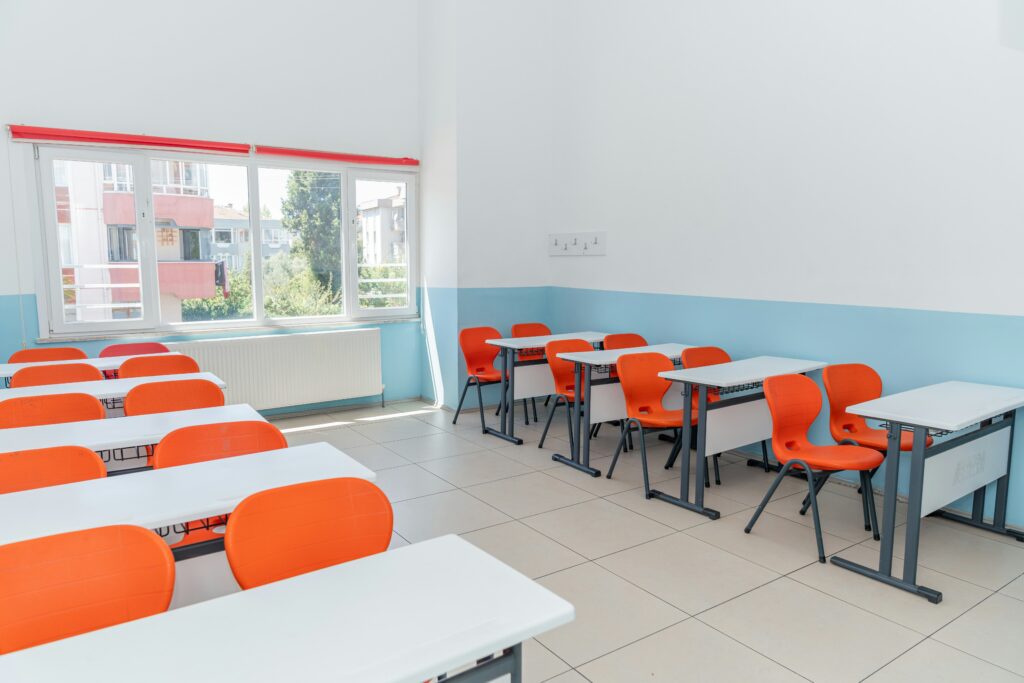
Not every classroom faces the same risk. A north-facing classroom on the shaded side of the building will perform very differently from a west-facing classroom with floor-to-ceiling windows that receives full afternoon sun.
The problem is systemic and predictable once you look for it.
South-facing classrooms receive consistent solar radiation throughout instructional hours. West-facing rooms — particularly those used in the afternoon, which is precisely when the sun is most intense and outdoor temperatures are highest — can become genuinely difficult to occupy. Standard window glass allows approximately 70-75% of solar radiation to pass through, and that energy heats surfaces in the room — desks, floors, walls — which then radiate heat into the air around students.
An HVAC system fighting afternoon solar gain in a west-facing classroom isn’t failing. It’s competing against a continuous heat source that it wasn’t sized to overcome on its own. The thermostat might read a tolerable number in the hallway while the room two doors down is several degrees warmer near the windows — and that’s where the students assigned to that room spend their day.
Research from ScienceDirect on school building thermal performance highlights the importance of district-wide thermal monitoring and installing sensors in all classrooms, underscoring that the variation is real, room to room, and often invisible to administrators who aren’t in the affected spaces during peak afternoon hours.
The Infrastructure Gap
An estimated 41% of school districts with air conditioning in the U.S. need to update or replace their systems — a statistic that reflects the scale of the underlying infrastructure problem.
But the more fundamental issue — one that doesn’t require system replacement to address — is the solar heat load entering through windows before any cooling system has a chance to manage it.
Cooling a room that’s continuously receiving solar heat gain is a fundamentally different challenge than cooling a well-insulated, shaded space. The system runs longer, works harder, and still falls short in the rooms with the worst sun exposure — because it’s removing heat while the sun keeps adding it.
Addressing solar heat gain at the glass reduces the incoming load before it enters the room. This changes the physics of the problem. Instead of cooling a room while the sun simultaneously heats it, the HVAC manages a more stable baseline — and the room stays within a range that supports learning rather than undermining it.
A Facility Question, Not Just a Comfort One
For school facility managers and administrators, this is worth framing as an operational issue rather than a comfort amenity.
The first weeks of school are not a good time for classrooms to be unusable in the afternoon. Teacher retention is a documented concern in districts where working conditions — including physical comfort — are poor. Parent complaints about heat in classrooms generate administrative burden. Early absence patterns traced back to heat stress create downstream academic challenges that compound through the year.
None of this requires a dramatic infrastructure overhaul to begin addressing. The starting point is identifying which classrooms face the worst solar exposure — almost always south and west-facing rooms with significant window area — and prioritizing those spaces for intervention.
Solar control window film applied to existing glass is one of the more practical first steps available to school facilities teams. It addresses heat gain at the source, installs without disrupting school operation, doesn’t require HVAC upgrades, and protects against UV exposure that affects both students and materials in the room.
It also doesn’t require summer to be over to be relevant. Film can be installed during the school year with minimal disruption — typically scheduled for evenings or weekends.
The First Day of School Shouldn’t Be the Hottest Day of the Year for a Classroom
Schools that return in August are making an academic calendar decision. The buildings those schools operate in are making a thermal one — and the two decisions are increasingly in conflict.
The research on heat and learning is clear. The practical response — starting with the worst-performing classrooms and the most addressable cause — is within reach for most districts without a capital project.
The question isn’t whether classroom temperature affects what happens in the room.
It’s whether anyone will act on that before the first bell rings.
Protect Your School’s Learning Environment
CoolVu works with educational facilities to evaluate solar heat gain, identify high-priority classrooms, and install solar control solutions that create more consistent thermal conditions across buildings.
Find your local CoolVu installer: www.coolvu.com
The school year starts in August. The heat problem starts in May. Address it before they collide.