Table of Contents
- Separating Fact from Marketing
- Understanding Security Window Film vs. Ballistic Protection
- How Security Window Film Enhances Glazing Systems
- Testing Standards and Performance Comparison
- Common Misconceptions and Real Solutions
- Conclusion and Next Steps
- Frequently Asked Questions
Separating Fact from Marketing
There is no such thing as true “ballistic window film” that can stop bullets on its own. Security window film and ballistic protection are fundamentally different technologies—film holds broken glass together and delays forced entry, while stopping projectiles requires specialized bullet resistant glass or glazing systems certified to specific threat levels.
This guide is written for building owners, school administrators, and security professionals researching protective glazing options for facilities in populated areas. Understanding the distinction between these technologies matters critically for life-safety decisions: specifying the wrong protection level against an active shooter or ballistic attacks can have devastating consequences. Many schools and commercial buildings have invested money in security films believing they provide bulletproof protection when they do not.
The direct answer: Security window film enhances safety by delaying entry and containing glass fragments, but it cannot stop bullets. Achieving bullet resistance requires independently tested ballistic glazing systems—such as laminated polycarbonate, glass clad polycarbonate, or specialized laminated glass—certified under standards like UL 752.
By the end of this article, you will understand:
- The actual capabilities and limitations of security window film
- What materials and systems provide genuine ballistic protection
- How testing standards like UL 752 and ASTM F3561-22 differ
- Real alternatives for bullet resistant products in retrofit applications
- Cost considerations for various protection levels
Understanding Security Window Film vs. Ballistic Protection
Security window film is a thick polyester or urethane layer applied to existing glass to enhance safety and security, creating an economical barrier that helps deter theft, vandalism, and forced entry while mitigating hazards from shattered glass security window films. These films typically range from 7 to 25 mils in thickness (0.007–0.025 inches) and are bonded to the interior surface of glass windows using specialized adhesives. Their primary purpose is holding broken glass together after impact—not stopping projectiles.
What Security Window Film Actually Does
Security films excel at what they’re designed for: delaying forced entry and preventing glass shattering from creating dangerous fragments, making them a useful component in bullet resistant window glazing strategies for schools and public facilities. Security window film is designed to improve human safety by preventing glass from breaking into dangerous shards during vandalism and forced entry attempts. When an intruder attempts to break through a window, the film holds glass shards in place, forcing them to expend significantly more time and effort to gain entry.
Performance data on forced entry delay shows meaningful results:
- 8-mil film: 15–30 seconds additional delay
- 12-mil film: 30–60 seconds delay
- 14+ mil film with anchoring: 60+ seconds delay
This delay matters for security response—it provides time for alarms to trigger, occupants to evacuate, and security professionals or law enforcement to respond. The film also prevents glass fragments from becoming projectiles during storms, blasts, vandalism, or accidental impacts, reducing injury risk to building occupants. Most quality security films additionally block over 99% of UV radiation, similar to dedicated solar window film solutions that cut glare, heat, and UV exposure.
However, these capabilities fall within the realm of safety and delay—not ballistic protection. The film stretches and absorbs some impact energy, but it cannot stop bullets from penetrating the underlying glass.
What Ballistic Protection Requires
Achieving genuine bullet resistance requires specialized glazing systems engineered to absorb projectile energy and prevent penetration. True ballistic glass consists of multiple layers of glass and plastic interlayers—sometimes incorporating polycarbonate, acrylic, or advanced polymer composites—designed to deform and capture bullets within the laminate structure.
Common materials in bullet resistant glazing include:
- Glass clad polycarbonate: Multiple glass layers bonded to polycarbonate cores
- Laminated polycarbonate: Layered polycarbonate sheets with polyurethane interlayers
- All-glass laminates: Multiple glass plies with PVB or similar interlayers
These systems are tested and certified under UL 752, the primary U.S. standard for bullet-resisting equipment. The standard defines eight protection levels corresponding to specific calibers, velocities, and shot counts:
- Level 1: Three shots of 9mm FMJ (1,175–1,293 fps)
- Level 2: Three shots of .357 Magnum JSP (1,250–1,375 fps)
- Level 3: Three shots of .44 Magnum (1,350–1,485 fps)
- Levels 4–8: Rifle threats including .30-06 and 7.62mm
The critical distinction is that UL 752 tests complete assemblies—glass, frame, and mounting hardware together—not individual components. This system-level approach reflects real-world performance requirements.
Understanding these fundamentals establishes why film alone cannot provide ballistic protection, setting the stage for examining how security window film does contribute to comprehensive glazing systems.
How Security Window Film Enhances Glazing Systems
While security window film cannot stop bullets independently, it plays a valuable role within layered security strategies when installed correctly. The film’s contribution depends heavily on proper installation methods and appropriate application to specific threat scenarios.
Installation Methods and Anchor Systems
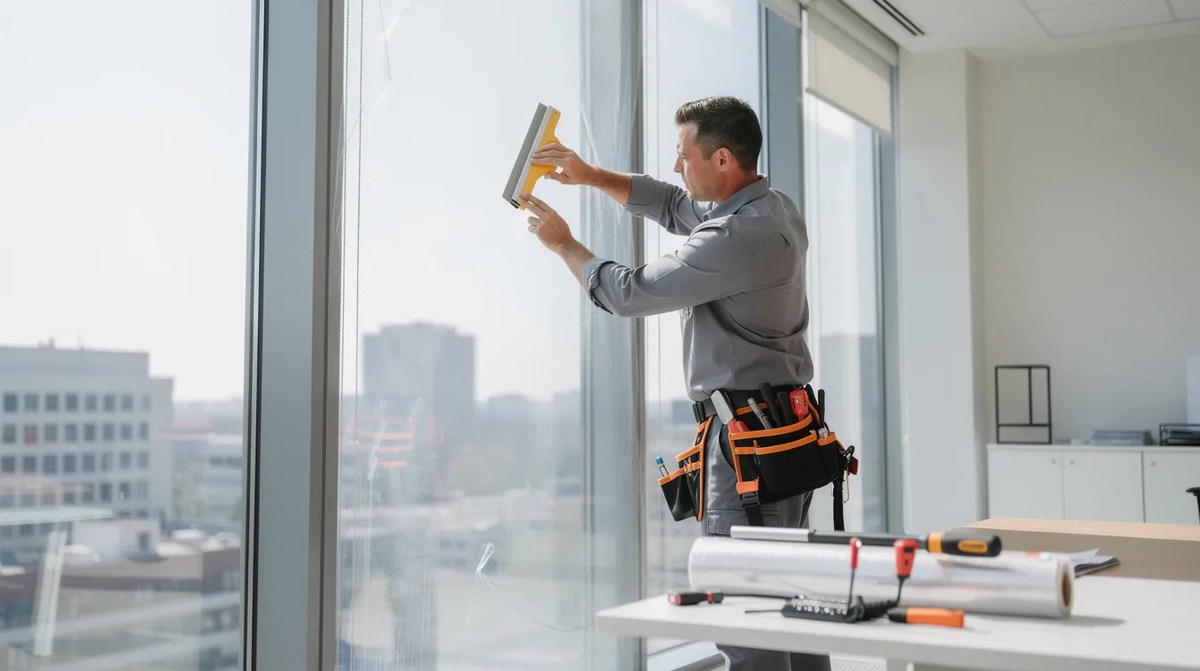
Security window film is applied to the interior surface of existing windows using pressure-sensitive adhesives. However, standard application—simply adhering film to glass—provides limited security benefit. The film may peel away from the edges under stress, allowing an intruder to push glass and film out of the frame. Some systems may also be evaluated for exterior applications depending on project requirements.
Maximum security performance requires anchoring the film to the window frame itself through methods including:
- Wet glazing: Applying structural silicone adhesive along film edges and into the frame channel
- Mechanical anchors: Using clips or channels to physically secure film edges
- Structural attachment systems: Bonding film directly to frame materials
The glass substrate also matters significantly. Tempered, annealed, laminated, and insulated glass units each respond differently to film application and stress. Dual-pane insulated units may experience thermal stress from certain films. Older glass with unknown properties presents risk for reliable performance.
Cure time affects protection level as well—adhesive bonding requires days to weeks to reach full strength depending on temperature, humidity, and film thickness. Thicker security films generally need longer cure periods before achieving rated performance.
Performance in Non-Ballistic Threats
When properly installed, security window film delivers measurable protection against common non-ballistic threats facing commercial and institutional buildings:
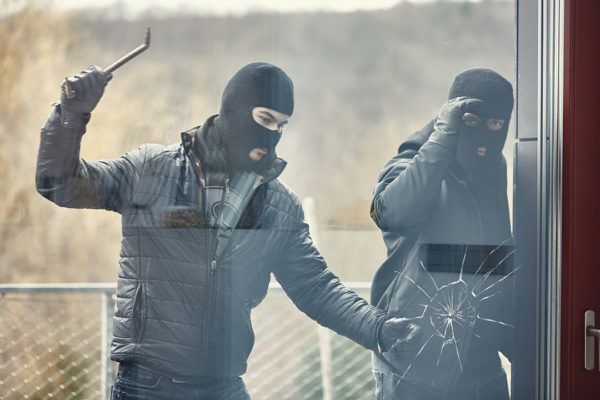
Forced entry: The combination of film and held glass forces intruders to work much harder to gain access, especially when installed by professional window tinting and security window film specialists. Instead of a quick smash-and-entry, they face minutes of effort cutting through film and removing glass sections—dramatically increasing detection risk and providing response time. Security window film can significantly delay an intruder’s access through glass, providing crucial time for occupants to react during an attack.
Vandalism and impact: Film prevents single-strike shattering, requiring repeated impacts to breach. Glass windows remain intact longer, reducing replacement costs and maintaining interior protection.
Storms and debris: Flying debris impacts shatter glass, but film contains fragments rather than allowing them to become secondary projectiles inside the building.
Smash-and-grab retail theft: For storefronts in high-crime areas, 8–12 mil films with edge anchoring create sufficient barrier to deter opportunistic criminals who rely on quick entry and exit, while also leveraging architectural window films that improve energy efficiency and comfort. Similar benefits can be achieved on door glass in vulnerable entry areas.
These applications represent the appropriate use case for security films—as one layer within total security solutions, not as standalone ballistic protection.
Role as Spall Shield for Ballistic Glazing
Security film serves an important function in actual ballistic glazing systems: spall containment, and it can be integrated into broader security upgrades through regional providers offering window film installation for Sacramento commercial and institutional buildings. When a bullet impacts ballistic glass, fragments (“spall”) can break off the protected side even if the projectile doesn’t penetrate. These high-velocity glass fragments pose serious injury risk to occupants.
Film applied to the interior surface of bullet resistant glass catches and contains these fragments, maintaining optical clarity after impact and protecting occupants from secondary injuries, a service commonly provided by security window film and tinting experts in the Salt Lake City area. The film acts as a spall shield when used on actual ballistic-rated glass, catching small glass fragments that might fly inward. In this role, the film works in conjunction with—not instead of—certified ballistic glazing.
This application illustrates the proper relationship between film and ballistic systems: film enhances safety and post-impact usability of rated glazing but does not provide the bullet-stopping capability itself.
Testing Standards and Performance Comparison
Third-party testing under recognized standards separates legitimate security claims from marketing language. Understanding which standards apply to which threats helps security professionals and school administrators make informed decisions about protection investments.
Forced Entry Testing (ASTM F3561-22)
ASTM F3561-22 is a relatively new standard (2022) designed to evaluate how well complete fenestration systems—windows, doors, and modular panels—resist forced entry after simulated ballistic weakening. The test fires projectiles at the glazing, then applies mechanical force (pendulum swings simulating kicking or battering) to measure breach resistance.
This standard matters for school shooting scenarios where an active shooter might fire at entry points before attempting to physically breach them. Systems that perform well under ASTM F3561-22 delay entry after the initial attack, providing evacuation and response time.
Critical limitation: The International Window Film Association has clarified that ASTM F3561-22 was not designed for retrofit window film applied to existing glass and frames. Films cannot be tested as standalone products under this standard—it evaluates complete systems including glass, frame, and hardware together.
This means that any security film marketed as “ASTM F3561 tested” or “active shooter rated” requires scrutiny: the test applies to the entire assembly, not the film alone.
Ballistic Testing Standards
Ballistic resistance testing evaluates whether glazing systems can stop specific ammunition types. Multiple standards exist with varying requirements:
| Standard | Test Method | Protection Level Examples | Typical Applications |
|---|---|---|---|
| UL 752 Level 1 | 3 shots, 9mm FMJ @ 1,175–1,293 fps | Handgun protection | Retail, banks, schools |
| UL 752 Level 2 | 3 shots, .357 Magnum @ 1,250–1,375 fps | Enhanced handgun | High-risk commercial |
| UL 752 Level 3 | 3 shots, .44 Magnum @ 1,350–1,485 fps | Large caliber handgun | Government facilities |
| UL 752 Levels 4–8 | Multiple shots, rifle calibers | Rifle protection | Military, high-security |
| NIJ Standards | Varies by type | Body armor ratings | Shields, mobile units |
| EN 1063 (Europe) | Varies by class | BR classes (metric) | International applications |
| UL 752 is stricter than some alternatives—it prohibits any penetration or significant spall on the protected side. NIJ standards, developed primarily for body armor, allow some spall passage. EN 1063 (European) specifies different ammunition types and metric measurements. |
For procurement decisions, request specific test reports showing the exact construction proposed. Generic claims of “ballistic rating” without documentation should prompt requests for UL listing numbers and test reports from accredited laboratories.
Common Misconceptions and Real Solutions
Marketing claims around security glazing frequently blur the line between enhanced safety and actual bullet resistance. Recognizing these misconceptions prevents dangerous underprotection in life-safety applications.
“Bulletproof Film” Marketing Claims
No retrofit film independently applied to existing glass has passed UL 752 ballistic resistance testing at any level. Terms like “bulletproof window film,” “armored film,” or “ballistic-grade film” are marketing language without technical validity when applied to film products alone. There is no such thing as “bulletproof film”; all security window films have limitations against ballistic threats and should not be relied upon for complete protection from gunfire.
Red flags indicating misleading claims:
- “Bullet resistant” applied to film without accompanying glazing system
- References to “ballistic technology” without specific UL 752 certification
- Claims of protection against “high-velocity impacts” without caliber specifications
- Testing references that cite forced entry standards (like ASTM F3561) as bullet-stopping evidence
What to request instead:
- UL 752 listing number for the specific assembly configuration
- Current test reports from accredited laboratories
- Detailed specifications matching the proposed installation
- Clear statements about what calibers and shot counts the system is certified against
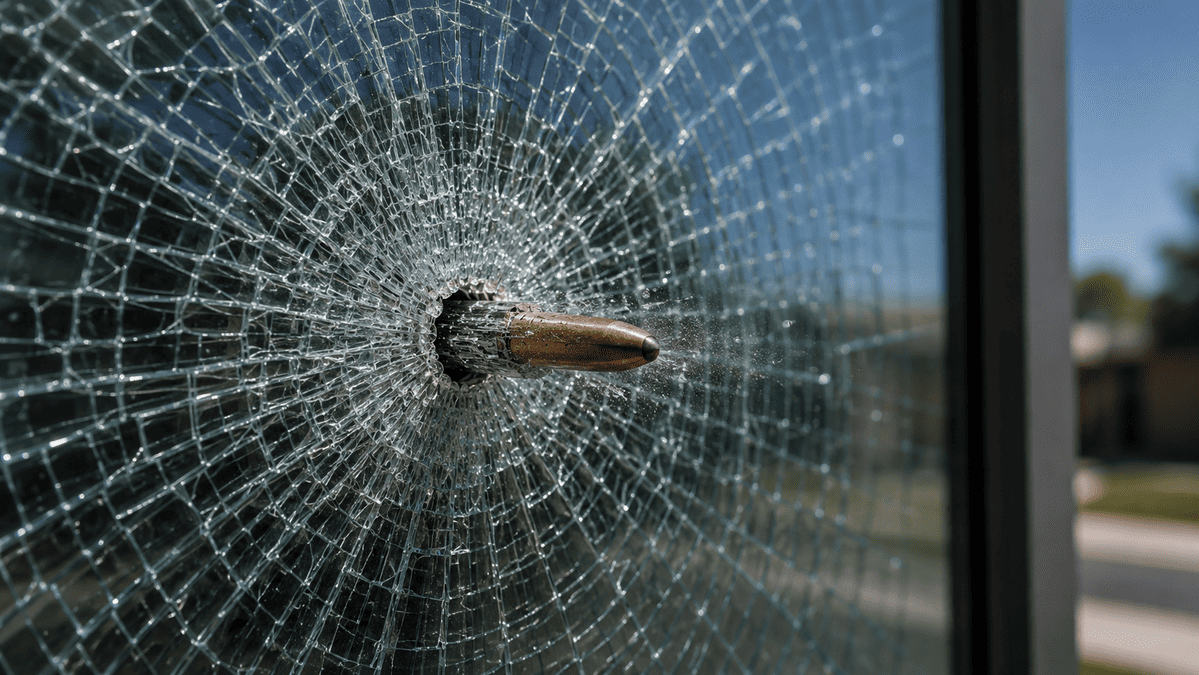
If a product claims ballistic performance, the manufacturer should readily provide UL 752 documentation showing the exact construction—glass type, thickness, interlayer materials, frame specifications—that achieved certification.
Confusion Between Film and Glazing Performance
A common misconception treats window film as adding ballistic resistance to existing glass. This fundamentally misunderstands how both technologies work.
Protection against bullets comes from the glass substrate and its construction—multiple layers, specific interlayer materials, engineered thickness—not from surface coatings or films. Security window film applied to standard glass does not transform it into bullet resistant glass any more than applying a protective case to a phone makes it bulletproof.
The system approach matters: glass, film, frame, and anchoring work together. Weak frames, poor edge retention, or inadequate glass will cause failure regardless of film quality. Thicker film poorly anchored to a weak frame provides less protection than thinner film properly anchored to a robust frame.
Actual Ballistic Solutions
When genuine bullet resistance is required, several retrofit and replacement options exist:
Polycarbonate shields: Interior-mounted transparent shields can be installed over existing windows without full glazing replacement. These achieve UL 752 ratings when properly specified and installed.
Laminated glass replacement: Existing glass can be replaced with certified ballistic glazing. This typically requires frame modifications to accommodate increased weight and thickness.
Glass clad polycarbonate systems: Multiple glass layers bonded to polycarbonate cores provide high protection levels while maintaining optical clarity. These represent a cost effective solution for Level 3+ requirements where weight is less constrained.
Film as enhancement: For facilities with existing bullet resistant glass, adding security film as a spall shield improves safety and post-impact visibility without compromising ballistic performance. Ballistic window film is often considered a cost-effective alternative to replacing glass with armored glazing when the goal is enhanced security and forced-entry resistance rather than true ballistic protection.
The selection depends on threat assessment, budget, aesthetic requirements, and existing building conditions. Security professionals can help match protection levels to documented threats rather than assuming maximum protection everywhere.
Conclusion and Next Steps
Security window film serves legitimate safety functions—delaying forced entry, containing glass fragments, reducing injury risk—but it cannot stop bullets; for many facilities, regional providers of security window film and window tinting in The Villages and surrounding Florida communities can help match film-based solutions to appropriate threat levels. Jim Richards and other security professionals often emphasize matching protection levels to documented threats. Achieving ballistic protection requires certified glazing systems tested under UL 752 or equivalent standards, constructed from materials engineered to absorb and capture projectiles.
This distinction matters critically for building owners and school administrators making protection decisions. Investing in security films provides value for its intended purpose; relying on film alone when bullet resistance is needed creates dangerous gaps in protection.
Immediate action steps:
- Assess threat levels for your facility—identify whether forced entry delay or actual ballistic protection is required
- Consult qualified security professionals to evaluate existing glazing and recommend appropriate solutions
- Request proper testing documentation (UL 752 listings, current test reports) for any product claiming ballistic performance
- Consider system-level solutions that address frames, anchorage, and detection in addition to glazing
Related topics to explore: Building security assessments, grant funding programs for school safety improvements, comprehensive protection strategies integrating physical barriers with detection and response systems, and innovative smart window films that provide switchable privacy and light control.
Frequently Asked Questions
Can window film stop bullets?
No. No retrofit security window film has achieved UL 752 ballistic certification when applied to standard glass. Film can delay forced entry and contain glass fragments but cannot stop projectiles. Bullet resistance requires specialized ballistic glazing systems.
What thickness of security film do I need?
For basic safety and fragment containment, 7–8 mil film is adequate. Forced entry delay in commercial settings typically requires 8–12 mil with edge anchoring. High-security applications may use 14–25 mil films, though thickness alone doesn’t guarantee performance—proper installation and anchoring matter equally.
How much does ballistic glazing cost compared to security film?
Security film typically costs $10–$30 per square foot installed, depending on thickness and anchoring requirements. Ballistic glazing systems range from $50–$150+ per square foot for Level 1–3 protection, with higher levels costing more. While significantly more expensive, ballistic glazing provides actual bullet resistance that film cannot match.
Is security film worth installing if it doesn’t stop bullets?
Yes, for its intended purposes. Security film effectively delays forced entry (providing critical response time), contains dangerous glass fragments during storms or impacts, blocks UV radiation, and can serve as a spall shield for ballistic glazing. It’s a cost effective solution when bullet resistance isn’t the primary requirement.
What are the UL 752 protection levels?
Level 1: 9mm handgun | Level 2: .357 Magnum | Level 3: .44 Magnum | Levels 4–8: Various rifle calibers including .30-06 and 7.62mm. Each level specifies ammunition type, velocity, and number of shots the glazing must stop without penetration or significant spall.
Can I add security film to existing bulletproof glass?
Yes. Film applied to bullet resistant glass serves as an effective spall shield, containing fragments on the protected side after impact. This enhances safety and maintains optical clarity. The film supplements the ballistic glazing rather than providing the bullet resistance itself.
How long does security film installation take?
Installation typically takes one day for small to medium projects. However, full adhesive cure requires 1–4 weeks depending on film thickness, temperature, and humidity. The film won’t achieve rated performance until fully cured, so security benefits aren’t immediate.
What maintenance does security film require?
Clean with mild soap and water; avoid abrasive cleaners or ammonia-based products that can damage the film surface. Inspect annually for peeling, bubbling, or discoloration. Quality films carry 10-year commercial warranties, though environmental exposure and thermal cycling affect lifespan. Plan for replacement every 10–15 years in commercial applications.