If you have ever been woken at 5 a.m. by summer sun streaming through thin curtains, or struggled with screen glare while working from home, you already understand the problem. Block out window film is one of the most effective solutions for eliminating unwanted light, gaining absolute privacy, and protecting your interiors from sun damage-without expensive renovations or permanent fixtures. This guide walks you through everything you need to know, from choosing the right film to installing it yourself.
Table of Contents
- What is Block Out Window Film?
- Who Needs Block Out Window Film (and Why)?
- Key Benefits of Block Out Window Film
- Types of Block Out Window Film
- Where to Use Block Out Window Film in the Home and Office
- How to Install Block Out Window Film (Step‑by‑Step)
- How Block Out Window Film Compares to Curtains and Blinds
- Safety, Compatibility, and Maintenance
- FAQs About Block Out Window Film
- Why Choose Our Blackout Privacy Film
- Conclusion: Turning Bright Rooms into Comfortable Dark Spaces
If you are looking for fast answers about day sleep, privacy, or light blocking, jump straight to the Benefits and FAQs sections. You can also browse our blackout window film range for product details and checkout options.
What is Block Out Window Film?
Block out window film-also called total blackout window film-is an opaque vinyl or polyester film applied directly to glass to stop almost all incoming light. Unlike a standard privacy window film or decorative window film that diffuses light while partially obscuring the view, block out film achieves a visible light transmission (VLT) of approximately 0%. That means complete light blockage, comparable to painting the glass black but far more practical.
High-quality films can deliver total blackout results on par with solid shutters, yet they are simpler to install and remove. Blackout window film blocks 100% of visible light, making the window fully opaque from both sides. This is a fundamentally different product from frosted or tinted films, which still allow varying amounts of light through.
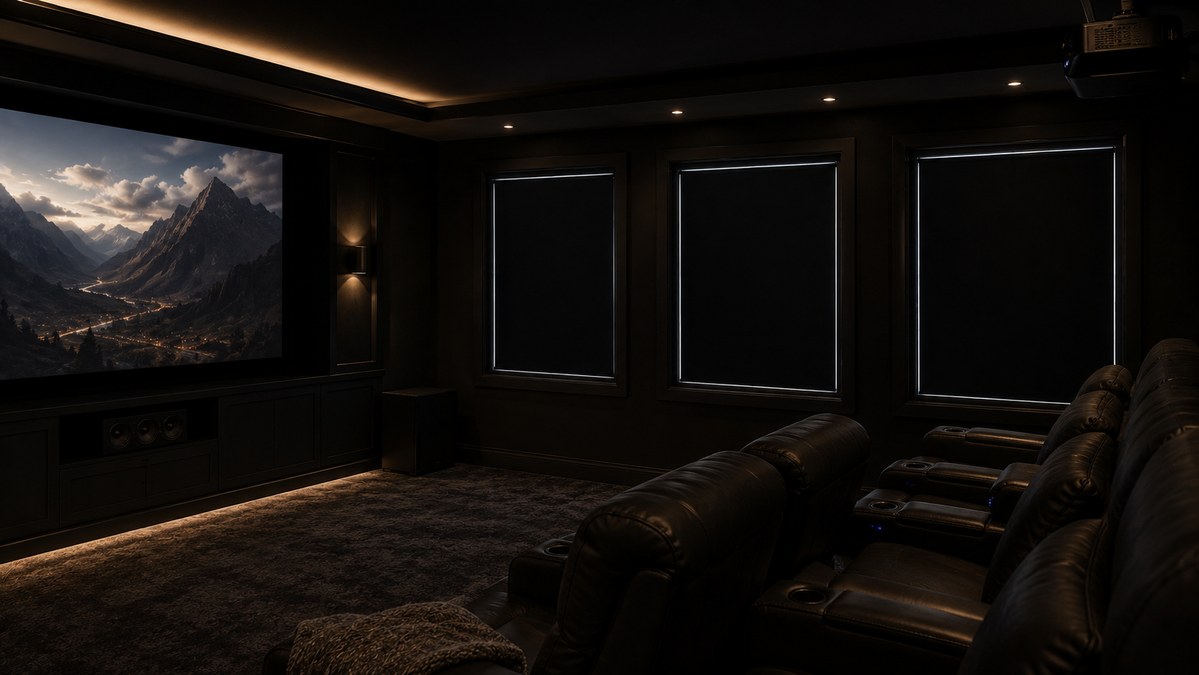
Common indoor uses include bedrooms, nurseries, rental apartments, home offices, media rooms, and photography darkrooms. Blackout films are often used in nurseries or home theaters where even a sliver of stray light can be a problem.
Block out film is available in two main formats. Permanent adhesive versions bond to the glass for long-term use. Removable static cling versions are favored by renters and people with temporary or seasonal day sleep needs. Both types of black window film achieve total blackout and strong sun protection, but they differ in durability and ease of repositioning.
Who Needs Block Out Window Film (and Why)?
Most people start looking into block out window film after hitting a familiar frustration: streetlights leaking through thin curtains, early summer sun flooding a bedroom at dawn, monitor glare forcing awkward desk angles, or neighbors with a clear line of sight into a ground-floor room.
Here are the key user groups who benefit most:
- Night-shift workers or medical staff needing reliable day sleep in a pitch-dark room.
- Parents of babies and toddlers who nap better in a dark, cool room during daytime hours.
- Home cinema and gaming enthusiasts fighting glare and reflections on screens.
- Remote workers needing to control sun on monitors without closing blinds fully.
- Urban residents dealing with bright signage or security lights outside their windows.
- People sensitive to migraines or light conditions, seeking strong light blocking during flare-ups.
Block out window film is often quicker and cheaper to implement than replacing blinds or installing shutters, especially in rentals where you cannot modify the property. Keep in mind that blocking all light with blackout films means relying on artificial lighting during the day, so it works best in rooms where darkness is the priority rather than natural daylight.
Static cling options can be removed cleanly when moving out or changing décor—the film leaves no glue or residue on the glass-making it an easy, temporary solution for renters.
Key Benefits of Block Out Window Film
This section covers the main reasons customers choose block out film over other window treatments. Each benefit matters differently depending on your room, climate, and lifestyle.
1. Total blackout and light blocking
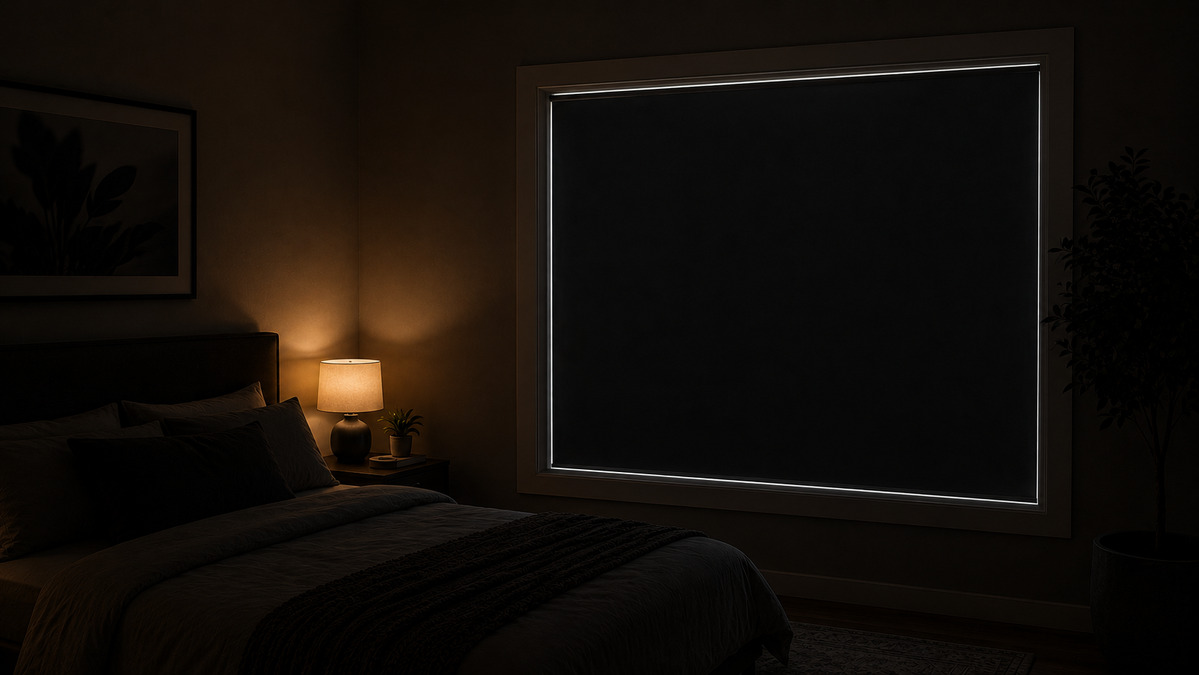
Quality total blackout window film can eliminate up to 100% of visible light when correctly installed on smooth glass. Even around edges, proper trimming and sealing dramatically reduce light leaks compared with standard curtains, which almost always leave gaps at the top, sides, or bottom.
Practical examples: an east-facing bedroom flooded with morning sun becomes a dark retreat at noon; a media room with a projector no longer suffers from washout. Blackout window film provides a comfortable sleep temperature by blocking light that would otherwise heat the room and disrupt rest.
2. Daytime and nighttime privacy
One-way mirrored or reflective films offer daytime privacy while preserving an outside view, but they lose effectiveness at night when interior lights are on. Blackout privacy film is different. It delivers complete two-way privacy-no one can see in or out, day or night. The film eliminates transparency in both directions, making it ideal for spaces requiring absolute privacy.
Typical uses include ground-floor bathrooms, storage rooms, garage windows, side windows facing neighbors, and any room where visibility from outside is a concern.
3. Sun protection and temperature control
Many blackout films also block 100% of UV rays, protecting furniture, flooring, and artwork from fading caused by prolonged UV exposure. In sunnier rooms, pairing blackout products with solar window film can further reduce indoor temperatures by blocking infrared rays, which carry a large portion of solar heat energy.
Well-specified adhesive films can reject 50–80% of solar heat gain on sun-facing windows. Rooms feel noticeably cooler in summer because less solar heat enters, and the extra film layer can marginally reduce heat loss in winter.
4. Energy savings and comfort
Blackout window film can lead to energy savings during summer by reducing the load on air conditioning, particularly in sunny bedrooms, attic spaces, or west-facing offices. Blackout window film can reduce indoor temperatures meaningfully in rooms that take direct afternoon sun.
By cutting glare and heat on south- and west-facing windows, occupants are more comfortable at desks and beds located near glass-without needing to crank up the AC or reposition furniture.
5. Flexible, renter-friendly installation
Static cling, non-adhesive films install with clean water mixed with a drop of soap. They peel off without residue, and the film is reusable-you can remove it after a heatwave or move it to another window when rearranging rooms.
Beyond light and privacy control, blackout films also enhance security by holding glass together if shattered, adding a layer of protection against break-ins or accidental impact similar to dedicated security window films.
Types of Block Out Window Film
Not all blackout products are the same. Understanding the main categories helps you avoid buying the wrong kind for your situation. Choosing the right film depends on room function and the specific window environment.
Black vs white vs dual-color films
Black films deliver the strongest room-darkening effect and a sleek exterior look. However, black window film absorbs more solar heat, which matters if your windows face direct sun.
White blackout films have a softer exterior appearance and reflect more infrared energy. They are better suited for double-glazed or heat-sensitive glass where excessive heat absorption is a concern, while adaptive transitional window film offers an option that automatically darkens in stronger sun.
Dual-color films (for example, black on the inside and white or reflective on the outside) balance aesthetics, heat control, and total blackout performance. These are a practical middle ground for most homes, while switchable smart window films let you toggle between clear and opaque modes where on‑demand privacy is more important than full blackout.
Static cling vs adhesive films
Static cling films are non-adhesive and reusable, making them ideal for renters, seasonal day sleep needs, or temporary blackout. They stick to glass using micro-suction contact and clean water. Typical lifespan is 2–5 years indoors under moderate conditions, or 1–2 years in direct sun.
Permanent adhesive blackout privacy film is a longer-term solution for offices, clinics, and storage rooms. Adhesive-backed films are more durable against peeling and typically last 7–15 years. They are harder to reposition but deliver superior longevity and can include advanced coatings for UV and heat rejection.
Full blackout vs dimming / translucent films
Total blackout window film is fully opaque, blocking both view and light. Frosted films provide translucent privacy while allowing some daylight to pass through-useful for bathrooms but not suitable for full day sleep blackout. If you need complete darkness, only a true blackout product will deliver the results you expect.
Decorative blackout and patterned films
Some films combine decorative window film designs-solid colors, geometric shapes, branded patterns-with complete privacy. These work well for storefronts, studios, or home gyms where you want a clean, styled look plus blackout, and can be paired with dedicated privacy window film options in adjacent areas where some daylight is still desirable. You can create a custom shape or pattern while still blocking all light.
For nurseries and bedrooms with double glazing, consider a lighter-colored blackout film to reduce thermal stress on the glass.
Where to Use Block Out Window Film in the Home and Office
Different rooms have different needs for light, privacy, and temperature control. Blackout films are best for specific areas rather than the entire home, so targeting the right windows maximizes your return.
Residential applications
- Bedrooms facing east or west where sunrise or afternoon sun disrupts sleep.
- Nurseries and kids’ rooms needing reliable nap-time darkness all year round.
- Living rooms or home cinemas where TV or projector glare is a problem.
- Home offices with screens near bright windows, especially in summer.
- Bathrooms, kitchen windows, or cloakrooms where blackout privacy film doubles as décor.
Commercial and professional applications
- Medical clinics and therapy rooms requiring privacy and a calming, dim environment.
- Photography studios and editing suites needing strict light control.
- Conference rooms with projectors, where blackout window film installed on glass assists presentations.
- Storefront back rooms or stock areas facing public areas.
Film can also be applied to doors with glass inserts, skylights (where accessible), and sidelight panels beside front doors for extra privacy. It suits any space where you need to find a quick, clean way to eliminate visibility from outside, or to integrate broader architectural window tinting for energy control and aesthetics throughout the building.
How to Install Block Out Window Film (Step‑by‑Step)
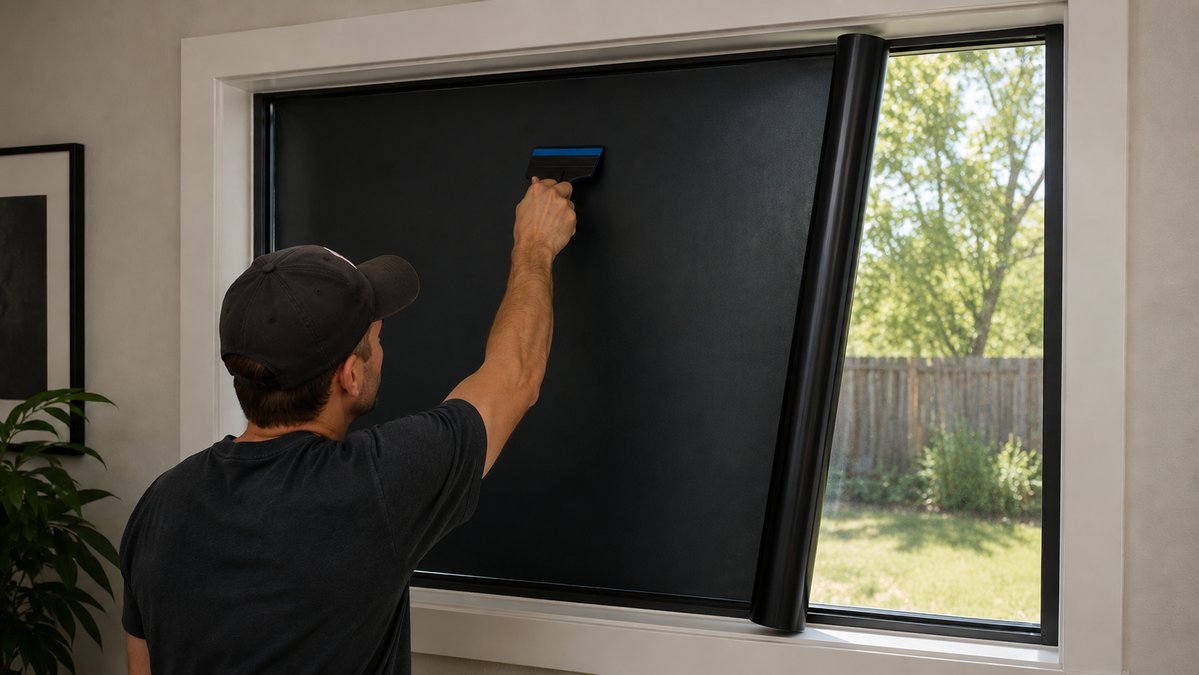
Most static cling films can be DIY-installed with simple tools in under an hour for a standard bedroom window. No professional installer is required, and you do not need any special glue.
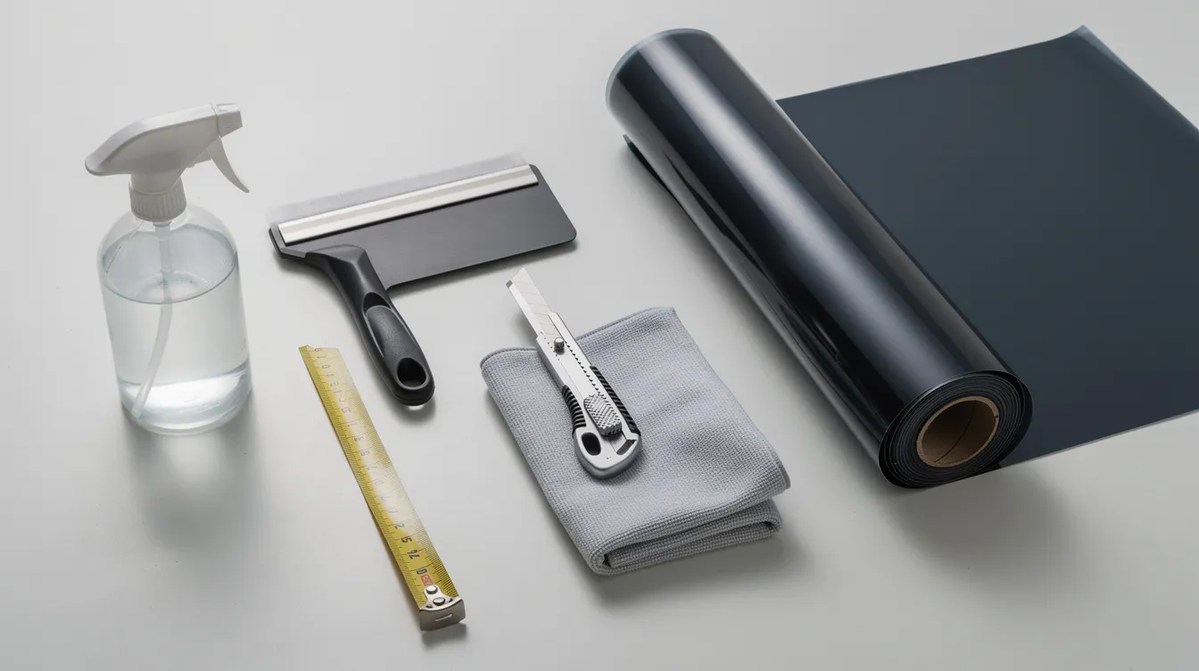
Tools you will need
- Spray bottle filled with clean water and a few drops of dish soap
- Squeegee or plastic card
- Utility knife or craft knife
- Measuring tape
- Microfiber cloth
- Ruler or straight edge
Installation steps
- Measure the glass area precisely, excluding frames and seals. Note the size carefully.
- Cut the film slightly larger than the window-about 1–2 cm extra on each side-for better fit and easier trimming.
- Clean windows thoroughly before applying window film. Remove all dust, grease, and old adhesive. Dry the glass, then mist it evenly with your soapy water solution.
- Peel the backing (for static cling) or expose the adhesive side. Keep the film wet to prevent premature sticking.
- Apply the film to the wet glass, starting from the top and smoothing downward. Apply the film gradually to avoid air bubbles.
- Use a plastic card or squeegee to smooth out the film, working from the center toward the edges to push out trapped air and excess water.
- Use a utility knife for precise trimming of the film against the frame. Trim carefully for a tight, light-blocking fit-this step makes the difference between a good result and slivers of light at the edges.
- Wipe down the surface with a dry microfiber cloth. Allow 24–48 hours for full adhesion and drying before touching the film.
Important notes before you start
Avoid installation on cracked or chipped glass, as existing flaws can become focal points for thermal stress. If you have double-glazed windows, read the manufacturer directions to confirm the film is compatible. For large sun-exposed panes, lighter-colored or reflective blackout film is a safer deal than pure black.
Troubleshooting
- Bubbles: Small bubbles often disappear as the film dries. Larger ones can be worked toward the edge with a plastic card.
- Edge lifting: Usually caused by dust under the edge or insufficient moisture during application. Peel back the lifted section, re-wet, and press down.
- Streaks: Wipe with a damp microfiber cloth. Avoid ammonia-based cleaners.
- Repositioning static cling: Simply peel off, re-wet the glass, and reapply. The film is reusable.
Removal is straightforward for both types. Lift a corner, slowly peel away, and clean remaining moisture or adhesive residue from the glass.
How Block Out Window Film Compares to Curtains and Blinds
If you are debating between film and traditional blackout curtains, roller shades, or shutters, here is a quick comparison:
| Factor | Block out window film | Blackout curtains / blinds | Shutters |
|---|---|---|---|
| Light blocking | Flush to glass; minimal edge gaps | Gaps around rails and sides are common | Excellent, but expensive |
| Space | Zero room intrusion; ideal for small rooms | Require rails, stack space | Structural; permanent |
| Cost | Lower, especially for multiple windows | Mid-range to high for custom sizes | Highest |
| Flexibility | Static cling is removable and reusable | Semi-permanent décor item | Fixed installation |
| Acoustic benefit | Minimal | Good with thick fabric | Good |
| Best results often come from combining approaches: total blackout film on the glass for complete light blockage, plus light decorative curtains for style and insulation. Curtains add acoustic damping and visual warmth that film alone cannot provide. |
Safety, Compatibility, and Maintenance
Compatibility matters most for large double-glazed or low-E windows exposed to strong sun. A quick assessment before you install prevents costly mistakes.
Compatibility guidance
- Always check your glass type (tempered, laminated, double-glazed, low-E) before applying dark blackout film. Standard black window film can cause thermal shock on double-pane or triple-pane windows because the dark surface absorbs solar heat and raises internal glass temperatures unevenly.
- Applying heat-absorbing films to certain glass types can crack the glass. Industry data suggests that fewer than 1 in 1,000 installations result in thermal-stress breakage under typical UK conditions, but the risk is real for large annealed panes in direct sun.
- Lighter or white blackout options reduce heat absorption and are safer for double glazing.
- Follow manufacturer charts for maximum recommended solar absorption on your specific glass construction.
Maintenance
- Clean film with a soft cloth and mild, ammonia-free cleaners.
- Avoid abrasive pads or blades that could scratch the film surface.
- Inspect edges annually for lifting or damage, especially in high-humidity rooms like a kitchen or bathroom.
Modern films are low-odor once installed. Ensure good ventilation during application to deal with any temporary off-gassing. Quality blackout privacy film is designed for several years of reliable performance when installed on suitable glass and maintained correctly. You can expect static cling films to last 2–5 years and adhesive films to last 7–15 years depending on exposure.
FAQs About Block Out Window Film
Does block out window film really create total blackout? Yes. With correct installation on flat, smooth glass, it blocks virtually all visible light. Tiny edge gaps may let in slivers if not trimmed accurately, but proper cutting eliminates most leaks. Read the product directions for trimming tips.
Can I still open my windows once the film is installed? On standard casement or sliding windows, the film moves with the glass. Opening and closing is usually unaffected. Check that film thickness does not interfere with weatherstripping on tightly fitted frames.
Is static cling film strong enough for long-term use? Good static cling blackout film can last several years indoors if edges are protected and the surface is cleaned gently. Static cling window films are easy to remove and reuse, making them great for seasonal or temporary needs.
Will blackout film damage my windows or void warranties? It depends on the glass type and the film’s solar absorption. Some window warranties are voided if incompatible films are applied. Always check your glass and frame warranty terms and use films certified as safe for your specific window. Reviews from other customers with similar windows can help guide your decision.
Can I use blackout film on car windows or sunroofs? Automotive use is governed by local tint laws that regulate how dark your windows can be. Specialized automotive films are usually a better fit than residential products. Some items are designed specifically for car sun protection and total blackout sunroof insulation-check local regulations before purchase.
What if I only want blackout at certain times of year? Removable static cling film is the answer. It can be removed, stored flat in its original rolls, and reapplied during bright summer months. No adhesive means it leaves no residue, and delivery of replacement film is simple if a piece wears out.
Does the film work on textured or patterned glass? Static cling requires a smooth surface to stick properly. Textured glass reduces contact area and weakens the bond. Adhesive films work better on lightly textured surfaces, though results vary by quantity and depth of texture.
Why Choose Our Blackout Privacy Film
Our blackout privacy film is built around a simple idea: reliable total blackout with an easy, renter-friendly experience. Here is what sets it apart:
- Consistent blackout performance with high UV rejection and durable, scratch-resistant coatings.
- User-friendly installation features including grid-lined backing, clear printed directions, and online installation video guides to help you get it right the first time.
- Static cling options that are easy to remove, reusable, and leave no residue-ideal for renters who want results without risk to their deposit.
- Responsive customer support for product selection, glass compatibility questions, and after-sales help. Our customers can reach us with questions at any time.
Our product range covers residential bedrooms, nurseries, home cinemas, and offices, with sizes and colors suited to different interior styles. Whether you need a single item for a nursery or film for every window in a home office, you will find the right fit. Click through to our blackout window film page for specific sizes, colors, and technical details.
Conclusion: Turning Bright Rooms into Comfortable Dark Spaces
Block out window film offers a fast, affordable way to achieve total blackout, reliable day sleep, and year-round privacy-without major renovations or permanent changes. The main benefits are simple: complete light blocking, absolute privacy, effective sun protection, improved comfort, and renter-friendly static cling options that peel off cleanly.
Here is how to start:
- Measure your windows carefully.
- Decide where you need the strongest blackout or privacy.
- Visit our blackout window film product page to choose the most suitable size and finish.
Even problem windows facing bright streets or early morning sun can be transformed into calm, dark, comfortable spaces with the right total blackout window film. The return on a small investment in film is better sleep, lower energy bills, and a room that works the way you need it to.