- The Silent Destroyer: How UV Rays Cause Irreversible Fading
- Why Traditional Solutions Like Curtains and Blinds Fall Short in Blocking UV Rays
- The Science of Advanced Protection: How Window Film Stops Fading in Its Tracks
- Choosing the Right Anti-Fade Window Film for Your Property
- Beyond UV Protection: The Unexpected Benefits of Window Film
- Protecting Your Assets: The Clear ROI of Professional Window Film Installation
The Silent Destroyer: How UV Rays Cause Irreversible Fading
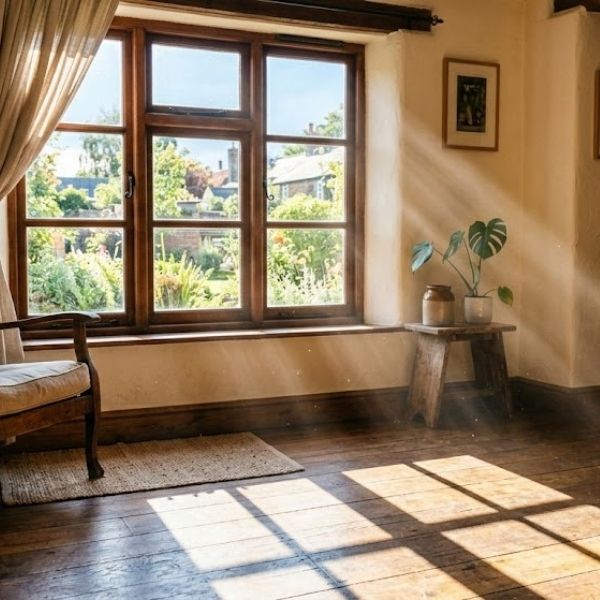
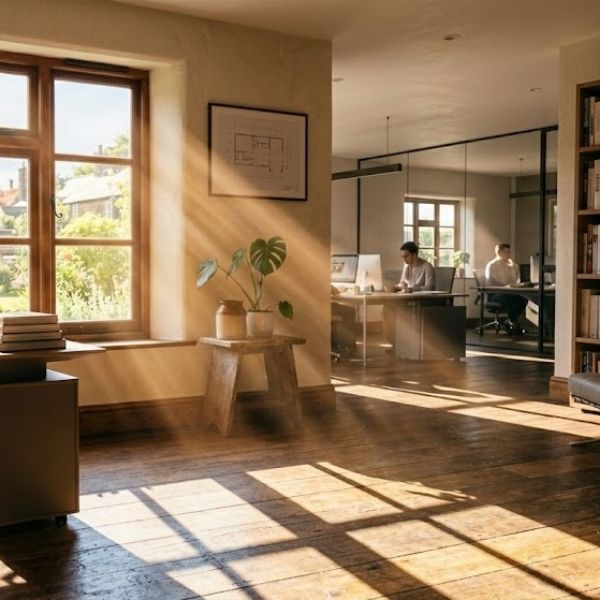
While we enjoy the warmth and brightness of the sun, a portion of its light spectrum is silently and relentlessly attacking our interiors. Ultraviolet (UV) radiation is the primary driver of fading, working invisibly to degrade everything from expensive hardwood floors to the vibrant fabrics on your furniture. Understanding this process is the first step toward effectively stopping it. Then it comes down to finding the best ways to block UV rays.
What Are UV Rays and Why Are They So Damaging?
Sunlight is composed of a spectrum of rays, including the visible light we see, the infrared rays we feel as heat, and the ultraviolet rays we can neither see nor feel. UV rays carry more energy than visible light rays. This high energy is what makes them so destructive.
Think of it like a constant, microscopic bombardment. When these high-energy photons strike a surface, they transfer their energy to the molecules within the material. This energy is enough to break the chemical bonds that give objects their color and structural integrity. Standard window glass does very little to stop this assault, allowing the most damaging UV rays to pass through and begin their destructive work indoors.
The Science of Fading: How UVA and UVB Break Down Materials
The fading process is a chemical reaction triggered by UV light. The two types of UV rays responsible for this damage are UVA and UVB.
- UVA Rays: These are the primary cause of fading. Their longer wavelength allows them to penetrate deep into materials and, crucially, pass easily through untreated glass. UVA rays attack the chromophores, which are the parts of a molecule responsible for its color. By breaking these bonds, UVA light systematically bleaches dyes and pigments.
- UVB Rays: While mostly absorbed by the ozone layer, the UVB rays that reach the Earth are extremely powerful. They are a significant contributor to fading and can also cause materials like wood and plastic to become brittle and weak over time.
This photochemical degradation is irreversible. Once the chemical bonds are broken and the color is lost, it cannot be restored. The process affects both natural materials like wood, cotton, and leather, as well as synthetic materials found in carpets, upholstery, and artwork.
Identifying At-Risk Assets: From Hardwood Floors to Retail Merchandise
Virtually every object exposed to sunlight is at risk, but some assets are particularly vulnerable and costly to replace. Protecting them is not just about aesthetics; it’s about preserving significant financial investments.
For homeowners, the most common victims include:
- Hardwood floors and custom cabinetry, which can suffer from permanent discoloration.
- Upholstered furniture, area rugs, and draperies, where vibrant colors quickly become dull.
- Photographs, fine art, and important documents, whose pigments can be irrevocably damaged.
For business owners, the financial stakes are even higher. Faded assets directly impact profitability and brand perception. Key commercial assets at risk are:
- Retail Merchandise: Clothing, furniture, and packaged goods displayed in a storefront can become unsellable, leading to direct inventory loss.
- Office Furnishings: The chairs, desks, and carpets in a modern office represent a major capital expense. Fading makes a workspace look worn and unprofessional.
- Restaurant and Hotel Decor: The ambiance created by carefully chosen furniture, art, and flooring can be compromised, requiring premature and expensive renovations.
Why Fading Is More Than Just a Cosmetic Issue
It’s easy to dismiss fading as a simple cosmetic flaw, but its consequences run much deeper. For a business, a sun-bleached interior is a direct reflection of the brand. A storefront with faded products appears neglected and cheap, deterring customers. An office with discolored furniture can negatively impact employee morale and the impression made on visiting clients.
Ultimately, fading is a direct hit to your bottom line. It represents the depreciation of valuable assets. Every dollar spent replacing a faded rug, reupholstering a sofa, or writing off unsellable inventory is a preventable loss. This makes the proactive protection of your interiors a sound financial strategy, yielding a clear return on investment by extending the life and value of your property and its contents.
Why Traditional Solutions Like Curtains and Blinds Fall Short in Blocking UV Rays
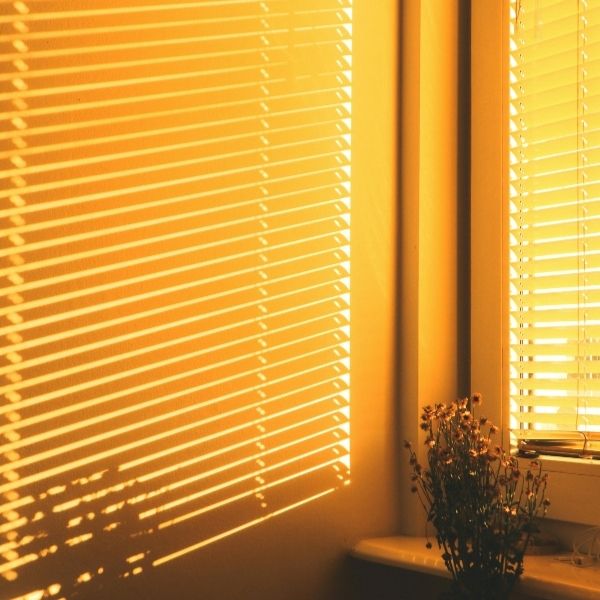
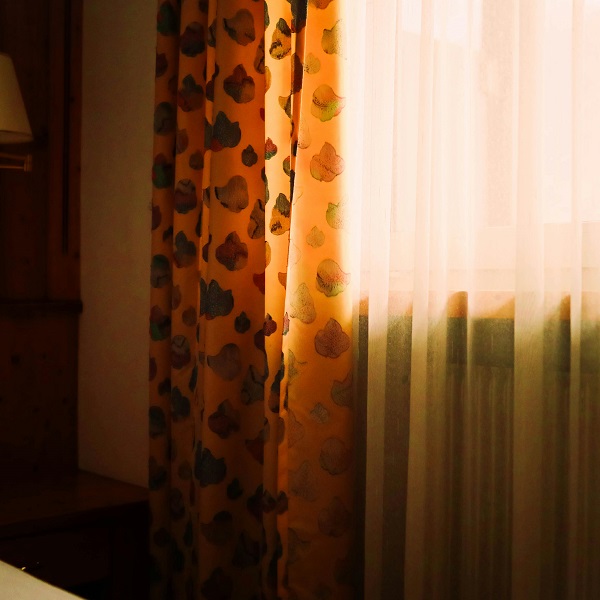
For years, property owners have battled sun-fading with the only tools they thought were available: window coverings. While these solutions are common, they represent a significant compromise, forcing you to choose between protecting your assets and enjoying your space. When examined closely, their effectiveness in preventing the financial loss and depreciation caused by sun damage is minimal at best.
The “All or Nothing” Problem with Curtains and Drapes
Curtains and drapes present a stark, binary choice. To stop UV rays, they must be fully closed, plunging your rooms into darkness and blocking the natural light and views you paid for. An open curtain offers zero protection, leaving your floors, furniture, and merchandise completely exposed.
For a business, this creates an unwelcoming environment that can deter customers. For a homeowner, it means living in a space that feels more like a cave than a sunlit sanctuary. This “all or nothing” approach is simply not a practical or desirable long-term solution.
The Ineffectiveness of Blinds Against Pervasive UV Radiation
Blinds may seem like a more flexible option, but they provide a false sense of security. Ultraviolet radiation does not travel only in a straight line. It bounces and reflects, easily finding its way through the gaps between slats, even when the blinds are tilted or fully closed.
Over time, this consistent, low-level exposure is more than enough to cause noticeable fading. You may see distinct lines of damage on your hardwood floors or uneven discoloration on a sofa, proving that blinds offer only partial and ultimately inadequate protection against persistent UV rays.
Do Factory-Tinted or Low-E Windows Offer Enough Protection?
Many modern buildings and homes feature windows with a factory tint or a Low-E (low-emissivity) coating. While these are valuable for improving energy efficiency by managing heat, they are not a complete solution for fading. Their primary purpose is thermal control, not comprehensive UV blocking.
- Standard Low-E coatings can still allow a significant percentage of UV radiation to pass through, often only blocking 70-80% of harmful rays.
- Factory tints can vary widely in their UV protection levels and often aren’t enough to prevent long-term damage to high-value assets like retail inventory or fine art.
These windows reduce, but do not eliminate, the threat. Relying on them alone leaves your valuables vulnerable.
The Unseen Trade-Off: Sacrificing Views and Light for Partial Protection
Every traditional solution forces an unfortunate trade-off. You can close your blinds and curtains, sacrificing the light and ambiance that make your space valuable. Or, you can leave them open, accepting the costly and irreversible damage to your furniture, floors, artwork, and merchandise as an unavoidable consequence.
This compromise is no longer necessary. You do not have to choose between protecting your interior and enjoying your windows.
The Science of Advanced Protection: How Window Film Stops Fading in Its Tracks
Unlike traditional methods that simply block light, modern window film is a scientifically engineered product designed to target and eliminate the specific cause of fading: ultraviolet radiation. It works on a microscopic level to provide a virtually invisible barrier that preserves your interior without compromising your view or natural light.
A Deeper Look at How Modern Window Film Blocks 99.9% of UV Rays
High-quality window films are manufactured with powerful UV-blocking agents integrated directly into their durable polyester layers. Think of it as a transparent, industrial-strength sunscreen for your glass. These agents are engineered to be hyper-effective at stopping the specific wavelengths of ultraviolet light (both UVA and UVB) that are the primary driver of fading.
By blocking over 99%, and in many cases up to 99.9%, of these damaging rays, the film acts as a complete shield. It stops the fading process before it can even begin, preserving the color, integrity, and value of everything inside your property.
The Evolution of Window Film: From Dark Tints to Invisible Shields
Many people associate window film with the dark, bubbly, or peeling purple tint seen on cars decades ago. Today’s architectural films are a world apart, benefiting from massive leaps in technology and materials science.
Modern window films are optically clear, distortion-free, and manufactured to bond directly to the glass with a powerful adhesive, ensuring they will never bubble or peel. They are designed to be an invisible upgrade to your existing windows, providing powerful protection that you will never see, but whose benefits you will enjoy for years.
Spectrally Selective Films: The Technology that Preserves Your View
The most advanced window films use a technology called spectral selectivity. These intelligent films are engineered to differentiate between different wavelengths of the sun’s energy. They are precisely constructed to target and block the undesirable parts of the solar spectrum, like UV rays and infrared heat, while allowing the maximum amount of desirable visible light to pass through.
This means you no longer have to make your rooms darker to protect them. Spectrally selective films allow you to keep your bright, naturally lit spaces and stunning views, all while providing the highest level of protection for your valuable assets.
Absorption vs. Rejection: The Mechanisms Behind UV Protection
Professional window films stop UV radiation through two primary, highly effective methods: absorption and rejection.
- Absorption: Many films use specialized UV-absorbing particles embedded within their layers. These particles capture UV radiation as it passes through the film and convert it into a minuscule amount of heat, which is then safely dissipated outward.
- Rejection: Other types of films, particularly ceramic and metalized versions, work by reflecting UV radiation. Microscopic ceramic particles or ultra-thin layers of metal act like a mirror, bouncing the harmful rays away from the glass before they can enter your space.
Both mechanisms are exceptionally effective at achieving over 99% UV blockage. An expert can help determine which type of film is best suited for your specific windows, climate, and goals.
Choosing the Right Anti-Fade Window Film for Your Property
Once you understand that blocking UV radiation is the key to preventing sun damage, the next step is selecting the right tool for the job. Not all window films are created equal, and making an informed choice is critical to protecting your investment, whether it’s the furniture in your home or the merchandise in your storefront. The good news is that modern film technology offers solutions for every need, without demanding compromises on light or aesthetics.
It’s Not Just About Being Dark: Understanding Film Clarity and Performance
A common misconception is that a darker window tint provides more UV protection. In reality, the darkness of a film, measured as Visible Light Transmission (VLT), is separate from its ability to block ultraviolet rays. Advanced window films can be virtually imperceptible to the eye, allowing over 70% of natural light to pass through, while still blocking more than 99% of damaging UV rays.
This technological leap is what allows property owners to solve the problem of fading without creating a new one: a dark, gloomy interior. You can preserve the bright, open feel of your space and your connection to the outdoors, all while providing complete protection for your floors, art, and furnishings. The key is to look at the film’s UV rejection specifications, not just its VLT.
Ceramic vs. Traditional Films: What’s the Best Choice for UV Protection?
The material science behind window films has evolved significantly. While older, traditional films played a role, modern ceramic films represent the pinnacle of performance and longevity.
- Traditional Films: These often use dyes to absorb solar energy. Over time, these dyes can break down and discolor, turning purple and losing their effectiveness. Metallic films are more durable but can have a mirror-like appearance and, more critically, can interfere with cell phone and Wi-Fi signals.
- Ceramic Films: These films utilize advanced, non-metallic ceramic nanoparticles to absorb and reflect solar energy. They are optically clear, color-stable, and do not block electronic signals. Most importantly, their UV-blocking properties are integrated at a molecular level, meaning they will not degrade over time. For long-term, high-performance UV protection, ceramic film is the superior choice.
Matching the Film to the Need: Residential vs. Commercial Applications
While the goal of stopping UV damage is universal, the specific application often dictates the ideal film choice.
For residential properties, the primary focus is on protecting valuable assets like hardwood floors, custom furniture, and irreplaceable artwork. Homeowners typically want maximum UV protection with minimal change to the appearance of their windows, preserving natural light and views. A high-clarity ceramic film is often the perfect solution.
For commercial spaces, the calculation includes a direct return on investment. A retail store owner must protect window display merchandise from becoming faded and unsellable. An office manager needs to prevent sun damage to expensive carpets and office furniture, extending their usable life. In these cases, a film’s performance is a direct contribution to the bottom line, making the upfront cost an easily justified business expense.
Key Questions to Ask Your Window Film Provider
To ensure you are getting a high-quality product that meets your needs, it’s important to ask the right questions. A reputable provider will welcome your diligence and provide clear, data-backed answers.
- What percentage of UVA and UVB rays does the film block? (The answer should be over 99%.)
- What is the film’s Visible Light Transmission (VLT)? Can you show me how it will look on my glass?
- Is this a ceramic, dyed, or metallic film?
- What is the warranty for the film? Does it cover discoloration, and does the warranty also cover the labor for installation?
- Can you provide performance data sheets for the specific films you recommend?
Beyond UV Protection: The Unexpected Benefits of Window Film
While preventing fading is often the primary reason property owners explore window film, the benefits extend far beyond UV protection. A professional installation delivers a suite of enhancements that improve comfort, safety, and energy efficiency, providing even greater value for your investment.
Enhancing Comfort and Reducing Energy Bills Through Heat Rejection
The sun’s energy is composed of more than just UV and visible light; it also includes infrared (IR) radiation, which is what you feel as heat. High-performance window films, especially ceramic-based ones, are engineered to reject a significant amount of this infrared heat.
This means your rooms stay cooler and more comfortable, even on the sunniest days. Your air conditioning system doesn’t have to work as hard, leading to a noticeable reduction in cooling costs. This energy efficiency is a powerful benefit for both homeowners and businesses, often allowing the film to pay for itself over time.
Cutting Annoying Glare Without Closing the Blinds
Sun glare on computer monitors, television screens, and conference room displays is a persistent source of frustration and eye strain. The typical solution is to close the blinds or draw the curtains, sacrificing natural light and the view. Window film offers a better way. It can dramatically reduce the intensity of glare without plunging the room into darkness, allowing for a comfortable and productive environment that remains connected to the outdoors.
Adding a Layer of Safety and Security to Your Glass
Window film adds a strong, protective layer to your glass. Its powerful adhesive bonds to the window, holding the glass shards together in the event of a break. This provides a crucial layer of safety, reducing the risk of injury from accidental impacts or storm damage. For commercial properties, it also enhances security by making forced entry more difficult and time-consuming for potential intruders, acting as a deterrent to smash-and-grab crime.
Preserving Privacy While Maintaining an Open Feel
Certain types of window films can provide excellent daytime privacy without requiring you to sacrifice your view. From subtle reflective films to elegant decorative or frosted options, you can prevent outsiders from looking into ground-floor rooms or specific office spaces. Unlike closed blinds, these films still allow filtered light to pass through, creating a sense of privacy that feels open and spacious, not closed off.
Protecting Your Assets: The Clear ROI of Professional Window Film Installation
Understanding that UV rays cause fading is the first step. The next is recognizing that this fading is not just an aesthetic annoyance, but a direct financial drain. For any business or homeowner, unprotected windows represent an ongoing, avoidable cost. Fortunately, professional window film offers a powerful solution with a clear and compelling return on investment by transforming your windows into a shield for your most valuable assets.
Calculating the Financial Impact of Faded Assets and Merchandise
For a business owner, sun-damaged inventory is a direct hit to the bottom line. Consider a retail storefront with a beautiful window display. Merchandise placed in that window, from clothing to furniture, can show signs of fading in a matter of weeks. This damage forces you into a difficult position: sell the item at a steep discount or write it off as a complete loss. Over the course of a year, these forced markdowns add up to a significant, and entirely preventable, loss of revenue.
The same principle applies to office environments. Expensive office furniture, custom upholstery, and carpeting are all long-term assets. When they fade unevenly, the professional appearance of your space is compromised, often necessitating premature and costly replacement. Window film effectively stops this cycle of depreciation, allowing your merchandise to remain vibrant and your office interiors to look their best, protecting your profits and your capital investments.
The Long-Term Value of Preventing Sun Damage on Wood Floors and Furnishings
Hardwood floors and high-quality wood furniture represent a major investment in the beauty and value of your property. Unfortunately, they are also highly susceptible to sun damage. The same UV rays that fade fabrics also bleach and dry out wood, leading to discoloration, warping, and cracking over time.
Refinishing a hardwood floor is a disruptive and expensive process, often costing thousands of dollars and requiring you to vacate the space. Replacing damaged furniture can be equally costly, especially if the pieces are custom or part of a set. Professional window film acts as a constant, invisible guardian for these valuable surfaces. By blocking over 99% of harmful UV rays, it preserves the rich color and integrity of your wood for years, delaying or eliminating the need for costly repairs and replacements. It’s a one-time investment that protects the long-term value and character of your interior.
Why Professional Installation is Critical for Performance and Warranty
While it might be tempting to consider a DIY approach, the effectiveness and longevity of window film are directly tied to the quality of its installation. Professional installation is not an upsell; it is a critical component for ensuring the product delivers on its promise.
- Flawless Application: Certified technicians have the tools and experience to apply the film without bubbles, creases, or gaps. This ensures edge-to-edge coverage and a seamless, invisible appearance.
- Correct Film Selection: An expert can assess your specific needs, considering window orientation, glass type, and desired outcome, to recommend the perfect film for maximum UV protection and performance.
- Longevity and Durability: Professionals properly prepare the glass surface, which is crucial for a strong, durable bond. A professionally installed film will not peel, discolor, or fail prematurely.
- Warranty Activation: Most importantly, manufacturer warranties on high-performance films are only valid when installed by a certified professional. This warranty is your assurance that the film will perform as specified for years to come, protecting both your assets and your investment in the film itself.
Putting Theory into Practice: Illustrative Scenarios of Asset Protection
Let’s look at how this works in the real world.
The Downtown Art Gallery
A gallery owner was hesitant to hang valuable, light-sensitive works near their large, street-facing windows, limiting their display options. After installing a spectrally selective window film that blocks 99.9% of UV rays without reducing visible light, they can now confidently use their entire space. The art is protected from fading, and the gallery is filled with brilliant, safe, natural light.
The Modern Corporate Headquarters
A company invested heavily in a new office with floor-to-ceiling windows and high-end wood conference tables. Within a year, they noticed significant fading on the areas of the floor and tables most exposed to the sun. A window film installation halted the damage immediately, preserving the intended aesthetic and preventing the six-figure cost of refinishing the floors and replacing the custom furniture.
The Family with Heirloom Furniture
A family inherited a set of antique wooden furniture. They loved the natural light in their living room but worried about the irreplaceable pieces becoming damaged. By applying a residential UV-blocking film, they protected their heirlooms for the next generation without having to hide them in a dark room or constantly draw the blinds.