
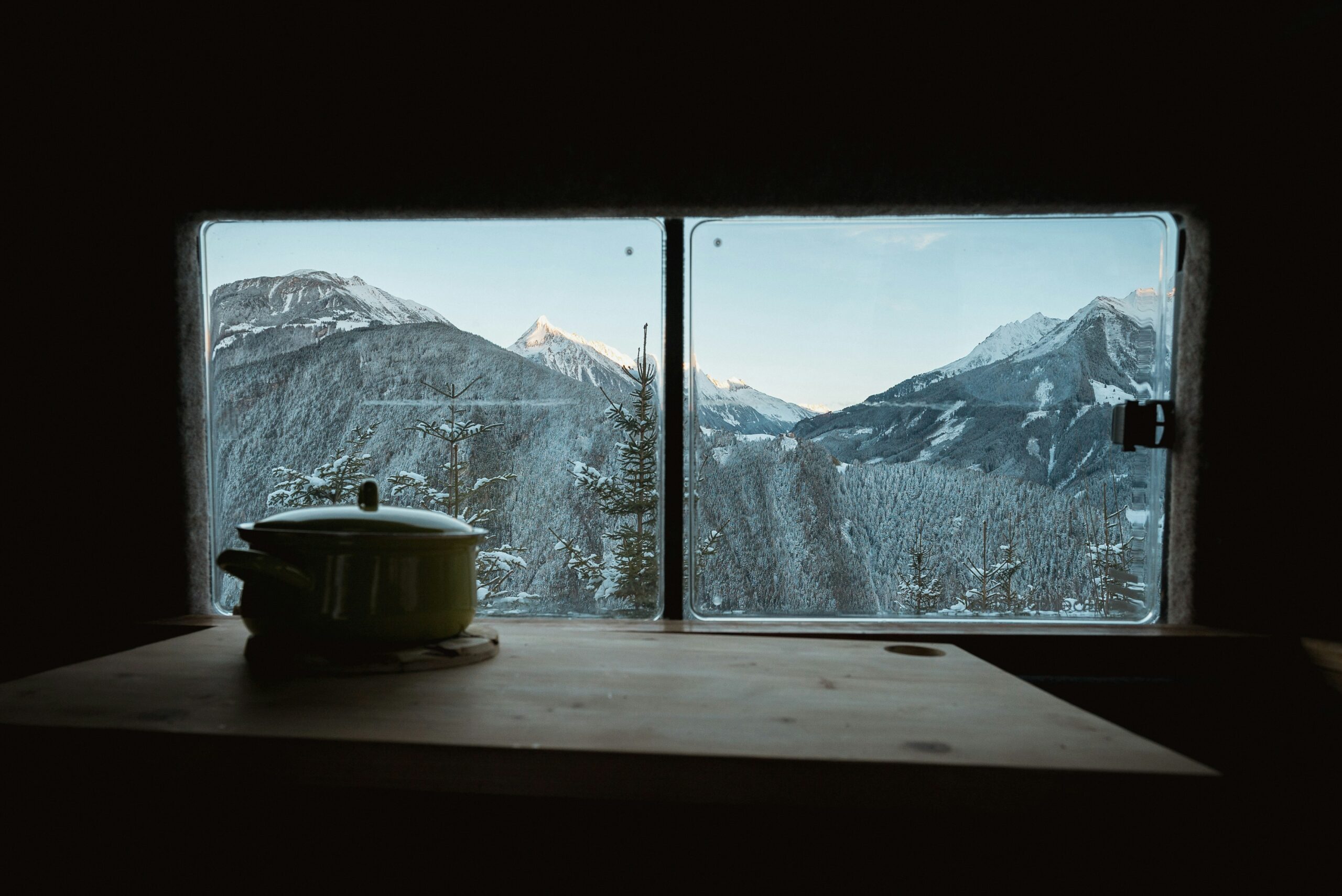
Windows are the weakest part of most home heating setups. Here are the three ways heat leaves through them, and which fix matches which one.
The heating season is underway, and the usual response to a cold room is to turn the thermostat up. That treats the symptom. The U.S. Department of Energy says heat gain and heat loss through windows are responsible for 25 to 30 percent of residential heating and cooling energy use. That number covers both seasons, but it points to where winter heat is going.
Windows resist heat flow far less than walls. DOE’s Zero Energy Ready Home guidance, hosted by the Building America Solution Center, lists single-pane aluminum-framed windows at about R-1 and the best triple-pane windows at about R-6. Insulated walls run R-13 to R-25 or higher. A standard double-pane window is typically around R-2. Window and wall ratings are not measured identically, so treat the comparison as rough. The gap is still large.
Heat leaves a window three ways. Each has a different fix, and mixing them up is how people end up paying for the wrong one.
| Exit | What is happening | What addresses it |
|---|---|---|
| Through the glass and frame | Heat conducts through the pane, the frame, and the spacer between panes | More panes, better frames, or an added layer such as a storm window or insert |
| Radiating out | Warm surfaces in the room give off infrared heat toward the cold glass | Low-emissivity (low-e) coatings on new glass, storm windows, or low-e film |
| Around the frame | Warm air leaks out and cold air leaks in through gaps | Caulk and weatherstripping, or new windows if the unit has failed |
Exit 1: Through the glass and frame
The U-factor on a window label measures the rate of non-solar heat flow through the whole window. Lower is better. Glass conducts heat readily, and the spacer between panes can weaken insulation at the edges of the glass.
Adding panes, gas fill, and better frames is how replacement windows lower the U-factor. Replacement is the most complete fix and the most disruptive. Storm windows and interior inserts are the lighter version of the same idea: another layer, ideally with an air gap.
Exit 2: Radiating out
Warm objects give off infrared heat, and ordinary glass passes it to the cold side readily. Low-emissivity coatings reduce that. A review of window retrofit research published by ACEEE explains that in winter the low-e coating reflects radiant heat back to the inside, which cuts heat loss through the glass.
Pacific Northwest National Laboratory testing found that low-e storm windows lowered the U-factor by 59 to 64 percent over single-pane windows and 43 to 57 percent over double-pane windows. In a 2003 to 2006 Chicago field study of six single-pane weatherization homes, low-e storm windows cut the heating load by 21 percent. Those results are for storm windows, not film. They do show that attacking radiant loss works.
Low-e window film applies a low-e coating to existing glass. E Source, summarizing research from Lawrence Berkeley National Laboratory and the General Services Administration, reports that low-e films cut heat loss by about 40 percent compared with single-pane glass. That figure is for the center of the glass only, so a complete window with its frame will perform differently.
Exit 3: Around the frame
Air leakage is the exit film cannot close. DOE guidance points to caulk on the exterior frame edges and weatherstripping where the sash meets the frame. A failed seal in a double-pane unit is a replacement problem, not a film problem. Check for drafts before spending money on anything else.
Where window film fits, and where it does not
In winter, film does one job well: it can reduce radiant window heat loss, if it is a low-e film. That is a specific product category. Do not assume a tint or a summer solar-control film delivers the 40 percent figure above. Ask for the rated U-factor.
Film does not seal gaps, and it does not repair a failed double-pane seal.
Film can also cost you free heat on south-facing glass. In cold climates, windows within about 30 degrees of true south and unshaded from 9 a.m. to 3 p.m. during the heating season collect useful solar heat. A film that lowers solar heat gain on that glass reduces it. The trade-off is mainly on south-facing windows, so check the numbers before filming them.
Film also blocks UV and reduces glare all year. That is a separate benefit from heat retention.
Questions to ask before buying film for winter
- What is the film’s U-factor, and is that figure for the center of the glass or the whole window?
- What is its solar heat gain coefficient, and what will that do to winter sun on my south-facing windows?
- Has the installer confirmed the film is compatible with my glass type, and does the manufacturer’s warranty cover it on my windows?
- Have the frames been checked for air leaks first?
The bottom line
Window heat loss in winter has three exits. Replacement windows, storm windows, and low-e coatings each address some of them. Low-e film addresses mainly the radiant one, and only when the film is built for it.
The first step is finding out which exit your heat is using. Check for drafts. Find your windows’ U-factor on the label or in the manufacturer’s documents. Then decide whether film, an added layer, or new windows fits.
Get the Numbers Before You Decide
Ask your local CoolVu installer which of their films are rated for winter window heat loss, and ask for the U-factor in writing.
Find your local CoolVu installer: www.coolvu.com