If you’ve ever worn a pair of self-tinting eyeglasses that darken in bright sunlight and clear up indoors, you already understand the basic idea behind transition film for windows. These are adaptive, light-sensitive window films that shift from a mostly clear state to a tinted state automatically when exposed to sunlight. The core benefit is straightforward: automatic glare reduction, solar heat control, and daytime privacy without permanently darkening the glass. When the sun drops or clouds roll in, the film returns to a lighter state and lets daylight pour back in.
CoolVu pioneered stable architectural photochromic window film in the early 2010s, developing what has become one of the world’s first commercially viable adaptive films designed specifically for building glass. By 2026, coolvu transitional window films are widely installed across homes, offices, schools, and government buildings throughout the United States. What was once a niche technology has matured into a reliable, field-proven upgrade for any property where sunlight creates comfort or energy problems.
So why does this matter if you already have window tint on your glass? Conventional static window tint has a fixed level of darkness. Once it’s installed, it looks the same whether it’s a bright July afternoon or a gray December morning. That means you’re either living with glass that’s too dark when you want natural light, or too light when the sun is hammering your west-facing living room at 4 p.m. Transitional window films solve that trade-off. They adapt their tint based on real-time sunlight exposure, which means you get two tint darkness levels in one installation. That’s what makes this a genuinely next-generation approach to glass performance. In this guide, you’ll learn how the technology works, what it costs, where it fits, and how to evaluate whether it’s the right solution for your property.
Table of Contents
- How Transitional Window Films Work (In Plain English)
- Transitional vs. Static Window Film: Key Differences Homeowners Notice
- Performance Benefits: UV Protection, Heat Gain Reduction & Glare Control
- Energy Efficiency and Potential Cost Savings
- Maintenance, Cleaning, and Longevity of Transitional Films
- Cost of Transitional Window Film and Factors That Influence Pricing
- Frequently Asked Questions About Transitional Window Film for Windows
How Transitional Window Films Work (In Plain English)
At the most basic level, transitional window films are a type of photochromic window film. The films contain photochromic particles that react to UV radiation from the sun, triggering a molecular response that darkens the film. When uv rays diminish, the molecules revert to their original state and the film clears. No electricity, no wiring, no app on your phone. It’s purely passive chemistry driven by sunlight.
The film itself is a layered product. From the glass surface outward, you’ll typically find an adhesive layer that bonds the film to the glass, followed by a clear polyester substrate, then the photochromic layer where the adaptive magic happens. On top of that sit nano-ceramic coatings that handle infrared heat rejection and additional UV blocking, and finally a protective topcoat that resists scratching and environmental wear. Each layer serves a distinct purpose, and together they deliver both the adaptive tinting and the thermal performance.
Here’s what happens in real time when direct sunlight hits a window with transitional film installed. UV light near 395 nanometers strikes the photochromic layer. Within about 30 seconds, the molecules in that layer undergo a structural change-they absorb more visible light, and the film visibly darkens. The transition from clear to tinted in sunlight is fast enough that you can watch it happen. Transitional tint changes from light to dark in 60-90 seconds for a full shift, depending on UV intensity and angle. When the sun moves, clouds pass, or evening arrives, those molecules gradually revert. Within a few minutes, the film returns toward its clear state.
Transition films are classified as passive materials that automatically adjust without electrical power. There are no switches, sensors, or smart-home integrations required for the film to function. It simply responds to the environment.
Modern architectural transitional films have a typical visible light transmission (VLT) range of roughly 60–70% in their clear state, dropping to approximately 20–30% when fully darkened. CoolVu offers several models-such as the CV-55/35, CV-35/20, and CV-25/15-each with a different clear-to-dark range so homeowners and commercial property managers can select the level that best fits their space. Transitional films provide dynamic solar control by darkening to block heat and glare when you need it most, then stepping back to let light in when you don’t.
Here’s the basic cycle:
- Clear state: UV exposure is low (cloudy, early morning, evening). Film transmits 60–70% of visible light. Rooms feel open and bright.
- Tinted state: Direct sunlight with strong UV hits the glass. Film darkens to 20–30% VLT within 30–90 seconds. Glare drops, heat is blocked, privacy increases.
- Return to clear: UV diminishes. Film gradually lightens over several minutes. Daylight and views return to full.
Transitional vs. Static Window Film: Key Differences Homeowners Notice
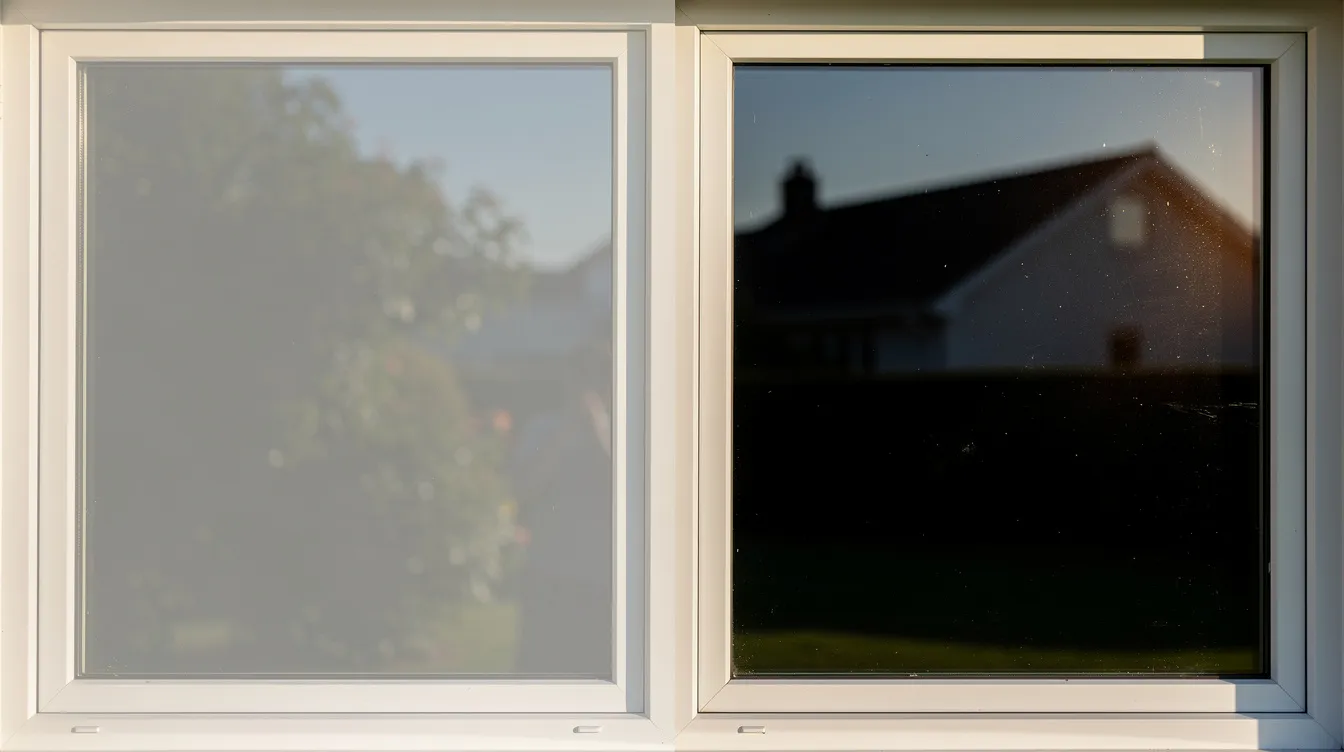
The fundamental difference is simple: static films have a fixed darkness that never changes, while transitional films actively respond to sunlight. Static tint remains the same darkness regardless of conditions-whether it’s a scorching August afternoon or a foggy January morning, the film looks identical. Transitional tint adapts darkness based on sunlight exposure, giving you a film that’s darker when you need protection and lighter when you want light.
That adaptive behavior creates noticeable comfort differences in daily life. With a static tint dark enough to handle summer glare, you’ll often find rooms feeling dim and cave-like on cloudy days, winter mornings, or north-facing windows. Many homeowners with static film end up turning on interior lights during the day to compensate. Unlike standard window films, transition films provide maximum clarity during low light conditions, so you get the daylight you want without sacrificing protection when the sun is intense.
At night, the difference becomes even more apparent. Static dark tints create a “black mirror” effect-you look at your windows from inside and see your own reflection rather than the yard or city outside. From the street, heavily tinted windows can look opaque and uninviting. Transitional window film returns to a much clearer state in the evening when UV levels are minimal, preserving your views out and reducing that mirror-like quality. That said, at night with interior lights on and darkness outside, no film alone provides complete privacy. We’ll address that in the privacy section.
From an aesthetic standpoint, transitional film preserves a neutral, modern glass look from the street. There’s no permanent dark or mirror-like sheen that some traditional types of window tint produce. The film appears as clean, contemporary glass most of the time, with a subtle shift to a darker tone only under bright conditions. For neighborhoods with HOA guidelines or commercial façades where appearance matters, that adaptability is a significant advantage.
When is static film still the better option? Here’s a quick breakdown:
- Best for transitional film: Living rooms, kitchens, home offices, storefronts, glass lobbies, classrooms, conference rooms-anywhere daylight and views are valued most of the time, but glare or heat causes problems during certain hours or seasons.
- Best for static film: Bathrooms needing 24/7 privacy, bedrooms where blackout is the goal, high-security glazing, rooms with minimal sun exposure where adaptive performance doesn’t add much value.
The Science Behind Photochromic Window Film Technology
The term “photochromic” describes molecules that change shape when exposed to specific wavelengths of UV light. In architectural window film, the photochromic layer reacts to UV light near 395 nanometers-a wavelength abundant in natural sunlight. When these molecules absorb UV photons at that wavelength, they undergo a structural transformation called isomerization that increases their absorption of visible light. The result: the film darkens. When UV drops, the molecules revert to their original configuration and the film clears. That’s the entire mechanism in a sentence.
CoolVu’s proprietary photochromic technology is engineered specifically for architectural glass exposure. Building windows face continuous daily cycling-darkening and clearing hundreds of times per year, across seasons, in climates ranging from Phoenix summers to Minneapolis winters. The proprietary manufacturing process behind CoolVu’s films addresses this by creating a stable photochromic molecular structure that handles repeated transitions without rapid degradation, color shift, or uneven tinting across large glass surfaces. Lab and field testing across different U.S. climates has validated that stability over years of real-world use.
Earlier generations of photochromic films-the ones available before the early 2010s-had well-documented problems. They shifted color toward purple or brown after extended uv exposure, cleared too slowly, developed patchy or uneven tinting on large panes, and degraded within a few years of installation. Those failures gave photochromic technology a mixed reputation in architecture. The advances that CoolVu and the broader industry have made since then include improved molecular stability, more consistent coating application across large surfaces, and the addition of spectrally selective layers that handle infrared heat independently from the photochromic response.
That brings up an important point: the photochromic layer handles visible light adaptation, but it’s the nano-ceramic coatings layered into the film that do the heavy lifting on infrared heat rejection and UV blocking. These nano-ceramic particles block infrared energy without making the glass mirror-like or overly reflective. The combination means you get a film that adapts its tint while simultaneously rejecting heat and UV-two functions working in parallel through different mechanisms within the same multi-layer product.
Performance Benefits: UV Protection, Heat Gain Reduction & Glare Control
Transitional window films are installed primarily for measurable performance: UV protection, heat control, glare reduction, and occupant comfort. These aren’t vague marketing promises-they’re quantifiable improvements that show up in spec sheets and, more importantly, in how a room feels on a hot afternoon.
UV protection is where the numbers are most striking. Transitional films block 99.9% of UV rays, including both UVA and UVB wavelengths. Transitional tint provides 99.9% UV protection at all times, regardless of whether the film is in its clear or darkened state. That level of protection dramatically slows fading of hardwood floors, carpets, artwork, leather furniture, and interior finishes. It also reduces cumulative skin exposure for people who spend hours near windows-particularly relevant for home offices, classrooms, and patient-facing healthcare spaces.
Infrared heat rejection is the second major performance benefit. Transitional films can reject over 80% of infrared heat, with advanced ceramic coatings in many CoolVu models achieving that threshold. Transitional films block over 80% of infrared heat gain, which directly reduces solar heat gain through glass and eases the load on cooling systems. Importantly, heat rejection remains high even in lighter film states, meaning you’re getting thermal protection around the clock-not just when the film is at its darkest.
These films reduce glare from sunlight, making rooms more comfortable for everything from watching television to working on a laptop. CoolVu’s darker models (like the CV-25/15) achieve glare reduction in the range of 69–79% when fully darkened, which makes a dramatic difference in south- and west-facing rooms where afternoon sun can turn screens into mirrors and force occupants to close blinds entirely. Transition films can help preserve views while providing sun protection, so you don’t have to choose between seeing outside and being comfortable inside.
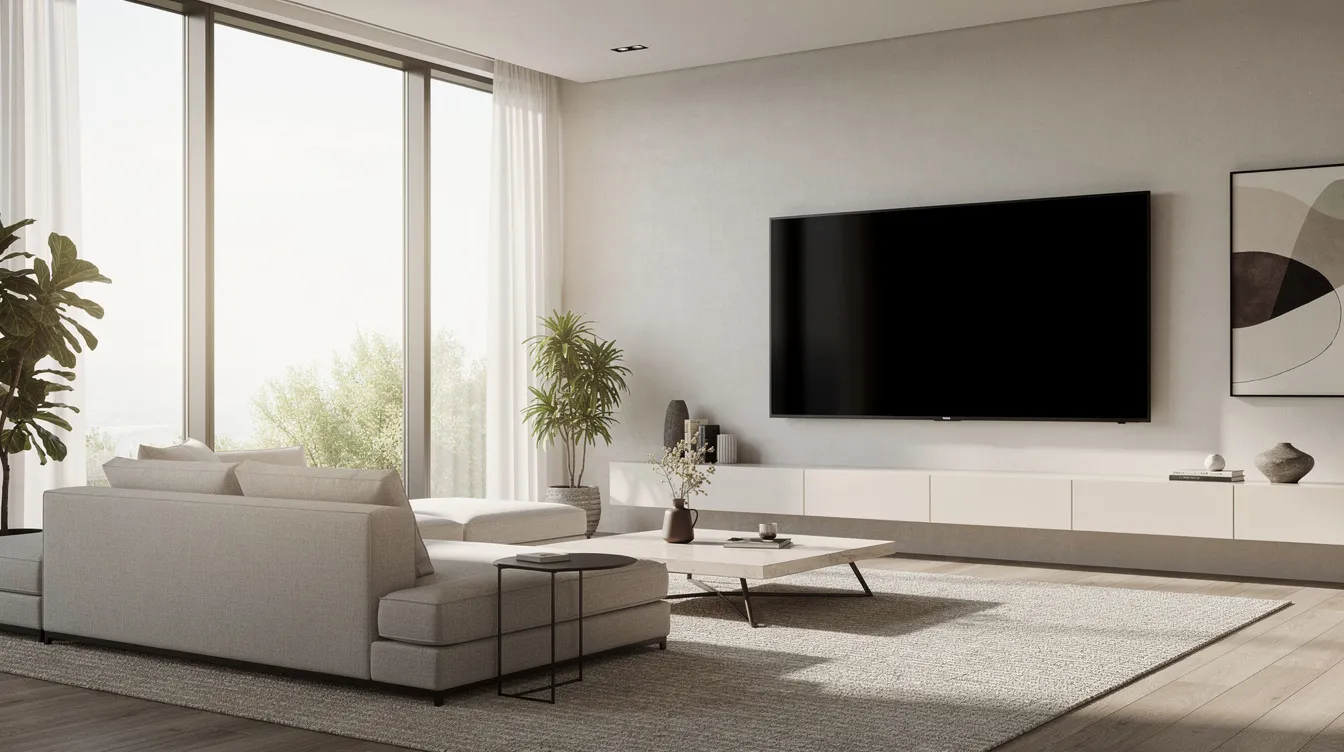
Consider a practical example. A 2025 retrofit of a glass-heavy living room in a suburban home with floor-to-ceiling west-facing windows. Before the film, occupants avoided the room from 2 p.m. to sunset. The TV was unwatchable, the leather sofa was hot to the touch, and the hardwood near the windows had visibly faded. After installing CoolVu’s CV-35/20 transitional film, the afternoon experience changed completely. The film darkened automatically as the sun swung west, cutting glare and dropping interior surface temperatures near the glass. Morning light still filled the room. The homeowner reported clear visibility on the TV screen by mid-afternoon without closing a single shade.
Here’s a summary of the four main performance outcomes:
- UV protection: 99.9% UVA/UVB blocked at all times, protecting skin, flooring, furniture, and artwork
- Infrared heat rejection: Over 80% IR blocked in many models, reducing solar heat gain significantly
- Glare reduction: 60–80% glare reduction when darkened, improving screen visibility and occupant comfort
- Adaptive comfort: Automatic adjustment means protection is always matched to current conditions-no manual intervention needed
Daytime Privacy and Natural Light: Striking the Right Balance
Daytime privacy is enhanced when the film darkens in response to sunlight. As transitional film shifts into its tinted state under bright conditions, the exterior surface becomes harder to see through from outside, giving occupants a meaningful layer of visual privacy without closing blinds or curtains. The effect is similar to one-way visibility-people outside see a darker, slightly reflective glass surface, while people inside maintain their view out.
In its clear state during low-light conditions, the film still allows ample natural light into the space. Rooms don’t feel closed off or artificially dim. The film only becomes more private when the sun and brightness increase, which aligns naturally with when privacy matters most-during daytime hours when passersby, neighbors, or street traffic can see in. Transition films adjust from clear to tinted in sunlight, so the privacy response is automatic and proportional to conditions.
There’s an important limitation to address honestly. At night, with interior lights on and the outside dark, transitional film alone does not provide full privacy. Because the photochromic response depends on UV from sunlight, the film returns toward its clear state after dark. Interior illumination can make glass transparent from outside. For bedrooms, bathrooms, or any room where nighttime privacy is essential, pairing transitional film with curtains, shades, or blinds remains necessary.
Here’s where transitional film excels for privacy-and where you’ll still want window treatments:
- Excellent daytime privacy: Street-level condos and townhomes, storefronts and retail glass, conference rooms facing busy roads, glass stairwells and corridors, outpatient clinic lobbies
- Still pair with shades: Bedrooms at night, bathrooms at any hour, home theater or AV rooms needing blackout, ground-floor rooms with interior lights on after dark
Energy Efficiency and Potential Cost Savings
Transition films improve energy efficiency by reducing the workload on air conditioning systems. By blocking infrared heat before it passes through the glass, the film decreases the amount of solar heat gain that reaches the interior. That means cooling systems cycle less frequently during peak sun hours, which is where the largest share of summer energy consumption typically occurs.
Buildings in hot-summer climates-Texas, Florida, Arizona, Southern California-tend to see the most noticeable impact. In these regions, south- and west-facing glass can account for a substantial portion of a building’s cooling load during summer months. The effective operation of transition films can vary depending on weather and window orientation, so a property with large west-facing glass in Phoenix will see more dramatic results than a north-facing office in Seattle.
Actual savings depend on several variables: glass type (single-pane vs. double-pane, with or without low-E coatings), film model selected, window orientation, building envelope tightness, and local energy rates. That said, energy modeling and field experience across well-chosen projects consistently show cooling cost reductions in the range of 5–15%. Those numbers add up, especially for commercial properties with large glazed surfaces running HVAC systems year-round.
For a concrete reference point, consider a 10,000-square-foot office building with a glass curtain wall in Dallas retrofitted with CoolVu’s CV-25/15 transitional film. With a total solar energy rejection (TSER) rate around 64–66% and a solar heat gain coefficient of approximately 0.33 when darkened, energy modeling projects cooling electricity savings of 10–15% during summer months. At current energy rates, that translates to a projected payback on film costs within 3–6 years. After payback, ongoing savings continue-and so does the reduced wear on HVAC equipment, which extends system lifespan.
Beyond utility bills, transitional film delivers non-energy value that contributes to overall return: extended life of interior furnishings, fewer occupant complaints about glare and hot spots, reduced reliance on blinds and shades (which carry their own cost and maintenance), and improved day-to-day comfort that’s difficult to quantify but easy to feel.
Where Transitional Window Films Work Best (Residential & Commercial Use Cases)
Transition window films are suited for both residential and commercial applications and complement other architectural window film solutions designed to improve comfort, efficiency, and aesthetics. Any space with significant daytime sun exposure and a need for visual comfort, energy management, or privacy can benefit. The question isn’t whether the technology works-it’s whether the specific space has the right conditions to make transitional film the best choice over static alternatives.
For homes, the most impactful installations tend to be on living rooms with large picture windows facing south or west, kitchens with expansive glass, sunrooms, home offices where screen glare disrupts work, and two-story foyer windows that are nearly impossible to shade with traditional treatments. In regions like the Sun Belt-Arizona, Texas, Florida, the Carolinas, and Southern California-transitional film addresses heat and glare issues that persist for much of the year. In cooler climates, selecting a model with higher clear-state VLT preserves passive solar warmth during winter while still protecting against summer intensity.
For commercial properties, glass lobbies where first impressions matter are a perfect fit. Conference rooms where projectors and monitors need to be visible without closing blackout shades. Open-plan offices where one side of the floor plan bakes while the other stays comfortable. Storefronts where merchandise fading and customer discomfort drive revenue loss. Restaurants with outdoor views that become unusable on bright afternoons. Healthcare clinics where waiting rooms and exam areas need both natural light and visual privacy.
For institutional and government buildings, classrooms with projectors and interactive displays where students suffer from screen glare. Libraries where reading areas near windows become unusable during peak sun. Courthouses, municipal offices, and community centers with large glazed façades where thermal comfort is a chronic maintenance and complaint issue.
There’s also a strong case for retrofitting historic or architecturally significant buildings where replacing the glass is cost-prohibitive or restricted by preservation guidelines. These CoolVu Transitional Window Films can be applied as a retrofit directly onto existing glass, improving thermal and optical performance without altering the architectural character of the façade. It’s a way to bring modern performance to legacy structures without the disruption and expense of full window replacement.
Architectural vs. Automotive Transitional Films: Focus of This Guide
Transitional technology exists for both building glass and vehicle windows, but this article focuses on architectural applications-homes, offices, schools, retail, and institutional properties. The distinction matters because the products, regulations, and performance priorities differ meaningfully between the two.
Automotive transitional films deal with curved glass surfaces, strict safety standards, and driving visibility requirements. A vehicle windshield must maintain specific VLT levels to ensure the driver has adequate visibility in all conditions. State laws regulate how dark a car window tint can be, particularly on front side windows. The emphasis in automotive applications is on safer driving, UV and heat comfort for passengers, and compliance with traffic safety regulations. A film that works well on a flat office window may not be appropriate for a curved windshield on a car, and vice versa.
CoolVu also offers photochromic automotive window tint through dedicated automotive services, but readers here are primarily evaluating solutions for buildings. Many benefits overlap-glare reduction, UV blocking, heat rejection-but the product formulations, adhesive chemistry, and regulatory landscape are different. Architectural films use thicker substrates, more aggressive IR-blocking ceramic coatings, and are designed for the larger surface areas and long-term energy savings goals that building owners care about.
If you’re looking for automotive information, CoolVu’s automotive division can address your needs separately. For the remainder of this guide, every recommendation, spec, and example applies to architectural transition film for windows.
How to Evaluate Transitional Window Film Performance Specs
When you read a manufacturer’s specification sheet for transitional film, you’ll encounter several key metrics. Understanding what they mean-and which ones matter most for your situation-makes the difference between choosing a film that performs well and one that disappoints.
The most important metrics to examine are visible light transmission (VLT) in both the clear and tinted states, total solar energy rejected (TSER) or solar heat gain coefficient (SHGC), infrared rejection percentage, UV blocking rate, and interior/exterior reflectivity. Each number tells you something different about how the film will behave on your windows.
Using CoolVu’s published performance ratings as a reference point, here’s how to interpret the data. The CV-55/35 model offers approximately 54% VLT in its clear state and 35% when darkened-a subtle shift suitable for spaces where maximum daylight is the priority. The CV-25/15, on the other hand, drops from about 28% VLT clear to 18% when dark-a more aggressive tint designed for high-exposure commercial facades. TSER values for the darker models reach approximately 64–66%, meaning roughly two-thirds of incoming solar energy is rejected.
A balanced film for most homes combines high clarity in its clear state (so rooms feel open on cloudy days and during winter), strong IR heat control (50–80%+ rejection), near-total UV blocking (99.9%), and moderate daytime privacy without excessive exterior reflectivity. Avoid fixating only on how dark the film gets. The clear-state performance is equally important, because that’s what you’ll experience every morning, on overcast days, and throughout winter months.
Here are the 3–4 numbers on a spec sheet that matter most for typical homeowners:
- VLT (clear state): How much light comes through when the film isn’t activated. Higher is brighter.
- VLT (tinted state): How much light comes through at maximum darkening. Lower means more glare and heat control.
- TSER or SHGC: The overall percentage of solar energy rejected. Higher TSER (or lower SHGC) means better heat performance.
- IR rejection: How much infrared heat is specifically blocked. Look for 80%+ in premium films.
Design and Aesthetic Considerations
Transitional films are engineered to produce a neutral gray or soft smoke tint in most models, avoiding the strong blue, bronze, or green color shifts that plague some static films. That neutral palette means the film complements virtually any architectural style, from modern minimalist facades to traditional residential exteriors.
Adaptive shading preserves views to the outside, which matters enormously for properties with water views, city skylines, mountain backdrops, or carefully landscaped yards. Homeowners don’t want a permanent “sunglass” look that flattens colors and dims the scenery they paid a premium to enjoy. Because transitional film only darkens when conditions demand it, occupants maintain their connection to the outdoors for most of the day.
From the exterior, transitional film may appear slightly darker on sun-exposed elevations during peak hours, but the overall effect is a consistent, modern glass façade. There’s no permanent mirror finish or heavy tint that makes a building look shuttered. For commercial properties, storefronts, and buildings in neighborhoods with aesthetic guidelines, this neutral adaptability helps secure HOA or design review permission more easily than aggressive static tints.
When coordinating transitional film with existing window treatments, think of the film as the performance layer and your curtains, sheers, privacy window film, or shades as the style and nighttime privacy layer. Here are some practical tips for design consultations:
- Ask about color preferences-neutral gray works for most, but some spaces benefit from warmer or cooler tones
- Test a sample piece on one window at different times of day before committing to the full project
- Consider how the film’s clear state will look from the street in the morning vs. its tinted state in the afternoon
- Coordinate with interior lighting design so that film darkening plus heavy drapes don’t accidentally over-darken a room
- Use thin sheers or roller shades as a complement for nighttime privacy without competing with the film’s daytime function
Signs It’s Time to Consider Transitional Film for Your Windows
There are clear, everyday signals that your windows are underperforming-signals most homeowners and facility managers recognize but don’t always connect to a solvable problem.
The most obvious sign is avoidance. If there are rooms in your home or building that you simply don’t use during certain hours because the sun makes them unbearable, that’s a window performance issue. If your blinds are permanently closed on south- or west-facing windows, you’re already acknowledging that your glass isn’t managing sunlight effectively. The irony is that closed blinds eliminate both the problem (glare and heat) and the benefit (daylight and views). Transitional film lets you keep both.
Other signals include fading hardwood floors or furniture near windows, persistent glare on screens that forces you to reposition desks or TVs, “hot spots” where the temperature near glass is noticeably warmer than the rest of the room, temperature swings between interior zones, and excessively high HVAC run times during sunny hours.
If your building already has low-E glass but occupants still experience glare and discomfort, transitional film can be layered onto the existing glazing to fine-tune light and heat control. Partnering with a professional window tinting and window film installer ensures the right product is matched to your glass type and performance goals. Low-E coatings are effective at reducing heat transfer through the glass itself, but they don’t adapt to changing sun angles or provide the variable tinting that transitional film delivers.
Here are the everyday scenarios that most commonly prompt homeowners and facility managers to explore transitional film:
- Blinds or shades are closed for hours every day on sun-exposed windows
- Hardwood, carpet, artwork, or furniture near windows is noticeably faded
- TV or monitor screens are difficult to read due to glare in the afternoon
- One side of the building or home is consistently hotter than the other
- HVAC systems run almost continuously during sunny months
- Staff or family members complain about eye strain or discomfort near windows
- You’re spending on replacement furnishings or flooring due to sun damage

Installation Process: What to Expect from a CoolVu Transitional Film Project
The installation process for transitional film follows a structured sequence that minimizes disruption while ensuring long-term performance. It starts with a free on-site consultation where a CoolVu representative visits the property, surveys the glass (type, condition, existing coatings, orientation), takes measurements, and discusses your specific concerns-whether that’s heat, glare, privacy, or all three.
Based on the survey, the installer recommends a film model that matches your exposure, aesthetic preferences, and performance goals. You’ll receive a detailed proposal with pricing. Once approved, the project is scheduled at a time that works for your household or business operations.
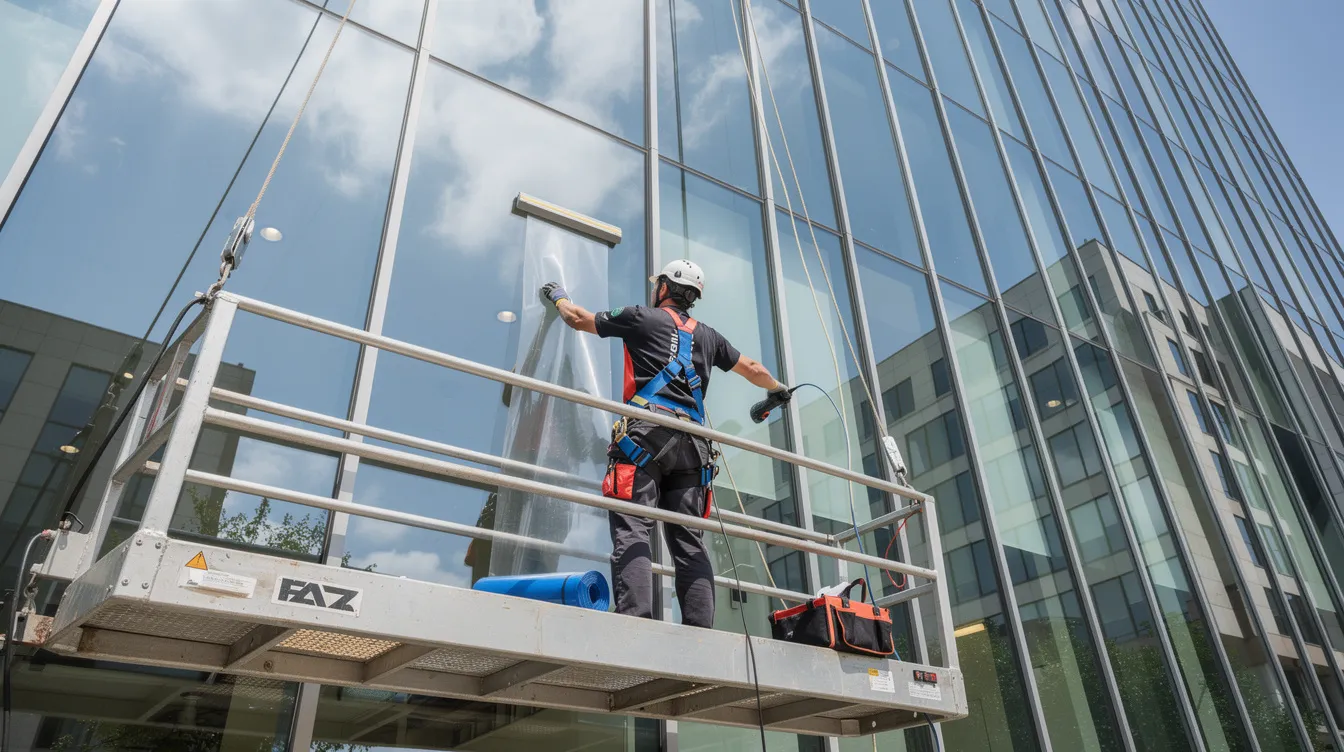
On installation day, the process is straightforward. Installation is similar to traditional window tint in terms of technique. Installers thoroughly clean each pane of glass to remove dust, oils, and contaminants-any debris trapped under the film can cause bubbles or adhesion problems. Transitional window films are sold by the linear foot from a 60″ roll, and installers cut panels to fit each window precisely. A slip solution is applied to the glass surface, the film is positioned, and a professional squeegee is used to press out moisture and air. Edges are carefully trimmed and detailed without damaging window frames or seals.
For a standard residential project covering 10–20 windows, most installations are completed in a single day. Larger commercial jobs-glass curtain walls, multi-story lobbies, entire office floors-may take multiple days or be staged in phases to minimize disruption to tenants or operations.
Disruption is minimal. There’s no structural work, no heavy machinery, and very little noise. Furniture is typically moved just a few feet away from windows to give installers access. Floors and furnishings near the work area are protected. After installation, a curing period of several days to a few weeks (depending on humidity and temperature) allows the adhesive to fully bond. During this time, you may notice minor moisture or slight haziness in the film-that’s normal and clears as the adhesive cures.
A final inspection confirms uniform film application, proper edge sealing, and correct photochromic response. Installers verify that the film darkens properly when exposed to direct sunlight and provide you with care instructions and warranty documentation.
Maintenance, Cleaning, and Longevity of Transitional Films
Once cured, transitional window films require very little upkeep. Maintenance is identical to regular tint-you clean the film the same way you’d clean any quality window film or glass surface. Use non-ammonia, non-abrasive glass cleaners and soft cloths, microfiber pads, or a standard squeegee. The adaptive function requires no special maintenance; the photochromic layer does its job passively without any user intervention.
After installation, wait a recommended period-typically about 30 days-before performing any deep cleaning. This allows the adhesive to fully cure. After that initial period, clean as needed using gentle products. Avoid razor blades, harsh scouring pads, or abrasive cleaners that could scratch the protective topcoat. Don’t apply stickers, tape, or adhesives directly to the film surface.
Transitional tint lasts 10-15+ years with proper care, depending on climate, window orientation, and glass type. Sun-facing windows in high-UV climates will age the film somewhat faster than north-facing glass in moderate climates, but modern stable photochromic formulations are engineered to handle that exposure. CoolVu offers manufacturer-backed warranties that typically cover adhesion, cosmetic defects, and photochromic performance.
Over very long time spans, photochromic response may gradually mellow-the transitions might become slightly less dramatic, and the maximum darkening may reduce marginally. However, with today’s stable photochromic chemistry, severe color shifts, patchiness, or rapid degradation are largely issues of past generations, not current products.
Care guidelines at a glance:
- Do: Use soft cloths and non-ammonia cleaners; clean when the film is cool; keep edges free of dust and debris; follow manufacturer cleaning recommendations
- Don’t: Use razor blades, abrasive pads, or ammonia-based products; clean within the first 30 days post-installation; apply stickers or adhesive materials directly to the film; use high-pressure water aimed at film edges
Cost of Transitional Window Film and Factors That Influence Pricing
Transitional tint costs more than basic static tint. That’s the reality of a product with a photochromic interlayer, nano-ceramic IR coatings, UV blockers, and a scratch-resistant topcoat-all engineered for 10–15+ years of daily cycling. Pricing starts at $8.00 per square foot for architectural transitional film, with installed costs for many projects running in the range of $15 to $30+ per square foot depending on the model, project complexity, and region.
Several factors influence the total cost of a transitional window film project:
- Total square footage: More glass means more material and labor. Larger projects may benefit from volume pricing.
- Number of panes and window sizes: Many small windows take more time to cut, fit, and detail than fewer large panes.
- Window height and accessibility: Second-story, third-story, or hard-to-reach windows may require lifts, scaffolding, or specialized safety equipment-adding cost.
- Glass type: Double-pane, tempered, laminated, or low-E glass may require specific film compatibility checks and preparation.
- Regional labor rates: Installation costs vary by market. Urban areas and high cost-of-living regions tend to be higher.
- Old film removal: If existing window film needs to be stripped before new film is applied, that adds time and cost.
Why does the higher price make sense? Transitional film replaces the need for multiple solutions. A heavy static tint plus motorized shades plus frequent HVAC maintenance adds up over the life of a building. With transitional film, you get adaptive tinting and high-performance heat rejection in a single product. The long-term value comes from lower utility bills, reduced furnishing replacement, fewer comfort complaints, and a building envelope upgrade that performs for well over a decade.
Treat transitional film as a long-term performance upgrade to the building envelope-not just a cosmetic enhancement. The upfront cost is real, but so is the compounding return over 10–15+ years of reduced energy use, preserved interiors, and daily comfort improvement.
Common Mistakes to Avoid When Choosing Transitional Window Film
Choosing solely on price. The lowest-cost film option almost never delivers the best long-term value. Without verifying the brand, performance specs (VLT, TSER, IR rejection, UV blocking), and the installer’s experience with photochromic products, you risk ending up with a film that fades, discolors, or underperforms within a few years. Always read the spec sheet and ask about warranty terms before making a decision.
Ignoring glass compatibility. Not every transitional film works well on every type of glass. Some tempered, laminated, or low-E configurations can create thermal stress issues or adhesion problems if the wrong film is applied. A professional installer will perform a glass survey and compatibility check before recommending a product. Skipping that step is a recipe for premature failure.
Attempting DIY installation. On small decorative projects, DIY film application can work. On large architectural glass, it rarely does. Bubbles, contamination, poor edge sealing, and misaligned cuts degrade both appearance and longevity. The photochromic layer is sensitive to installation quality-trapped debris or uneven application can cause patchy tinting that worsens over time. Professional installation pays for itself in durability and performance.
Selecting an overly dark film for aesthetics. It’s tempting to choose the darkest model available for maximum privacy or a dramatic look. But an overly dark film with very low clear-state VLT can eliminate too much natural light on cloudy days and during winter, undermining one of the key advantages of transitional technology. Choose a model based on your actual sun exposure and daylight needs, not just appearance at maximum tint.
How Transitional Window Film Integrates with Other CoolVu Solutions
Transitional films don’t have to work alone. For properties with multiple needs, CoolVu Glass & Surface Solutions offers a suite of glass and surface solutions that can be combined into a single coordinated project. Transitional film on exterior glazing can be paired with decorative privacy films on interior glass partitions, security window films on ground-floor or vulnerable openings, and architectural surface finishes on walls, doors, or high-traffic interior surfaces.
Imagine a full-building transformation: transitional film installed on the exterior curtain wall of a commercial building to manage heat and glare, smart window film that switches from clear to private on demand in conference areas, branded printed graphics in the lobby to reinforce the company’s identity, and architectural vinyl on elevator surrounds and corridor walls to refresh worn surfaces. All delivered by one provider, on one timeline, with consistent quality standards.
CoolVu’s franchise network allows property owners to work with a single partner for multiple film and surface upgrade needs, including switchable smart glass film for interior partitions. That simplifies project management, reduces scheduling complexity, and ensures that every element-from the window film to the wall finish-is installed by trained professionals under manufacturer-backed warranties. For facility managers juggling multiple vendors and budgets, that consolidation has real operational value.
Local Expertise and the CoolVu Franchise Network
CoolVu operates as a national franchise system with local owners trained specifically in window tinting, window film installation, and surface solutions. Each franchisee completes comprehensive training on photochromic film science, installation techniques, glass compatibility, and regional performance considerations before serving customers in their market.
The advantage of local expertise is substantial. A CoolVu franchisee in Scottsdale understands that west-facing glass in the desert Southwest receives punishing afternoon UV and heat loads that demand aggressive film models. A franchisee in Charlotte knows that seasonal variation between humid summers and mild winters calls for a balanced approach that doesn’t sacrifice too much winter daylight. Regional knowledge of building codes, typical glass types, and energy concerns specific to local markets translates directly into better product recommendations and more satisfying outcomes.
CoolVu franchisees provide on-site evaluations, precise measurements, and professional installation for both residential and commercial properties. They can assess your specific glass conditions, discuss which transitional film model fits your exposure and aesthetic goals, and deliver a transparent proposal-including honest guidance on when a different product (such as static film or security film) might actually serve you better.
That consultative approach, backed by manufacturer training and brand standards, is what separates a qualified CoolVu installation from a generic tint job. Photochromic film is more complex than standard window tint, and the quality of the installer directly affects the quality of the result.
Case Study 1: Residential Transitional Window Film Upgrade
A 3,000-square-foot single-family home in Austin, Texas, built in 2018, had a common problem: a wide-open living area with floor-to-ceiling south-facing windows that made the space gorgeous in real estate photos and miserable to live in from April through October. The homeowner reported interior temperatures near the glass exceeding the rest of the room by 8–10°F during peak afternoon hours. Hardwood flooring within six feet of the windows had noticeably faded after just five years. The 65-inch TV mounted on the adjacent wall was essentially unwatchable between 1 p.m. and sunset without closing blackout shades-which defeated the purpose of the panoramic windows.
The local CoolVu of Greater Augusta-style franchise model illustrates how a nearby expert supports homeowners: the local CoolVu franchisee conducted an on-site evaluation, surveying the glass (double-pane, low-E, no existing film), measuring sun angles, and documenting the specific hot spots and glare patterns. Based on the south-facing orientation and the homeowner’s desire to preserve maximum daylight on overcast and winter days, the team recommended the CV-35/20 transitional film. This model offers approximately 35% VLT in its clear state and drops to about 20% when fully darkened-enough to cut intense glare without making the room feel dim during Austin’s frequent partly cloudy mornings.
Installation covered approximately 400 square feet of glass and was completed in a single day. After the curing period, the homeowner reported that afternoon comfort improved dramatically. The TV was watchable without shades. The temperature differential near the glass dropped noticeably. Blinds that had been permanently closed were opened for the first time in years. Over the following summer, electric bills showed a measurable decrease consistent with reduced AC run times during peak hours. The hardwood flooring, now protected by 99.9% UV blocking, stopped its accelerated fading.
Case Study 2: Commercial Office or Retail Application
A multi-tenant office building in downtown Tampa completed a transitional film retrofit in mid-2025. The building featured a three-story glass lobby and a street-level retail space with floor-to-ceiling storefront glass facing southwest. Tenants on the upper floors had been filing consistent complaints about afternoon glare on computer monitors, uncomfortable heat near perimeter workstations, and the general feeling that their workspace was bright in all the wrong ways. The retail tenant reported that customers avoided seating near the windows during afternoon hours, reducing usable floor space during peak business times.
The building owner evaluated three options: motorized interior shades (high upfront cost, ongoing maintenance, reduced aesthetics), static ceramic tint (permanent darkening that would eliminate the lobby’s airy feel on cloudy days), and CoolVu transitional film. The owner selected transitional film for its adaptive behavior-protecting against afternoon sun exposure while maintaining the building’s open, modern glass aesthetic during mornings and overcast conditions.
The project covered approximately 6,500 square feet of glass across the lobby, retail storefront, and upper-floor perimeter windows. Installation was staged over four days to minimize disruption to tenants and retail operations, with each floor completed in sequence, similar to how CoolVu of Northeast Columbus manages multi-space tinting projects. The CoolVu team worked during regular business hours, requiring only that perimeter desks be cleared a few feet from the glass.
Post-installation, tenant complaints about glare and heat dropped significantly. The retail tenant reported that window-adjacent seating became usable again in the afternoon. Building management noted reduced HVAC cycling during peak sun hours. The lobby maintained its bright, open character on cloudy mornings and transitioned to a more comfortable, softly tinted environment during intense afternoon sun-exactly the adaptive behavior the owner had been seeking.
Frequently Asked Questions About Transitional Window Film for Windows
How quickly does the film transition from clear to dark?
The transition occurs in about 30 seconds when exposed to strong UV rays, with a full shift from lightest to darkest state typically completing within 60–90 seconds depending on UV intensity and angle. When UV levels drop-due to clouds, shade, or evening-the film gradually returns to its clear state over several minutes.
Does transitional film work on cloudy days?
Yes, but the degree of darkening is proportional to UV intensity. On a heavily overcast day, the film may darken only slightly or remain in its clear state, which is actually a benefit-you get full daylight when the sun isn’t causing problems. The film responds dynamically to conditions, so partial cloud cover will produce partial tinting.
Will transitional film make my rooms too dark?
No, if the correct model is selected. Each film model has a defined VLT range in both its clear and tinted states. A film like the CV-55/35 maintains approximately 54% VLT even in its clear state and only drops to about 35% when darkened-a subtle shift. Choosing the right model for your orientation and light preferences ensures rooms stay bright when the sun isn’t intense.
Is transitional film compatible with double-pane and low-E glass?
Most modern transitional films are compatible with standard double-pane and low-E glass, but compatibility should always be verified by a professional installer. Certain glass configurations can create thermal stress when film is applied, so a glass survey and compatibility check are standard parts of any reputable installation process.
How long does transitional window film last?
Transitional tint lasts 10-15 years with proper care, and many installations exceed that range depending on climate, orientation, and maintenance. CoolVu’s films are engineered for long-term stability, and manufacturer-backed warranties provide coverage for adhesion, appearance, and photochromic performance.
Does transitional film interfere with Wi-Fi, cell signals, or home network equipment?
No. Transitional photochromic window films do not contain metallic layers that would interfere with wireless signals. Your Wi-Fi router, cell reception, Bluetooth devices, and any network server equipment will function normally with the film installed.
How does transitional film compare in price to traditional static tint?
Transitional film costs more than basic static tint due to its more complex multi-layer construction, including the photochromic interlayer and nano-ceramic coatings. Pricing starts at $8.00 per square foot, with fully installed costs typically ranging from $15 to $30+ per square foot depending on the project. The higher price reflects the adaptive capability-you’re getting two tint levels in one film-plus superior IR and UV performance.
Does transitional film provide privacy at night?
Not on its own. Because the photochromic response requires UV from sunlight, the film returns toward its clear state after dark. With interior lights on at night, the glass can appear transparent from outside. For nighttime privacy, pair transitional film with curtains, blinds, or sheer window treatments.
Why Choose CoolVu for Transitional Window Films
CoolVu has been at the forefront of architectural photochromic window film since the early 2010s, when the company developed and commercialized stable photochromic technology purpose-built for building glass. That head start matters. Years of field installations across residential, commercial, institutional, and government properties have produced a depth of real-world experience that newer entrants simply haven’t accumulated.
The key differentiators are tangible. CoolVu’s adaptive films are backed by a proprietary manufacturing process that delivers consistent photochromic cycling without the color drift, patchiness, or premature degradation that plagued earlier generations. The franchise network ensures that every installation is performed by trained professionals who understand both the science of the film and the practical realities of working with different glass types, building configurations, and regional climates.
Beyond transitional film, CoolVu functions as a comprehensive glass and surface transformation partner. Decorative films, security films, architectural surface finishes, printed graphics-it’s all available through the same local franchise, simplifying multi-scope projects and providing a single point of accountability. The consultative approach means your CoolVu representative will recommend the right solution for your specific situation, including honest guidance when a different product type would turn out to be a better fit.
That combination-proven technology, trained local installers, manufacturer-backed warranties, and a broad solution set-is why property owners across the country trust CoolVu to handle their most visible and important glass surfaces.
How to Get Started: Next Steps for Your Home or Building
Getting started is simple. Reach out to your local CoolVu franchise, such as CoolVu of Lower Fairfield County if you’re in that region, to request a free consultation and estimate. You can connect via phone, an online contact form, or through the CoolVu website. There’s no obligation, and the initial evaluation is designed to help you understand your options before committing to anything.
To speed up the process, have a few things ready: photos of the problem windows (especially during peak sun hours), approximate window dimensions or a floor plan, your building type and location, and any known glass details (single-pane, double-pane, low-E, tempered). If you can access the http address of your property listing or building specs online, that can help the team prepare before the on-site visit. The more context you provide upfront, the more tailored the recommendation will be.
One practical tip: schedule your consultation during peak sun hours so you and the CoolVu specialist can observe glare and heat issues firsthand. It’s one thing to describe a problem; it’s another to stand in a room at 3 p.m. in July and feel the difference between a protected window and an exposed one.
Your windows don’t have to be a source of frustration. With the right transitional film, you can turn over-bright, uncomfortable rooms into spaces that stay comfortable and light-filled throughout the day-automatically, quietly, and without lifting a finger. Contact your local CoolVu franchise today and find out what adaptive sun control can do for your property.