- Why Window Film is a Critical Infrastructure Upgrade, Not an Expense
- Slash Your Operating Costs with Solar Film for Office Buildings
- Enhance Tenant Comfort and Productivity
- An Invisible Shield: Upgrading Building Security and Safety
- Choosing the Right Film for Your Property
- Conclusion: Transform Your Property with Window Tint for Commercial Buildings
- Frequently Asked Questions
For too long, commercial window film has been misunderstood, often dismissed as a discretionary cosmetic touch. It’s time to reframe that thinking. For modern property managers under pressure to cut costs and improve tenant satisfaction, window film isn’t an expense. It’s a critical, high-ROI infrastructure upgrade that directly impacts your bottom line.
Why Window Film is a Critical Infrastructure Upgrade, Not an Expense
Think about your building’s essential systems. You wouldn’t hesitate to invest in a more efficient HVAC unit or a new roof because you understand their direct impact on operating costs and asset value. Professional window film belongs in that same category. By fundamentally changing how your building’s windows perform, it generates measurable returns year after year.
It’s a proactive solution that addresses multiple pain points simultaneously. It works 24/7 to lower energy consumption, protect your interiors, and enhance the comfort of your tenants. This isn’t just about making a room a little cooler; it’s about optimizing the performance of your entire building envelope.

Translating Technical Specs into Tangible Business Value
The window film industry has its share of technical acronyms, but they don’t tell you what you really need to know: what’s in it for your building and your budget?
Let’s translate the tech talk into real-world results:
- High Total Solar Energy Rejection (TSER) means the film is blocking a massive amount of the sun’s heat from ever entering your building. The direct result is a lighter workload for your HVAC system, which can slash your cooling costs by up to 30%.
- Excellent Ultraviolet (UV) Rejection of over 99% isn’t just a health benefit. It’s an asset protection tool that stops the fading that ruins expensive office furniture, flooring, and artwork, extending their life and reducing replacement costs.
- Optimized Visible Light Transmission (VLT) means you can cut harsh glare on computer screens without making your space feel like a cave. You maintain beautiful, natural light, creating a more pleasant and productive environment for tenants.
Moving Beyond Outdated Perceptions of Window Tinting
If your idea of window film is the dark, bubbly, or purple tint you see on old cars, it’s time for an update. Today’s architectural films are a world apart, the product of decades of materials science innovation.
Modern films are designed to be optically clear, durable, and virtually invisible. Many high-performance films are completely unnoticeable once installed, preserving your building’s original aesthetic while delivering powerful benefits. They’re engineered to last for years without peeling, bubbling, or discoloring, making them a reliable, long-term upgrade for any commercial property.
Slash Your Operating Costs with Solar Film for Office Buildings
While the benefits of commercial window film are diverse, the most immediate and compelling impact is on your operating budget. For any property manager wrestling with high utility bills, solar control film offers one of the fastest and most effective ways to gain control.
How Solar Control Film Drastically Reduces HVAC Strain and Energy Bills
Your building’s windows are a major source of solar heat gain. On a sunny day, untreated glass allows a huge amount of solar energy to stream inside, forcing your HVAC system to run constantly just to keep up. This not only drives up your monthly energy bill but also puts significant wear and tear on your expensive cooling equipment, leading to more frequent maintenance and a shorter lifespan.
Solar control film acts as a protective barrier, rejecting a significant percentage of solar heat before it can penetrate the glass. By reducing the heat load, you directly reduce HVAC run-time. This translates into lower energy consumption, more stable and comfortable indoor temperatures, and a longer, more reliable life for your HVAC system.
Calculating the ROI: Payback Periods for Commercial Window Film
An investment in solar control film isn’t a cost you sink into the building; it’s an asset that pays you back. The return on investment is clear and calculable. While the exact payback period depends on factors like your local climate, energy rates, and window-to-wall ratio, many commercial projects see a full payback in just 2 to 5 years.
After the payback period, the energy savings become pure profit, improving your Net Operating Income (NOI) for the life of the film. Our experts can even use specialized software to model the energy usage of your specific building, providing a clear and reliable estimate of your potential savings and payback timeline.
Gaining a Competitive Edge with a More Energy-Efficient Building
In a competitive leasing market, differentiation is key. A building that is more comfortable and has lower utility costs is simply more attractive to prospective tenants. By reducing hot spots and glare, window film creates a premium work environment that can directly impact tenant retention.
Demonstrating a commitment to energy efficiency can also enhance your property’s reputation and appeal to a growing number of corporate tenants with sustainability mandates. These upgrades can even contribute valuable points toward green building certifications like LEED, providing a powerful marketing tool that sets your property apart.

Unlocking Potential Energy Rebates and Tax Incentives
Many property managers are surprised to learn they can get help paying for this upgrade. Utility companies and local governments often offer rebates and tax incentives for energy-saving improvements, and high-performance window film frequently qualifies.
These programs are designed to encourage smart investments in efficiency and can significantly reduce the upfront cost of your project. This accelerates your return on investment and makes an already smart financial decision even better. Navigating these programs can be complex, but working with a knowledgeable partner can help you identify and apply for all the incentives available in your area.
Enhance Tenant Comfort and Productivity
Happy, comfortable tenants are the bedrock of a successful property. They’re more productive, complain less, and are far more likely to renew their leases. Window film is a surprisingly powerful tool for enhancing the tenant experience, directly impacting your bottom line through improved retention.
Eliminating Glare to Improve Employee Focus and Screen Visibility
Persistent glare is more than just an annoyance; it’s a productivity killer. In an office where employees spend hours looking at screens, harsh sunlight causes debilitating eye strain, headaches, and visual fatigue. It forces people to close blinds, cutting off natural light and creating a dim, cave-like atmosphere.
Advanced films like CoolVu transitional and spectrally selective films are engineered to cut down on intense glare by as much as 87% without sacrificing natural light. This transforms a workspace, allowing employees to see their screens clearly from any desk, at any time of day. For a prospective tenant, an office that’s already solved the glare problem is a significant competitive advantage.
Creating Consistent and Comfortable Interior Temperatures Year-Round
One of the most common complaints from office tenants is inconsistent temperature. Employees sitting near windows bake in the afternoon sun while others are comfortable, leading to a constant battle with the thermostat and an overworked HVAC system.
Window film acts as a thermal shield for your building’s glass. In the summer, advanced films reject a significant amount of solar heat, eliminating frustrating hot spots. During colder months, low-e films help reflect radiant heat back into the room, reducing heat loss through the glass. The result is a far more stable and comfortable temperature for everyone, which means fewer complaints for you to manage.
Protecting People and Assets with 99% UV Radiation Rejection
The same sunlight that causes heat and glare also carries damaging ultraviolet (UV) radiation, the primary cause of fading and degradation for your expensive interior assets, including:
- Hardwood floors and carpets
- Office furniture and upholstery
- Paintings and artwork
- Retail merchandise
Virtually all professional-grade window films from CoolVu block over 99% of harmful UVA and UVB rays. This invisible protection acts like sunscreen for your building, preserving the look and life of your interiors and protecting your investments from premature aging.
How Tenant Comfort Directly Impacts Lease Renewals and Retention
Tenant turnover is one of the biggest hidden costs in commercial property management. The expenses associated with marketing a vacant space, paying broker commissions, and funding tenant improvements can decimate a building’s profitability. The most effective way to combat this is to keep your current tenants happy.
By addressing the core comfort issues of glare, temperature imbalance, and UV exposure, window film contributes directly to a premium work environment. It shows your tenants that you’re proactively invested in their well-being. A comfortable, functional space is a place where businesses want to stay and grow, making lease renewal a much easier conversation.
An Invisible Shield: Upgrading Building Security and Safety
Your building’s windows and glass doors are its most vulnerable points. While alarms and cameras are essential for detection, they do nothing to physically stop an intruder. Security window film for your business provides a tough, invisible layer of protection that reinforces this critical weakness.
Delaying and Deterring Forced Entry
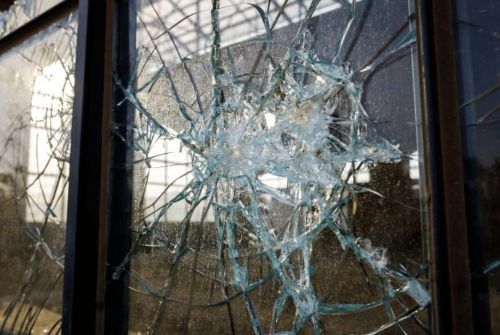
Standard annealed glass shatters instantly upon impact, giving criminals immediate access. Security window film changes this equation entirely. Constructed from thick, heavy-duty polyester and bonded to the glass with a powerful adhesive, it holds the broken shards firmly in place.
Instead of the glass collapsing, an intruder is met with a formidable, flexible barrier that is incredibly difficult to breach. This doesn’t just deter thieves looking for an easy target. More importantly, it creates a significant delay, buying precious minutes for your alarm system to alert authorities and for security to respond. That delay can be the difference between a minor incident and a major loss.

Mitigating Hazards from Glass Shatter
The same technology that deters intruders provides invaluable protection against natural disasters and accidents. During a severe storm, high winds can turn debris into projectiles that easily shatter windows, sending dangerous shards of glass flying through an office.
By holding the glass together upon impact, safety and security film contains the danger. It prevents the hazardous explosion of glass, protecting occupants from serious injury and reducing your liability as a property owner.
Enhancing Privacy and Protecting Sensitive Information
Not all security threats are physical. For many businesses, protecting sensitive information is just as critical. Ground-floor conference rooms, executive offices, and HR departments often require visual privacy that traditional blinds can’t provide without blocking all light.
A range of privacy films can solve this problem elegantly:
- Frosted and Decorative Films: These films obscure the view while still allowing ample light to pass through, making them perfect for interior glass walls and meeting rooms where you need to balance an open feel with confidentiality.
- Reflective or “Mirror” Films: Applied to exterior windows, these films provide excellent daytime privacy, creating a one-way mirror effect that prevents outsiders from seeing in.
- Blackout and Whiteout Films: For areas where total privacy is required, such as storage rooms or sensitive data centers, these opaque films block the view and light completely.
The Role of Film in a Comprehensive Building Safety Plan
It’s crucial to view security window film not as a standalone solution, but as a critical component of a layered safety strategy. It’s the physical reinforcement that makes your other security systems more effective. An alarm can tell you a window has been broken, but security film can stop the intruder from getting inside. By hardening the most vulnerable entry points, you create a robust security posture that protects your property, your assets, and most importantly, your tenants.
Choosing the Right Film for Your Property
Window film is not a one-size-fits-all product. The beauty of modern film technology lies in its versatility, allowing you to select a solution tailored precisely to your building’s most pressing challenges. The key is to first identify your primary goals.
Assess Your Building’s Primary Needs: Energy, Security, or Aesthetics?
Before you can choose the right solution, you need a clear diagnosis of the problem. Start by asking a few critical questions:
- Where is the money going? If skyrocketing energy bills are your biggest headache, then solar energy control is your top priority.
- What are your tenants saying? If occupants complain about intense glare or uncomfortable hot spots, you know tenant comfort is a critical financial consideration linked to retention.
- What are your vulnerabilities? Is your ground-floor retail space a potential target? Is your building in an area prone to severe storms? If so, mitigating risk through enhanced security should be a primary focus.
- What does your building look like? Are you looking to modernize an outdated facade, create private meeting spaces, or add branding to your entryway? Sometimes the goal is purely about design and function.
Answering these questions will point you to the type of film that will provide the most immediate impact.
The Benefits of Solar Film for Offices and Retail
For most commercial properties, the conversation starts with solar film. This is the workhorse solution that directly tackles your largest operating expense: energy consumption. By rejecting a massive portion of the sun’s heat, advanced solar films can slash your annual cooling costs by up to 30%. This isn’t a minor tweak; it’s a major reduction in overhead that drops straight to your bottom line.
But the commercial window film benefits go far beyond the utility bill. Solar window tint also dramatically improves the tenant experience by eliminating harsh glare and balancing temperatures. Furthermore, it acts as a powerful shield, blocking over 99% of the UV radiation that causes fading and protects your building’s interiors.
When to Specify Safety and Security Film
While solar film manages the sun, safety and security film manages risk. This thicker, more robust film is engineered to make glass significantly harder to penetrate and to hold the shards together if it does break. For a property manager, this provides a formidable layer of protection in several key scenarios:
- Deterring Crime: It’s a powerful deterrent against smash-and-grab burglaries and vandalism for street-level spaces.
- Storm Protection: In areas prone to high winds, it helps prevent windows from shattering inward, protecting people and property.
- Accident Mitigation: It provides an essential safety net in high-traffic areas like lobbies, hallways, and childcare facilities.
Using Decorative Film to Enhance Branding and Design
Sometimes, the challenge isn’t energy or security, but aesthetics and space utilization. Decorative and privacy films offer a cost-effective and flexible way to transform glass surfaces, achieving the high-end look of etched or custom glass for a fraction of the price. You can use these films to create privacy in conference rooms, add custom-cut brand logos to entryways, or simply modernize a building’s facade.
Conclusion: Transform Your Property with Window Tint for Commercial Buildings
Commercial window film is far more than a simple aesthetic upgrade. It’s a critical infrastructure improvement that directly addresses the core challenges property managers face every day. For a relatively low initial cost, it delivers a powerful, multi-layered return on investment that impacts your budget, your tenants, and your building’s long-term viability.
Key Takeaways: The Three Pillars of Window Film ROI
The business case for window film rests on three distinct pillars:
- Financial and Operational Efficiency: By rejecting solar heat, window film dramatically reduces the load on your HVAC system. This cuts cooling costs by up to 30% and extends the lifespan of your expensive equipment.
- Asset Protection and Security: UV-blocking films prevent the sun from fading and damaging expensive interiors like flooring and furniture. Security films reinforce your glass to deter break-ins and contain dangerous shards during accidents.
- Tenant Comfort and Retention: Window film solves common tenant complaints by eliminating hot spots, cutting harsh glare, and increasing privacy. This creates a more comfortable, productive environment that helps attract and retain high-value occupants.
The Long-Term Value of Enhancing Your Building’s Performance
Beyond the immediate monthly savings, installing high-performance window film is a strategic move that enhances the fundamental value of your property. In a competitive market, a building that offers lower utility costs, greater comfort, and enhanced security is simply worth more. This single upgrade can modernize an older building, making it more competitive without the massive cost of a full window replacement.
Next Steps to Evaluating Window Film for Your Property
Convinced but not sure where to start? The process is straightforward.
- Define Your Primary Goal: Identify your biggest pain point. Is it a high energy bill, tenant complaints about glare, or a need for better security? Knowing your main objective helps narrow down the best film options.
- Gather Basic Information: If possible, have a rough idea of your window dimensions and recent energy costs. This data helps a professional provide a more accurate ROI projection during a consultation.
- Schedule a Professional Assessment: The final step is to bring in an expert. A reputable provider can perform a site survey, listen to your goals, and recommend specific products, providing you with performance data, ROI calculations, and a no-obligation quote.
Contact CoolVu today for a free estimate and discover the best window tint solution for your commercial building.
Frequently Asked Questions
How long does it take for commercial window film to pay for itself?
The return on investment is surprisingly fast. While it depends on your climate, energy costs, and the specific film you choose, most businesses see a full payback from energy savings in just 2 to 5 years. After that, the savings directly boost your bottom line for the life of the film.
Will window tint make my commercial building look dark?
Not at all. This is a common misconception based on old automotive tints. Today’s architectural films are technologically advanced and often virtually invisible once installed. You can cut heat and glare significantly while maintaining clear views and beautiful natural light.
Is installing window film disruptive to my tenants?
Professional installers work to minimize disruption completely. The process is quiet, clean, and quick. A skilled team can often complete an entire office or floor with very little impact on your tenants’ workday, scheduling work to fit your building’s needs.
What’s the difference between solar film and security film?
Solar film is designed to manage the sun’s energy. Its main job is to block heat, cut glare, and stop UV rays to lower energy costs and improve comfort. Security film is a thicker, stronger product designed to hold glass together upon impact. Its main job is to deter break-ins and prevent injury from shattered glass. Some advanced films even combine both solar and security benefits.