Table of Contents
- Key Benefits: Energy Efficiency, Comfort & UV Protection
- How Sun Control Window Film Works & Types Available
- Professional Installation, Cost & What Homeowners Can Expect
- FAQs About Home Sun Control Window Film
- Why Homeowners Choose CoolVu for Sun Control Window Film
- Ready to Upgrade Your Home with Sun Control Window Film?
What Is Sun Control Window Film for Homes?
Sun control window film is a micro-thin polyester layer – typically 1 to 2 mils thick – that is professionally applied to existing glass to manage heat, glare, and ultraviolet exposure while preserving the natural light you actually want inside your home. Rather than replacing your windows, this film upgrades the glass you already have, improving energy efficiency without changing window appearance or altering your home’s curb appeal.
Unlike blinds, curtains, or shades that simply block the view and darken a room, window film works at the glass surface itself, filtering the sun’s rays before they enter the space. And compared to a full window replacement with low-E glazing – which can run tens of thousands of dollars – sun control film delivers meaningful performance gains at a fraction of the cost and disruption.
In 2026, many homeowners are applying sun control films to their most problematic glass: large south- and west-facing windows, sliding glass doors, sunrooms, two-story foyers, and any room that overheats under direct sunlight during summer afternoons. CoolVu, a national window film and architectural surfaces franchise, specializes in these residential installations. CoolVu’s trained local technicians evaluate each home’s orientation, glass type, and comfort goals to recommend the right film for every window.
Key Benefits: Energy Efficiency, Comfort & UV Protection
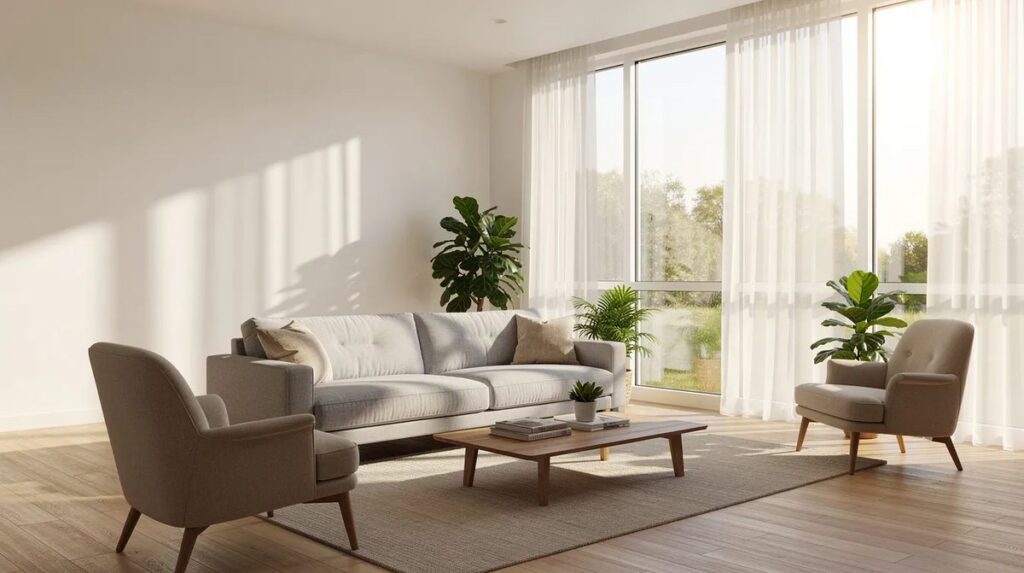
Modern sun control window films do more than just darken a pane of glass. They cut solar heat, improve energy efficiency, and protect interiors – all while letting pleasant natural light into your home. Here is what that looks like in practice.
Cooling-Season Savings
During summer, south- and west-facing windows act like magnifiers, turning living rooms, bedrooms, and home offices into ovens by mid-afternoon. Sun control window films can reject up to 78% of solar heat before it crosses the glass, which means your HVAC system runs less and your electricity bill drops. Case studies in high-cooling-demand climates like central Texas have documented payback periods as short as 1.3 years on film investments, simply from reduced air conditioning run-time. Even in milder climates, homeowners with large glass areas typically see single-digit to low-double-digit percentage savings on cooling costs.
Window film can also reduce heat transfer in homes that rely on older single pane or standard double pane windows, making each pane perform closer to the efficiency of newer glazing without the price tag of full replacement.
Year-Round Comfort
Heat rejection can stabilize indoor temperatures and reduce hot spots – those frustrating pockets of warmth near big windows that make one corner of the room uncomfortable while the thermostat reads fine. By blocking infrared and UV energy, films stabilize indoor temperatures across the entire space, so you no longer need to close curtains during peak sun just to keep a room livable.
This sort of temperature evening means more usable square footage in rooms that were previously too hot or too bright. A sunroom that felt unbearable in July becomes a space you can actually enjoy year-round. A bedroom with a western exposure finally stays cool enough to sleep in comfortably.
UV and Fade Protection
Fading is caused by UV, visible light, and infrared heat – all three contribute to the gradual deterioration of your interiors, a process many homeowners underestimate until they see UV damage to furniture and flooring firsthand. Quality residential window film can block 99% of UV rays, dramatically slowing the damage to hardwood flooring, area rugs, artwork, leather sofas, cabinetry, and other furnishings that sit in the path of direct sunlight. It is worth noting that visible light also contributes to fading of furnishings, which is why spectrally selective films that balance light transmission with heat rejection tend to deliver the best overall fade protection.
Beyond protecting your furniture and flooring, cutting harmful uv rays adds a layer of defense for your family. Rooms with extensive glass – nurseries, playrooms, home gyms – expose skin to uv rays for hours at a time. Film doesn’t replace sunscreen, but it meaningfully reduces cumulative UV exposure inside the home.
Glare Reduction and Screen Visibility
If you have ever tried to watch a TV or work at a computer in a bright family room at 4 p.m., you understand glare. Sun control films can soften harsh daylight to reduce glare without turning the space into a dark cave. Many films enable natural light while filtering heat and UV rays, so you get a comfortable view of your screen and a well-lit room at the same time. Homeowners prefer this approach over constantly adjusting blinds or repositioning furniture just to see a monitor.
Privacy Options
Many films provide daytime privacy by creating a reflective surface on the outside, so passersby see a mirror-like finish while you maintain a clear view from inside. This is particularly useful for street-facing windows in an apartment or a ground-floor bedroom. However, daytime privacy films often lose effectiveness at night when interior lights are on and outdoor light levels drop – a detail worth discussing with your installer so you select the right product for your specific needs. Other films are virtually invisible and prioritize heat and UV control without altering the style or appearance of the glass from either side.
How Sun Control Window Film Works & Types Available
How Films Interact with Sunlight
Sunlight reaches your windows in three components: ultraviolet radiation (below roughly 380 nm), visible light (380–700 nm), and infrared heat (700–2500 nm). Sun control window films help manage solar heat gain by selectively filtering these components rather than simply darkening the glass. These films are engineered to reflect, absorb, and transmit light in carefully controlled proportions. A portion of solar energy is reflected back outside, a portion is absorbed by the film itself, and the remainder passes through as usable daylight.
Window films can block 97% of infrared heat from the sun in high-performance solar window film product lines, while still allowing a comfortable amount of visible light through the glass. The key metric here is Visible Light to Solar Heat Gain Ratio (LSG) – the higher the number, the more light you keep relative to the heat you reject.
Construction and Materials
Residential sun control window films use specialized polyester layers laminated together with scratch-resistant top coats, precision adhesives, and sometimes metallic or ceramic coatings. The adhesive is pressure-sensitive and designed for long-term bond to residential glass. During installation, water is used to position the film before it is squeegeed into final contact, and the adhesive cures over days to weeks for a permanent hold.
Quality sun control films are available in various types, including reflective and spectrally selective options. Here is how the main categories break down:
Lightly tinted neutral films offer a subtle reduction in glare and heat with minimal change to the glass appearance. These work well for homeowners who want protection without a noticeable tint or color shift.
Dual-reflective day-privacy films look reflective from the outside during daylight but remain relatively clear from inside, balancing privacy with a natural view. They tend to deliver strong heat rejection in the 70–85% total solar energy rejection range.
Ceramic and nano-ceramic films use non-metallic coatings for sharp spectral selectivity – high infrared rejection, high visible light transmittance, and zero interference with WiFi or cellular signals, and advanced options like transitional window film can even adapt their tint based on sunlight levels. Window film can reflect up to 97% of infrared heat in top-tier ceramic lines while maintaining a VLT of 30% or higher.
Higher-tint options are designed for rooms with extreme sun exposure, like sunrooms or south-facing bonus rooms. Darker window films block more visible light, which is a trade-off some homeowners accept for maximum heat and glare control.
Performance Ranges
| Film Category | Visible Light Transmittance | Solar Heat Gain Coefficient | Total Solar Energy Rejected | UV Blocked |
|---|---|---|---|---|
| Clear / Spectrally Selective Ceramic | 30–70% | 0.25–0.45 | 50–70% | ≥ 99% |
| Dual-Reflective / Medium Tint | 10–30% | 0.10–0.30 | 70–85% | ≥ 99% |
| Reflective / Silver Metalized | 5–20% | 0.10–0.25 | 80–89% | ≥ 99% |
| Window film can lower the U-Value of double pane windows, and certain products – like 3M’s Thinsulate film – can improve double pane windows’ efficiency to the point where window film can turn double pane windows into triple pane equivalents. That kind of upgrade matters in both warm and cold climates. |
Compatibility and Durability
Compatibility with glass types is critical to avoid thermal stress. If a film absorbs too much solar energy on a glass unit that cannot handle the resulting heat buildup, cracking can occur. This is especially relevant for low-E coated panes and certain tempered units. CoolVu installers evaluate each window’s construction – double pane, low-E, tempered, or standard – and recommend manufacturer-approved film options that match the glass safely.
On durability, professionally installed ceramic and nano-ceramic films routinely carry manufacturer warranties covering product performance, color stability, and adhesion for a decade or more, with some offering limited lifetime coverage for the original homeowner.

Professional Installation, Cost & What Homeowners Can Expect
Professional installation of architectural window films is critical for both performance and warranty coverage. The installation method can impact the performance of window films significantly – a poorly applied film with trapped air, creases, or contamination will underperform and fail sooner than one installed by a trained technician.
The CoolVu Process
A CoolVu project starts with a free in-home consultation. A local franchise technician visits your home, examines each window’s orientation and glass type, discusses your comfort and energy efficiency goals, and places real film samples directly on your glass so you can see the exact appearance in your own light. Every window is measured, and you receive a written estimate before any work begins.
On installation day, furniture and window coverings are carefully moved back from the glass. Each pane is cleaned with specialized tools to remove contaminants, oils, and dust – details that matter for adhesion quality. The film is precision-cut, applied using water to allow repositioning, then squeegeed to remove air and moisture. Edges are trimmed and sealed, and a final walkthrough with the homeowner confirms every pane looks right.
Curing and Aftercare
In the first few days to weeks after installation, you may notice slight haziness or small water pockets between the film and glass. This is normal. As the adhesive cures and residual moisture evaporates, the film settles to full clarity. Clean with soft cloths and non-abrasive, ammonia-free glass cleaners to protect the scratch-resistant coating.
Cost and Value
In 2026, residential sun control window film typically ranges from $6 to $15 per square foot installed, depending on film type, project size, and regional labor costs. A whole-house project on a mid-size home might run $1,500 to $4,000 – a fraction of the price of full window replacement, which can easily exceed $15,000 to $30,000 for comparable glass area.
Installing window film can reduce heat transfer and loss, and homeowners in warmer regions often recoup the investment within one to three years through reduced cooling bills alone. Even in cooler climates, combined heating and cooling savings – measured against the modest upfront cost – make film one of the highest-ROI efficiency upgrades available.
Common Concerns
Will the film change your view? In most cases, the view actually improves because reduced glare makes it easier to see outside without squinting. Some reflective films may cause minor reflections at night from interior lighting, which is worth discussing during the consultation so you can select a product that matches how you use each room. Professionally installed film looks integrated with the glass – clean, uniform, with no visible edges or bubbles – not like something stuck on as an afterthought.
FAQs About Home Sun Control Window Film
How long does residential sun control window film typically last?
Sun control window films typically last 10 to 20 years in residential applications, depending on sun exposure, climate, and product line. Films on west-facing windows in intense sun environments may age slightly faster than those on shaded north-facing panes. CoolVu works with premium manufacturers that back their products with long-term warranties covering performance, adhesion, and color stability – so you are not left guessing about longevity.
Will window film make my home too dark or change the view?
This is the most common concern, and the answer depends on which film you select. Many modern ceramic and spectrally selective films maintain a visible light transmittance of 30–50% or higher, which means rooms still feel bright and open. During consultations, CoolVu installers place real film samples on your glass so you can see the exact effect on light and view before committing. If you want maximum clarity, ultra-clear films with VLTs above 60% are available – they still block significant infrared heat and nearly all UV.
Is sun control window film safe for double pane and low‑E windows?
Yes, when properly matched to the glass type. Professionally specified films are safe on insulated and low-E units. CoolVu conducts a glass assessment before every project to ensure the selected film complies with the glass manufacturer’s guidelines, avoiding any risk of thermal stress or seal failure. This step matters – using the wrong film on certain glass can cause problems, which is why expert evaluation is non-negotiable.
Can I install window film myself?
DIY window film kits are available on amazon and at home improvement stores, but installing film on large residential windows presents real challenges. Dust contamination, creases, cutting errors, and poor adhesion are common with DIY attempts, especially on floor-to-ceiling or oversized panes. Beyond aesthetics, improper installation can void manufacturer warranties and reduce the film’s heat rejection performance. Professional installation delivers a cleaner result, better long-term performance, and keeps your warranty intact.
How much can I save on energy bills with sun control film?
Savings depend on your home’s orientation, existing glazing, climate, and how much glass faces the sun. As a realistic range, many homeowners see 5–15% reductions in cooling costs, with the highest savings on south- and west-facing glass in warmer regions. A documented case study at Temple College in Texas showed payback in as little as 1.3 years. In cooler climates, savings are more modest on cooling but film can still help you save energy by reducing heat loss – during heating season, window film reflects man-made heat back inside, keeping warmth where you need it.
Can window film be removed or replaced later?
Professional-grade residential films can be removed by trained installers without damaging the glass. This means you can upgrade to newer technologies, switch to a different shade or style, or remove the film entirely if your design preferences change. Removal involves softening the adhesive with heat and carefully peeling the film, followed by cleaning any residual adhesive from the glass surface. It is a straightforward process when handled by experienced companies that do this work regularly.
Why Homeowners Choose CoolVu for Sun Control Window Film
CoolVu is a national franchise network specializing in window films, window coverings, and architectural surface solutions for residential and commercial properties, backed by over a century of combined industry experience. Each CoolVu location is owned and operated by a trained local franchise owner who understands the climate, building styles, and comfort challenges specific to your community.
What makes CoolVu stand out among window film companies:
- Trained, vetted installers who follow consistent installation standards across every project, whether it is a single bedroom window or a whole-house retrofit.
- Wide product portfolio spanning sun control, privacy and decorative window films, and security window films – so your home gets solutions tailored to each room’s orientation, use, and feel.
- Free in-home consultations with on-site film samples, detailed proposals, and honest guidance on energy efficiency, glare control, UV protection, and appearance.
- Long-term support including manufacturer and franchise warranties, responsive service if a pane needs re-film, and the ability to add decorative or security films later as your needs evolve.
CoolVu’s products are field-tested in demanding environments – schools, government buildings, commercial offices – so the same films that protect a busy institution also protect your living room. That level of real-world validation gives homeowners confidence that the film will perform for years, not months.
Ready to Upgrade Your Home with Sun Control Window Film?
If you are tired of hot rooms, fading floors, relentless glare, or energy bills that climb every summer, sun control window film is one of the fastest, least disruptive improvements you can make. Most residential projects are completed in a single day with minimal disruption to your routine, and regional specialists like CoolVu of The Villages follow a streamlined process from consultation to installation.
Contact your local CoolVu franchise for a free, no-obligation assessment. A trained technician will visit your home, take measurements, learn about your comfort goals, and place film samples on your own glass so you can see – and feel – the difference before you decide, whether you are working with CoolVu of South St. Paul or another local team.
More comfort. Better energy efficiency. Protected interiors. And you keep your natural light, your view, and your existing windows – no replacement needed.