Table of Contents
- What Are Smart Glass Films and Why They Matter Now
- How Smart Glass Film Works (PDLC and Other Smart Glass Technologies)
- Smart Film vs. Smart Glass: Which Is Right for Your Project?
- Key Benefits of Smart Glass Films in Homes and Commercial Spaces
- Cost Factors: What Drives Smart Film and Switchable Glass Pricing
- When Is It Time to Upgrade to Smart Glass Film?
- Smart Glass Films in Healthcare, Education, and Government Facilities
- Environmental and Energy Considerations
- FAQs About Smart Glass Films and Switchable Glass
What Are Smart Glass Films and Why They Matter Now
Smart glass films are thin, self adhesive switchable film layers that transform existing windows and glass surfaces into on-demand privacy panels. The most common technology for smart glass films is Polymer Dispersed Liquid Crystal, or PDLC, a material that shifts from frosted to transparent when a low voltage current is applied. Smart films are often applied as a retrofit to existing glass surfaces, meaning you keep your current frames and panes while gaining intelligent glass that responds to your needs.
In 2026, demand is accelerating. Hybrid work has made the conference room a focal point for privacy control, homeowners want cleaner alternatives to curtains and blinds, and facility managers are chasing energy savings across commercial spaces. Smart glass films are used in architectural applications ranging from residential bathrooms to hospital bays, with over 6,000,000 square feet of smart film installed worldwide to date. CoolVu, a national franchise network specializing in glass and surface transformation, helps homeowners, architects, and property managers navigate the entire project from product selection through professionally installed results.
This guide covers how smart film technology works, when to choose it over factory switchable glass, real-world applications, technical specs, costs, and the full installation process.
How Smart Glass Film Works (PDLC and Other Smart Glass Technologies)
Smart glass films change light-transmission properties when activated through an electrical signal. Inside a PDLC film, millions of liquid crystals sit within a polymer dispersed liquid crystal matrix sandwiched between two transparent conductive layers. Without power, the liquid crystals scatter light randomly, making the surface opaque. When activated, liquid crystal molecules align, allowing light to pass through and making the film appear clear and transparent. Smart glass technology may require continuous power to maintain transparency; when the power supply is removed, the film returns to its private, frosted state.
Smart film switches from clear to opaque in seconds – most premium PDLC films complete the transition in under 100 milliseconds. Basic electrical requirements include a low voltage transformer (typically 48–60 VAC), a wall switch or remote control, and optional integration with building automation. Other smart glass technologies exist: electrochromic glass changes tint gradually but slowly, SPD (Suspended Particle Device) offers tunable tint at higher cost, and thermochromic materials respond passively to heat rather than offering instant privacy. PDLC switchable film remains the dominant choice for retrofit applications due to speed, cost, and versatility.
Always confirm that products meet UL standards or carry ETL listing for electrical safety – this matters for code compliance, insurance, and long-term reliability.
Smart Film vs. Smart Glass: Which Is Right for Your Project?
The core difference comes down to where the PDLC layer lives. Retrofit self adhesive smart film bonds onto existing glass. Factory-laminated switchable glass encapsulates the film between two pieces of glass during final manufacturing, producing a finished panel.
Smart film typically costs $25–$80 per square foot installed, while smart glass panels run $70–$150+ per square foot. Installation complexity is lower for film – a conference room retrofit may take one to two days versus a week for full glass replacement. Smart film is the best retrofit solution for leased commercial spaces, existing windows that are structurally sound, and projects where removing frames is impractical, and dynamic smart window films deliver that flexibility with on-demand privacy and light control. Fully laminated switchable glass suits new construction, hospitals requiring fire-rated assemblies, and high-end storefronts where edge aesthetics and acoustic performance must be integrated from the start.
Rule of thumb: when the framing is already open, consider smart glass. When the glass is in place and you want minimum disruption, apply smart film.
Key Benefits of Smart Glass Films in Homes and Commercial Spaces
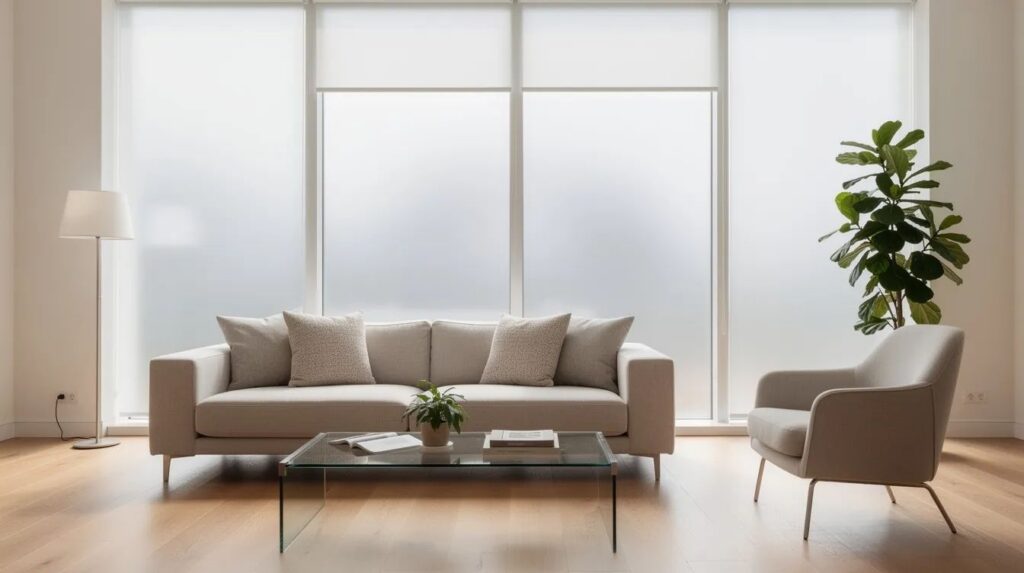
PDLC smart film solves multiple problems at once. Smart glass enhances privacy without curtains or blinds, delivering a clean, modern style that eliminates dusty window treatments. Smart film provides instant privacy at the touch of a button – ideal for bathrooms, street-facing windows, medical exam rooms, and conference room glass.
Smart films can reduce heat by up to 50%, and products like genuine Smart Tint block 99% of UV rays and solar heat, protecting floors, artwork, and furnishings from fading. Smart glass films can lower energy bills by reducing reliance on HVAC systems, and they improve occupant comfort by reducing glare across the space. Smart glass films can also enhance the aesthetics of modern architecture by providing a minimalistic appearance – no bulky hardware, no blinds to maintain, just clean lines and natural light on demand.
In open-plan offices, switching glass to its opaque state reduces visual distraction, supporting productivity without permanent walls.
Common Applications: From Existing Windows to Conference Rooms and Beyond
Most CoolVu smart film projects fall into a few recurring categories.
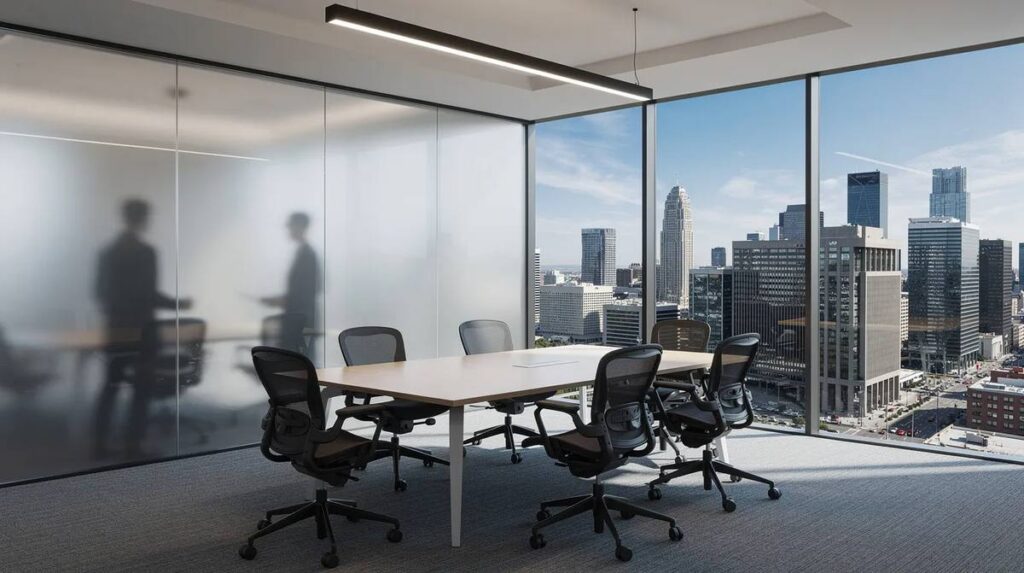
Residential use cases include primary bathroom windows, shower enclosures, home offices facing busy streets, and glass railings where switchable privacy is occasionally needed. In commercial spaces, glass conference room fronts, internal office partitions, law firm consultation rooms, and urgent care patient bays are the most popular installations. Smart glass films can also be used for dynamic projection displays in storefronts, where retail windows transform into rear-projection marketing screens after hours. Smart glass technology is increasingly applied in automotive spaces for improved comfort and privacy as well. CoolVu can work with framed and frameless glass, doors, sidelights, and large wall systems already in place, using switchable smart glass film to turn existing partitions into instant-privacy surfaces.
Technical Specs That Matter: Clarity, Haze, UV, and Power Use
Specs vary significantly across brands, and buyers often underestimate issues like haze and color cast. Key parameters to evaluate include visible light transmission – premium films deliver greater than 80–90% in the transparent state and below 5–10% in the opaque state. Haze in clear mode should sit below 3–5% for best performance. Color neutrality matters: avoid products with a noticeable green or blue cast.
Smart films block over 98% of UV rays, providing outstanding uv protection for interiors. Solar heat rejection varies, but films can meaningfully cut heat gain on sun-exposed façades. Power consumption runs approximately 3–4 W/m² (about 0.3–0.4 W/ft²), so a 100 square foot conference room uses roughly the same electricity as a standard desk lamp. Operating temperature ranges typically span -20°C to +70°C – important for sun-exposed curtain walls in hot-summer states where professional product details and selection matter.
Installation Options: Self-Adhesive Smart Film vs. Factory Glass
Proper installation is the difference between a flawless smart privacy glass wall and a chronic headache. Self adhesive PDLC switchable film uses an adhesive peel backing that bonds directly to clean glass. Smart film can be installed on any smooth glass surface, and when removed, smart film installation leaves no sticky residue behind – an advantage in leased spaces. However, edge sealing, wire locations, and bus-bar routing must be planned carefully. DIY attempts on large panels frequently fail due to dust contamination, bubbles, and exposed wiring.
CoolVu uses trained installers who evaluate glass type (standard glass, tempered, low-E), take precise field measurements, and pre-cut film rather than trimming on site. The peel and stick process is straightforward for professionals but unforgiving for amateurs. Factory-laminated switchable glass encapsulates the film between multiple pieces of glass at the plant, then ships as finished panels for install by glazing crews coordinated with electrical contractors.
Project Lifecycle: From Quote to Completed Smart Glass Film Installation
With CoolVu, the ordering process follows a clear path. A dedicated project manager conducts an on-site or virtual review of existing windows, glass types, dimensions, and goals – whether that is privacy control, a projection screen, energy efficiency, or branding, much like the consultative approach used by CoolVu of Lower Fairfield County for local window and wall enhancement projects. Final measurements are taken along with glass thickness checks, and shop drawings are produced before final pricing.
After deposit, installation typically takes 2-4 weeks for production of custom-cut film. On installation day, the team masks surrounding surfaces, deep-cleans the glass, applies the film, conceals wiring in frames or channels at planned wire locations, and runs a full system test with a client walk-through.
Smart Film Reliability & Lifespan: What Customers Should Realistically Expect
Early smart film projects had mixed reliability, but by 2026 product quality and installation high standards have improved dramatically. Premium PDLC smart film on interior glass lasts 10–15 years when correctly installed, with manufacturers quoting 80 million or more switching cycles. Common failure causes include improper surface cleaning, sharp frame edges, moisture ingress in wet areas, and running film 24/7 without rest.
CoolVu mitigates these risks through vetted manufacturers, matched power supply units, cable strain-relief practices, and installation QA. Customers should expect a slight haze in clear mode compared to bare glass and should always evaluate a live sample of genuine smart tint product under similar lighting before committing.
Smart Glass Films as Projection Screens and Digital Signage
Certain types of smart glass films can act as transparent or high-contrast rear-projection screens. When the film switches to its opaque state, the milky white surface becomes a projection screen suitable for PowerPoint presentations, retail window advertising, or museum displays. Front-projection also works in controlled lighting. Image quality depends on projector brightness (lumens), ambient light levels, and film color – white film maximizes brightness while gray film improves contrast. CoolVu can coordinate with AV integrators to align film layout with screen sizes and camera lines of sight.
Cost Factors: What Drives Smart Film and Switchable Glass Pricing
Online “per square foot” numbers can be misleading without project context. Major price drivers include total square footage, panel count and shapes, cutouts around locks and hinges, power supply placement, and control system complexity. Retrofit smart film on existing windows generally costs less than full smart glass solutions replacement, though there are potential drawbacks to smart glass, including higher upfront cost and maintenance requirements for more complex installations.
Multi-room commercial projects – such as an office floor with six conference rooms – gain economies of scale versus one-off panels, and local providers like CoolVu of North Nassau County frequently design multi-space layouts that balance privacy, branding, and energy performance. Rather than relying on generic calculators, contact CoolVu for a free site visit and project-specific quote.
Electric and Control Options: From Wall Switches to Full Smart Home Integration
Control is where smart glass becomes truly “smart.” Simple options include an on/off wall switch, handheld RF remote, or occupancy sensors for restrooms and exam rooms. Smart film can be controlled via remote or smartphone, and smart glass films can support smart home integration for convenience and control through platforms like Crestron, Lutron, and Control4 using low voltage relays or smart power modules. Dimmable PDLC options allow partial opacity to fine-tune glare and control transparency in conference rooms. All wiring must be installed per local electrical code and meet electrical safety requirements.
Cleaning, Care, and Everyday Use of Smart Glass Films
Daily use is simple. Clean with soft microfiber cloths and non-ammonia glass cleaners. Avoid razor blades and abrasive pads on the film surface. Turn the film off when not needed to reduce operating hours and heat load on the system. In high-moisture areas like showers, proper edge sealing and ventilation protect film longevity. If you notice flickering, uneven opacity, or localized spots, contact CoolVu early so minor issues can be addressed before worsening.
Common Mistakes to Avoid When Choosing Smart Film or Switchable Glass
Most bad experiences trace back to rushing decisions or chasing the lowest cost. Avoid buying non-certified film online and attempting DIY installation on large panels without professional tools. Ignoring glass type and sun exposure when selecting film leads to premature failure. Poor wiring planning creates exposed cables and visible junction boxes in sightlines. Always view a live sample of the actual material in both clear and private modes under similar lighting before committing to any product.
When Is It Time to Upgrade to Smart Glass Film?
If you are dealing with messy blinds, permanently frosted windows, or a lack of privacy in glass-heavy offices, it is time to consider smart film. Common triggers include renovating a conference room to support video calls, converting a spare bedroom into a home office, opening a clinic with glass-front exam rooms, or modernizing a lobby. Smart film is often added during other upgrades – new flooring, lighting, or a branding refresh – to minimize disruption and boost property value.
Smart Glass Films in Healthcare, Education, and Government Facilities
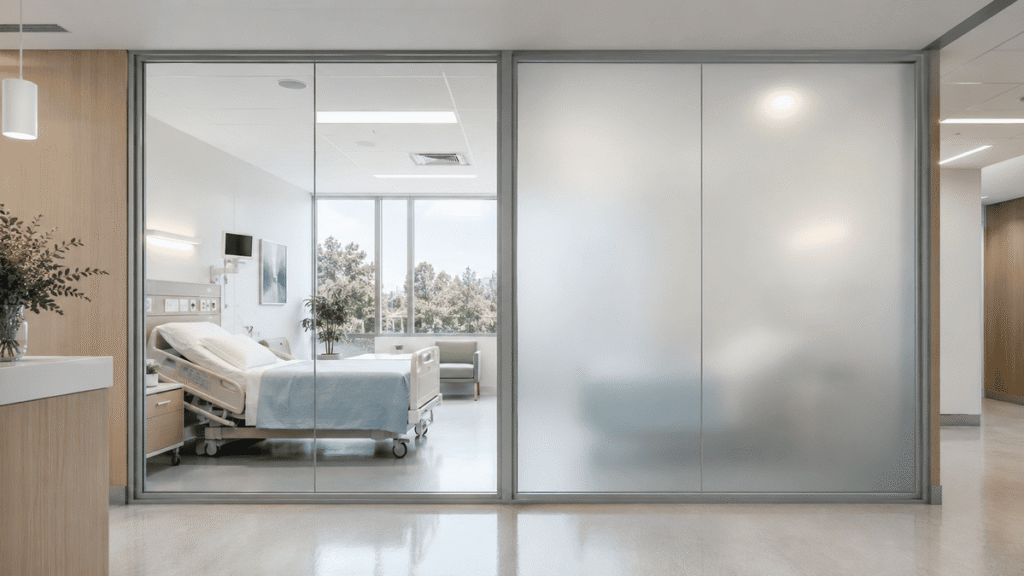
Institutional spaces demand both transparency for supervision and instant privacy for dignity, safety, and compliance. In hospitals and clinics, ICU and ER bays use switchable glass so staff maintain visibility at a distance but can provide private conditions during procedures. Schools use smart film on observation windows in counseling offices and testing rooms. Government and security facilities install smart film in interview rooms and secure meeting areas. CoolVu teams are experienced working within off-hours schedules and procurement processes that these facilities require, just as CoolVu of Central San Diego delivers specialized smart glass and window film solutions tailored to local commercial and institutional clients.
Environmental and Energy Considerations
Smart film fits squarely into 2026 sustainability conversations. Reducing solar heat gain via smart film can lower HVAC loads on south- and west-facing façades, and smart glass can achieve up to 30% energy savings in cooling-dominant climates. Retrofitting existing windows with smart film is a lower-carbon option than full glass replacement because it preserves existing frames and IGUs, and regional providers like CoolVu of Central San Diego routinely pair smart glass with other efficiency-enhancing window films for sustainable upgrades. Smart glass supports WELL and LEED goals by enabling more usable daylight with controllable glare. Facility managers should consider smart film as part of an integrated package with solar-control window films, lighting controls, and shading strategies for maximum energy efficient outcomes and energy savings across the building.
FAQs About Smart Glass Films and Switchable Glass
How long does smart film last?
Premium PDLC smart film typically lasts 10–15 years on interior glass when professionally installed and powered within spec. Lifespan depends on environment, switching frequency, and edge protection.
Can smart film be installed on double-pane or low-E glass?
Yes. Smart film bonds to the interior surface of most double-pane and low-E windows. Your installer should verify glass compatibility and any impact on thermal performance before proceeding.
What happens if the power goes out?
Standard PDLC film defaults to its opaque state when power is lost – meaning your glass stays private during an outage. Backup power options are available for spaces that need to remain clear.
Is smart glass safe in bathrooms and showers?
Yes, provided edges are properly sealed against moisture. Laminated smart glass or well-sealed adhesive film with appropriate ventilation performs reliably in wet environments.
Can I cut smart film myself?
Smart film cannot be field-cut without damaging the conductive layers and bus bars. Always order custom-sized panels based on final measurements. If your project involves two pieces or multiple pieces, each must be sized and wired individually.
What does a typical smart film project cost?
Retrofit smart film ranges from approximately $25–$80 per square foot installed. CoolVu provides free estimates tailored to your specific project so you get accurate product details and pricing rather than guesswork.
Why Choose CoolVu for Your Smart Glass Film Project?
CoolVu is not just a film reseller – it is a national franchise network of trained installers who specialize in glass and surface transformation. Local franchise owners understand regional building codes, climate conditions, and the world of commercial procurement. CoolVu provides end-to-end support: product selection, coordination with general contractors and electricians, custom-cut film, and post-install service.
Beyond smart glass solutions, CoolVu’s broader portfolio includes window films that enhance energy efficiency, security, aesthetics, and privacy as well as solar control films, security films, decorative graphics, and architectural surface finishes – allowing you to combine services for budget optimization. In a recent 2025 project, a CoolVu franchise retrofitted six conference room fronts for a technology firm, delivering switchable privacy across 480 square feet in under three days with measurable glare reduction and elimination of manual blinds across the floor, similar to how regional CoolVu teams deliver privacy, security, and decorative window solutions for both homes and businesses.
How to Get Started: Consult, Estimate, and Next Steps
Getting started is straightforward. Request a free on-site or virtual consultation with your local CoolVu franchise by phone, web form, or email. Have photos, rough measurements, floor plans, and any AV or IT requirements ready. Whether you are a homeowner, facility manager, architect, or contractor, involving CoolVu early in the design phase helps avoid rework and extra cost, and regional teams such as CoolVu of South St. Paul follow the same consult–estimate–install process to streamline projects.
Schedule a smart glass film demo or sample viewing today to experience instant privacy in person – and see the difference smart film technology makes before you commit.