Table of Contents
- Why Retail Storefront Security Film Matters in 2026
- How Security Film Actually Works on Storefront Glass
- Key Benefits for Retail Shops: More Than Just Forced Entry Protection
- Types of Storefront Films: Security, Anti Graffiti, and Solar
- The Professional Installation Process with CoolVu
- Frequently Asked Questions About Retail Storefront Security Film
Why Retail Storefront Security Film Matters in 2026
Your storefront window is your best billboard and your biggest vulnerability. Large glass surfaces invite shoppers in, showcase merchandise, and flood retail spaces with natural light-but they also give criminals a one-second entry point. According to industry surveys, 83% of U.S. retailers have experienced break ins or smash and grab incidents, with nearly 30% reporting 15 or more attempts per year.
A typical smash and grab theft lasts under 60 seconds. Attackers swing a crowbar or hammer, clear broken glass, grab visible inventory, and disappear before police arrive. The average loss per incident runs around $22,000 once you factor in stolen inventory, shattered glass replacement, emergency board-ups, and lost trading hours.
Retail storefront security film is a thick, optically clear polyester laminate retrofitted to existing glass on the interior surface. It does not make glass unbreakable, but it delays forced entry by holding shattered glass together-turning a one-second smash into a prolonged struggle that buys critical response time. Security film maintains the appearance of the storefront, keeping displays visible and the atmosphere welcoming. CoolVu, a national window film franchise, regularly installs these systems for boutiques, pharmacies, electronics retailers, and restaurants, matching film thickness and attachment method to each location’s risk level and budget through its window tinting and security window film installation services. This article covers how the film works, its key benefits, how it compares to alarm systems and cameras, the installation process, and how to get started.
How Security Film Actually Works on Storefront Glass
Security window film is built from multiple bonded layers of polyester (PET), typically 8 to 15 mil thick for retail applications. These layers are adhered to the interior side of your storefront glass using aggressive, pressure-sensitive adhesives. Once fully cured, the film and glass function as a single reinforced pane.
When a brick or hammer strikes unprotected annealed glass, the pane shatters instantly and falls away-creating an open entry point. With security film in place, the glass may still crack, but the film holds shards together, spreading impact energy across the entire surface and keeping a continuous barrier anchored in the window frame. Security film thickness affects its protective capabilities directly: thicker security films discourage quick breaches with tools, extending delay times from 30 seconds to over two minutes depending on film gauge and attachment system.
It helps to understand the distinction between safety film and true security film. Basic safety film runs 2 to 4 mil and is designed for fragment retention during accidental human impact-think a child running into a glass door. True storefront security window film at 8 to 15 mil is engineered for deterring break ins, resisting forced entry, and withstanding severe weather impacts. While laminated security glass offers built-in protection against breakage, it requires full glass replacement. Security film achieves comparable delay performance as a retrofit to existing glass.
CoolVu technicians evaluate whether your glass windows are tempered, annealed, or insulated before recommending a product, because film interacts differently with each type and improper pairing can cause thermal stress; properly specified security window films create a clear, impact-resistant barrier without requiring full glass replacement.
Key Benefits for Retail Shops: More Than Just Forced Entry Protection
Retail storefront security film is a multi-benefit upgrade that goes well beyond burglary prevention. Here are the key benefits that matter most to retail owners and property managers.
Deterring break ins and forced entry. Security film can deter smash and grab theft effectively by adding 30 to 120 seconds to every breach attempt. That delay changes the risk calculus for criminals, especially when paired with visible security cameras, alarm systems, and good exterior lighting. Most thieves abandon attempts when glass refuses to give way.
Customer and staff safety. Flying debris from broken glass is a serious injury risk during accidents, altercations, or even a heavy merchandise display toppling into a storefront window. Security film minimizes the risk of injury from flying glass fragments, and it can reduce glass-related injury liability significantly-a primary concern for any retail operator managing liability exposure.
Severe weather and natural disasters. Security film is effective in storm-prone regions. It holds broken glass in place during hurricanes and severe storms, prevents glass from shattering during natural disasters, and can reduce damage from high winds and flying debris. This helps businesses comply with safety regulations during disasters and gets stores reopened faster.
Vandalism protection. Thick films make storefront glass harder to chip or crack from thrown objects, while a separate anti graffiti film layer protects glass from etching and scratching damage. The sacrificial anti graffiti film can be peeled and replaced at a fraction of the cost of new glass.
Everyday operations. Clear security film maintains storefront visibility while enhancing protection-preserving your welcoming atmosphere and brand’s reputation. Fewer emergency board-ups mean less downtime, lower maintenance costs, and smoother business operations across multiple locations.
Security Film vs. Alarm Systems, Cameras, and Other Options
When budgeting for storefront security, retail owners often weigh security film against other options. The most important distinction: alarm systems and security cameras detect and document incidents, while window security film physically resists forced entry. One records the crime; the other slows it down. Security film is best as part of a comprehensive security strategy that layers physical resistance with electronic detection.
Here is how common alternatives compare:
- Security grilles and roll-down shutters provide robust protection but block sightlines, reduce curb appeal, and require daily operation. They can also clash with modern retail branding.
- Laminated security glass is factory-built with interlayers for strong impact resistance, but replacing every pane in a multi-bay storefront is expensive and disruptive.
- Polycarbonate shields are extremely impact-resistant but distort optical clarity over time, degrade in UV exposure, and look noticeably different from standard glass.
For many retail shops, visible bars and shutters undermine the open, inviting look that drives foot traffic. Security film preserves natural light and window merchandising while providing additional protection invisibly. As a retrofit to existing glass, it is typically far less expensive than full glass replacement, especially across large glass surfaces on multi-bay storefronts.
The recommended approach for comprehensive protection: reinforce glass with professionally installed security film and frame attachment, add monitored alarms and high-resolution cameras, and maintain quality exterior lighting. CoolVu handles the glass and film layer of that defense stack.
Types of Storefront Films: Security, Anti Graffiti, and Solar
Most commercial properties benefit from a combination of film types rather than a single product. Here is what each category delivers.
Security film in the 8 to 15 mil range is the core product for doors, sidelites, and display windows. Available in clear or lightly tinted versions, it absorbs impact energy while preserving product visibility and branding.
Anti graffiti film is a sacrificial outer layer designed for ground-level glass surfaces, exterior doors, and transit-adjacent storefronts where etching, scratching, and spray-paint tagging are common. When damaged, the film is peeled off and replaced-far cheaper than sourcing new storefront glass.
Solar control and energy efficiency film reduces heat gain, cuts glare, and blocks uv rays that fade merchandise. Security films can block up to 99% of harmful uv rays when combined with solar control layers, either as a hybrid product or a layered system. This helps reduce energy costs and protects inventory from uv exposure.
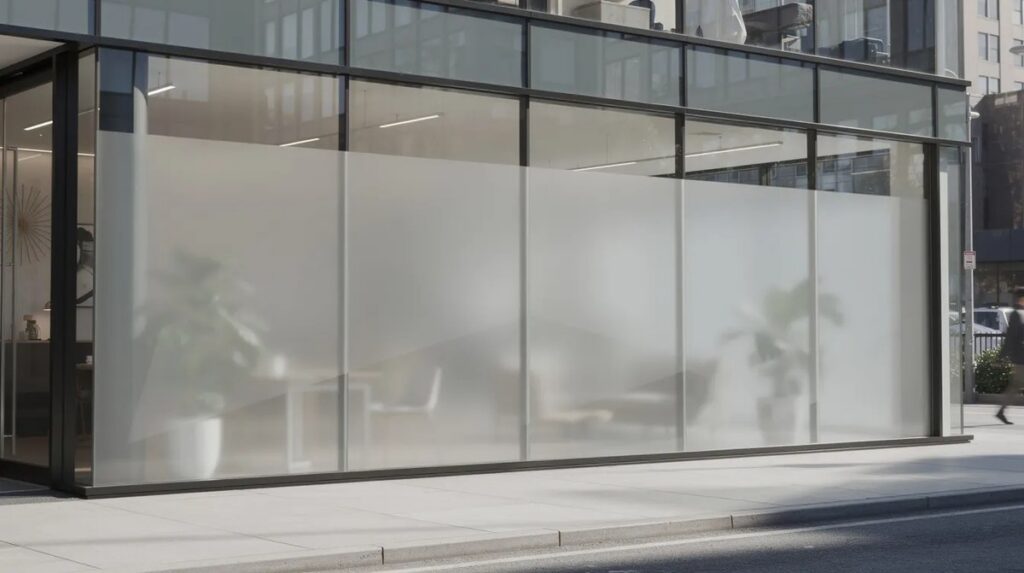
Decorative and privacy films include frosted window films, branded graphics, and one-way options used on office partitions, stockroom doors, or cash-wrap areas. These privacy window film solutions conceal sensitive areas while still allowing natural light through.
A practical mix-and-match strategy: apply window film with 10 mil security plus anti graffiti film on street-facing display windows, solar control window tint on west-facing or upper-level glass to reduce heat gain and trim energy bills, and frosted privacy film on back-office glass. CoolVu designs these combinations during a single site visit.
What to Know Before Installing Security Film on a Retail Storefront
Before committing to a project, a short pre-checklist helps retail owners avoid common mistakes and set realistic expectations.
Glass audit. Not all glass is the same. CoolVu technicians check whether your existing glass is annealed, tempered, insulated (dual pane), or laminated on site. Film thickness and attachment systems are matched to the glass type and frame condition to prevent thermal stress and ensure long-term performance.
Risk assessment. Consider your history of break in attempts, nearby crime rates, merchandise value and proximity to other windows, operating hours, and whether your glass is flush or recessed. Retailers in high crime areas or with high-value visible goods may need thicker film and mechanical edge anchoring for the most robust protection.
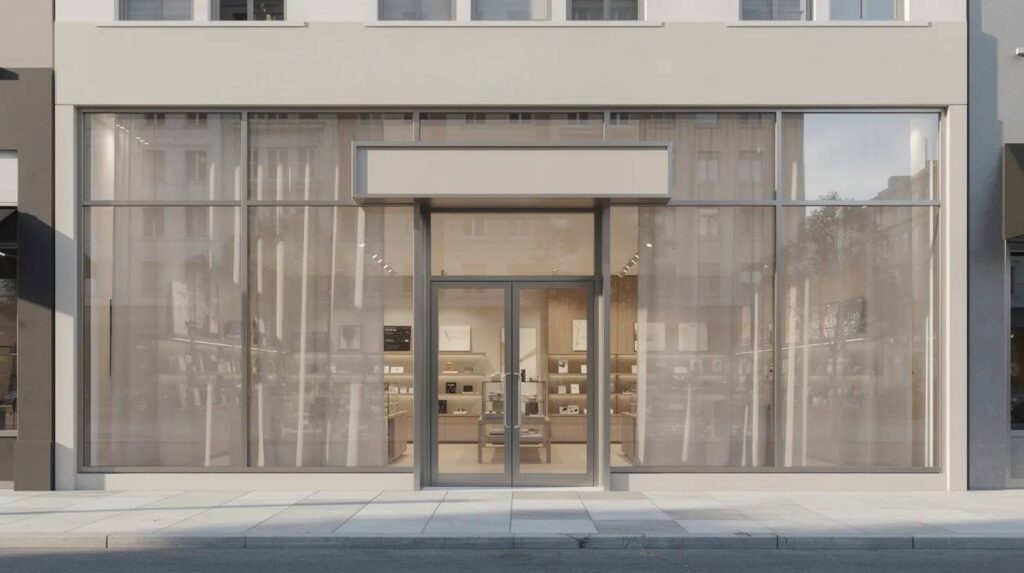
Appearance expectations. Decide whether a fully clear look, a light window tint, or a subtle reflective finish best matches your brand image, interior lighting, and any landlord requirements. Clear security film preserves the look of your storefront completely.
Operational timing. Most installations happen early morning or after hours to minimize disruption. Door glass may be temporarily inaccessible. Cure time before film reaches full adhesion strength ranges from several days to a few weeks, during which minor haziness or small water pockets may appear and then resolve.
DIY vs. professional installation. Consumer-grade film kits lack the adhesive quality, optical clarity, and edge finishing that large glass surfaces and commercial doors demand. Proper cleaning of glass is essential before film application, and installation requires precise cutting and air bubble removal-steps that are difficult to execute properly without training. Professional installation using architectural window films on commercial storefronts is the clear choice for durability and warranty coverage.
The Professional Installation Process with CoolVu
Understanding what happens during a project removes uncertainty and helps you plan around minimal disruption to your retail schedule.
Site visit and estimate. A local CoolVu franchise partner walks the property, measures every pane of storefront glass, notes door swing directions, evaluates frame depth and seal condition, and identifies where attachment systems may be needed. You receive a written proposal with product options and pricing.
Film selection. CoolVu presents options-security-only, security plus solar, or inclusion of anti graffiti film-with clear explanations of performance, warranty terms, and cost. You choose the configuration that fits your building’s security goals and budget.
Surface preparation and installing security film. The crew cleans each glass surface thoroughly, covers nearby merchandise and flooring, then precision-cuts film to size. A solution is applied, the film is positioned, and professional-grade squeegees remove air bubbles and excess moisture. Edge finishing and any wet-glaze or mechanical anchor attachment follows. Professional installation ensures proper adhesion and coverage across every pane.
Cure time and quality checks. Installation typically takes less than a day to complete, minimizing disruption to your store. Over the following days and weeks, adhesive reaches full bond strength. Minor haziness or tiny water pockets disappear as the film cures.
Training and aftercare. CoolVu teams walk you through recommended cleaning methods, warranty coverage, and what to expect during the first weeks. Professional installers can provide warranties and aftercare services, including follow-up inspections for multi-site rollouts. Professionally installed security films can last 15 to 20 years with proper care.
Building Codes, Insurance, and Energy Efficiency Considerations
This section connects storefront security film to compliance, risk management, and operating costs-topics that matter to independent shop owners and corporate facilities teams alike.
Building codes. Most U.S. building codes do not yet mandate security film for retail storefronts, but many require safety glazing in doors and hazardous locations under standards like ANSI Z97.1 and CPSC 16 CFR 1201, as well as IBC Chapter 24. Properly specified security film can help existing glass meet certain safety glazing criteria without full pane replacement, which matters for older retail stores undergoing renovation or code review.
Local tint and reflectivity limits. Some cities and states regulate visible light transmission and reflectivity on commercial glass. If your chosen film includes solar or reflective layers, your local CoolVu representative can confirm compliance before installation.
Insurance implications. Security film installation can reduce insurance premiums by deterring break ins, reducing glass-related injuries, and minimizing storm damage claims. Documented use of tested films can support risk assessments and underwriting conversations with your carrier, helping lower your overall liability exposure.
Energy efficiency. Pairing security film with solar control technology helps reduce glare, cut cooling loads in summer, and stabilize interior temperatures year-round-lowering energy bills and HVAC wear. Replacing glass can be significantly more expensive than installing security film that delivers both protection and energy savings from security film that can deliver ROI within 2 to 4 years.
Incentives. In the mid-2020s, many utilities and local programs began offering incentives for energy efficiency upgrades including window film. CoolVu can help document performance data for rebate applications when available.
Real-World Scenarios: How Security Film Protects Retailers
Scenario 1: Smash-and-grab attempt at an electronics retailer. A store with high-value inventory displayed near street-facing glass previously lost roughly $25,000 in a 45-second smash and grab-merchandise, glass replacement, and two days of closure. After installing 10 mil security film with wet-glaze frame attachment, a later attempt left glass cracked but intact. The suspects struck repeatedly, failed to breach, and fled empty-handed. Security film can minimize costs from theft and vandalism, and preventing one break-in can offset security film installation costs entirely.
Scenario 2: Recurring vandalism at a transit-adjacent convenience store. Repeated acid etching and tagging on lower door glass cost this retailer thousands annually in pane replacement. After switching to anti graffiti film panels over security film, each tagging incident was resolved by peeling and replacing the sacrificial layer-cutting annual glass-related maintenance costs by more than 70% and keeping the storefront looking professional.
Scenario 3: Hurricane debris in a coastal strip center. High winds sent debris into several storefronts. Neighbors without film had fully shattered glass, water damage, and weeks of closure. The location with security film saw cracked panes but the film held fragments bonded in the frame, preventing interior damage. The store reopened within 48 hours with only minor glass repair. That difference in downtime, stolen inventory avoided, and insurance claims illustrates exactly why storefront protection matters for retailers in storm-prone regions.
Why Choose CoolVu for Retail Storefront Security Film
National franchise, local expertise. CoolVu operates through trained local franchise owners who understand regional crime patterns, weather risks, and local building codes, such as CoolVu of Central San Diego. Each location has access to national-level product sourcing and technical support, giving you the best of both worlds.
Full suite of solutions. Unlike single-product vendors, CoolVu combines security, solar, decorative, and anti graffiti films with architectural surface finishes. As outlined in the company’s CoolVu Glass & Surface Solutions overview, retail chains and independent shops can solve multiple security challenges, heat control needs, and branding goals in a single project-reducing coordination headaches and costs.
Professional installation standards. Every CoolVu installer is trained on manufacturer guidelines, proper surface preparation, edge attachment systems, and quality control for commercial-grade applications. You get films engineered for commercial properties, not consumer DIY rolls.
Proven B2C and B2B experience. CoolVu’s track record spans small boutiques, big-box retailers, restaurants, schools, and government facilities. Retail storefronts are a core part of daily work, not a side project.
Service model built for retail. Free estimates, clear written proposals, scheduling flexibility to avoid peak hours, and support for multi-location rollouts across different markets through local teams like CoolVu of North Nassau County. CoolVu makes storefront security film a straightforward investment rather than a logistical headache.
Frequently Asked Questions About Retail Storefront Security Film
Below are answers to the most common questions retailers ask before investing in security film.
How thick should storefront security film be to help prevent break ins?
Most retail projects use 8 to 12 mil security film for effective forced entry resistance. Thicker options in the 12 to 15 mil range, combined with mechanical edge attachment systems, are reserved for higher-risk sites such as jewelry stores in high crime areas or locations where property managers want maximum delay times against sustained attacks.
Will security film make my storefront look darker or less inviting?
No. Clear security films are designed to be virtually invisible, preserving natural light and display visibility. High-quality clear films transmit over 85% of visible light. If you also want to reduce glare or add subtle uv protection, lightly tinted versions are available without significantly changing the storefront’s appearance or welcoming atmosphere.
Can security film be installed on existing tempered or insulated glass?
Yes. Security film is commonly applied to tempered and insulated storefront glass. CoolVu evaluates seal condition, glass size, and framing during the site visit to recommend the right product and avoid thermal stress issues on insulated glass units.
How long does installing security film on a typical retail storefront take?
A small shop with one or two doors and display windows typically takes a few hours. Larger multi-bay storefronts may require a full day. Installation typically takes less than a day, and CoolVu schedules work during off-peak hours to keep disruption to business operations minimal.
Does security window film come with a warranty?
Commercial-grade security films installed by CoolVu generally include manufacturer warranties against peeling, bubbling, and discoloration. Specific terms depend on the product and glass type. Your CoolVu franchise partner will outline warranty details in your written proposal.
How do I clean storefront glass after security film is installed?
Use soft cloths or squeegees with non-abrasive, ammonia-free cleaners. Avoid razor blades and harsh chemicals that can damage the film surface. CoolVu installers provide detailed cleaning guidelines at project completion to help you maintain optical clarity and film longevity.
Next Steps: Schedule a Storefront Security Film Consultation with CoolVu
Retail storefront security film is one of the most cost-effective ways to deter break ins, protect staff and customers from shattered glass injuries, reduce energy costs through heat control and uv protection, and keep your storefront looking its best-all without replacing a single pane of glass.
Start by walking your own storefront. Note every vulnerable area: entry doors, sidelites, low display windows, large glass surfaces near high-value merchandise. Write down what concerns you most-smash and grab risk, vandalism, severe weather, energy bills, or all of the above. That list will make your consultation focused and productive.
Contact your local CoolVu franchise for a free consultation and on-site assessment. Whether you work with CoolVu of Lower Fairfield County or another nearby location, a trained technician will evaluate your glass, measure every pane, and provide a written proposal covering security film, anti graffiti film, solar control options, and even decorative branding graphics-all in a single visit.
Professional installation of storefront security film is a proactive, budget-smart move that protects your inventory, your people, and your bottom line. In 2026’s retail environment, the question is not whether you can afford to invest in comprehensive storefront protection-it is whether you can afford not to.