Table of Contents
- Understanding Privacy Film for Glass Doors
- Types of Privacy Film for Glass Doors & How to Choose
- Benefits, FAQs, and Why Choose CoolVu for Glass Door Privacy Film
- FAQs about Privacy Film for Glass Doors
Understanding Privacy Film for Glass Doors
Glass doors are everywhere in 2026-from open-plan homes with floor-to-ceiling patio sliders to glass-walled offices and school corridors. The challenge is obvious: all that glass means lots of natural light but very little privacy. Privacy film for glass doors solves this without the expense or disruption of replacing existing glass.
So what exactly is privacy film? It is a thin window film-typically polyester- or PVC-based-applied directly to glass surfaces using adhesive or static cling. It works by diffusing or reflecting light so that people on one side cannot clearly see through, while the glass still lets daylight pass into the room. This is a fundamental difference from curtains or blinds, which block light entirely when closed, or from replacing glass with factory-etched panels, which is far more expensive.
Common use cases include bathroom doors in homes, conference room sidelites, glass doors in medical offices and schools, storefront entry doors, and patio sliders. Privacy films can transform plain glass surfaces into decorative features, and they serve as an affordable alternative to etched or frosted glass replacements. The result is a view that is softened or obscured without sacrificing the brightness that makes glass doors appealing in the first place.
CoolVu is a national window film and architectural surface provider that designs and installs privacy films, decorative window films, and security window films for both residential and commercial properties. With over 50,000 installations completed across the U.S., CoolVu’s franchise network brings trained, local expertise to every project.
Types of Privacy Film for Glass Doors & How to Choose
Not all privacy films perform the same way. The style you choose affects appearance, how much light enters the room, and whether the film improves energy efficiency. Here is what you need to know to find the right match.
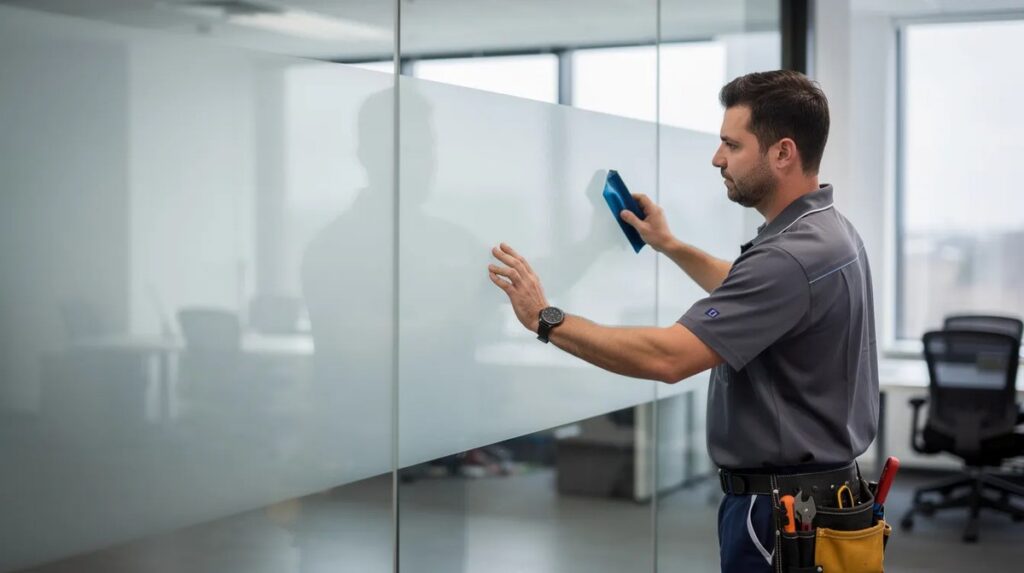
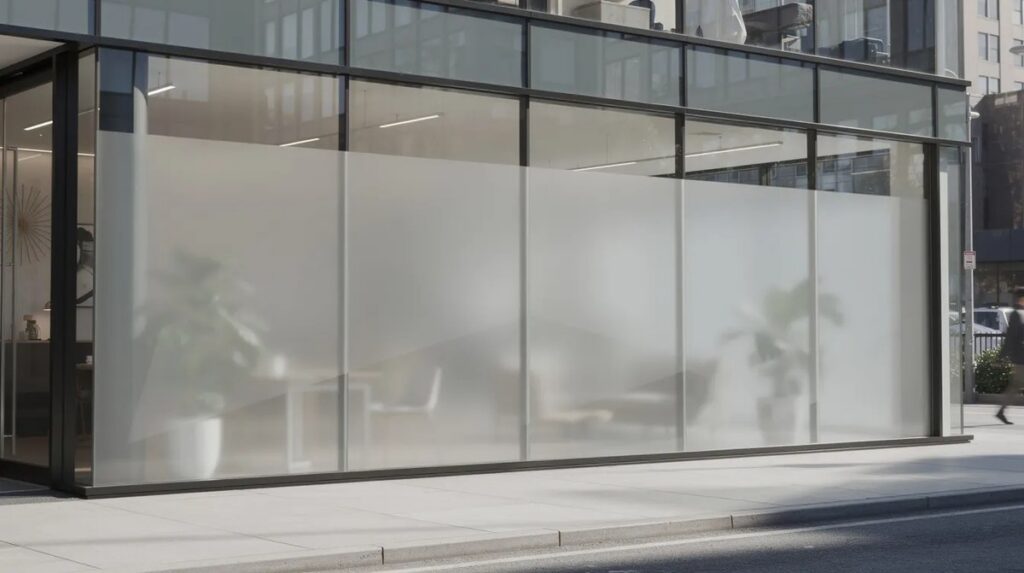
Frosted and etched-glass-style films are the most popular option for glass doors. They create a soft, diffused look-similar to sandblasted glass-that provides two-way privacy both day and night. Decorative privacy films with a frosted finish obscure visibility around the clock, making them ideal for bathroom doors, office partitions, and hallway sidelites. Light transmission stays relatively high (typically 60–90% VLT depending on frost density), so rooms remain bright without a direct line of sight.
Decorative and patterned films go further by doubling as design elements. These films come in stained glass, etched glass, and frosted designs, along with geometric patterns, gradients, and custom logos. Schools, medical lobbies, and corporate spaces use them to add privacy while reinforcing brand identity. Pattern density determines how much visibility is blocked-heavier patterns offer more privacy, while lighter ones serve as accent details.
One-way and tinted films are built for glass doors exposed to strong sun. One-way mirror films create a mirrored effect on the outside during the day, blocking visibility from the street while still allowing you to see out. However, one-way mirror films block visibility during daylight but lose effectiveness at night, because the mirror effect reverses when interior lights are brighter than the exterior. Reflective films are effective for daytime privacy but can become transparent at night, so they are best paired with curtains or blinds for evening hours. High-quality films can block up to 99% of harmful UV rays, and the added solar rejection helps reduce cooling loads on south- and west-facing doors. Privacy films also reduce glare and can increase energy efficiency, which matters in sun-drenched commercial spaces.
Blackout films are a specialized category worth mentioning. Blackout films block all light and visibility, making them best for spaces requiring total darkness-think media rooms, server rooms, or light-sensitive labs.
Safety and security films can be paired with privacy film on entry doors. Privacy films enhance safety by strengthening glass and holding shards together if broken, and dedicated security window films add even more impact resistance without changing the frosted or tinted appearance.
When it comes time to choose, consider three things. First, determine the privacy level you need-full privacy for a bathroom door versus partial privacy for a hallway sidelight. Second, decide how much light you want to keep. A light frost lets in nearly as much daylight as bare glass, while heavier patterns or tinted films reduce it significantly. Third, consider whether the door is interior or exterior, because exterior-facing doors need films rated for weather exposure and UV resistance.
Installation methods range from non-adhesive static cling to permanent adhesives. Static cling films are easy to install and ideal for renters-these films are adhesive-free and easy to apply, requiring no special tools or landlord permission. Some films are suitable for DIY installation, making them user-friendly for small projects. People often browse for DIY films on amazon, but for large sliding doors, conference rooms, or high-tech spaces, switchable smart window films offer on-demand privacy with a clean, modern look, while for other commercial applications, professional window film installation services from CoolVu ensure clean edges, proper glass compatibility, warranty coverage, and a finish that lasts. When researching options online, you can read manufacturer datasheets typically available via http on the brand’s web server or distributed through content delivery platforms like edgesuite-but real film samples viewed on your actual door beat any spec sheet.
Benefits, FAQs, and Why Choose CoolVu for Glass Door Privacy Film
Privacy film for glass doors delivers a short list of benefits that add up to a great investment. You gain privacy for restrooms, offices, and patient areas without blocking natural light. UV protection helps reduce fading of furniture and artwork positioned near sun-facing doors. Heat and glare filtering improve daily comfort and can lower HVAC costs, especially when combined with broader architectural window film solutions. And because film is applied to existing glass, the total cost is a fraction of what you would spend on etched glass replacements or full door swaps. Design flexibility is another advantage-films can be updated or replaced as tastes or branding evolve, which makes them practical for leased spaces that change tenants.
The CoolVu Process
CoolVu starts with an on-site or virtual consultation where you can access real film samples and see how each option looks against your glass in actual lighting conditions. Installers measure doors precisely, verify glass type (tempered, laminated, insulated), clean surfaces thoroughly, and apply the film using professional wet-adhesive methods with proper edge clearance. After installation, the team cleans up and provides written care instructions along with warranty documentation.
Why Choose CoolVu
CoolVu operates a national franchise network with trained, licensed installers who handle everything from a single bathroom door to a full glass-front office renovation. The company offers 2026-grade film technologies across privacy, decorative, solar, and security categories-so you can combine a frosted privacy film with a security underlayer or add decorative privacy window films with printed graphics to a conference room, all in one project. From CoolVu of Lower Fairfield County to other local franchises nationwide, residential installations may carry a lifetime warranty on window film and labor, while commercial projects are backed by up to 15 years of coverage. Decorative frost and privacy films are specifically warranted for 5 years. CoolVu serves homeowners, property managers, schools, medical practices, and government facilities, and every estimate is free.
FAQs about Privacy Film for Glass Doors
These FAQs address the questions CoolVu’s residential and commercial clients ask most often.
Does privacy film work at night on glass doors?
Frosted and opaque decorative films maintain privacy day and night because they diffuse light in both directions regardless of lighting conditions. One-way reflective or mirrored films, however, depend on a light differential-during the day, the brighter exterior reflects the view back, but at night when interior lights are on and outside is dark, the effect reverses and people outside may see in. For exterior entry doors and bathroom doors where round-the-clock privacy matters, choose a full-privacy frosted or decorative film rather than a reflective option, and consider consulting a local specialist like CoolVu of Central San Diego if you live in a high-sun market.
Can I still see out once privacy film is installed?
It depends on the film type. A translucent frost lets light in but reduces the view to soft shapes and silhouettes-you will not get a clear outward view. Tinted or partial-coverage films (such as a gradient that covers only eye level) preserve some outward visibility while still blocking the sightline from outside. For patio doors where you want to enjoy the view, a light tint or banded frost is a better fit than a full frosted film, and homeowners in the Mid-Atlantic can work with CoolVu of Northern Virginia to balance privacy and views in sun-exposed spaces.
Will privacy window film damage my glass doors?
Professional-grade window films are engineered for tempered and laminated glass, which covers the vast majority of residential and commercial glass doors. CoolVu installers examine the glass type before installation and maintain a minimum edge clearance (approximately 1/16 inch) from insulated glass seals to prevent thermal stress. When installed correctly, the film will not void your glass warranty or damage the surface, and regional experts such as CoolVu of North Milwaukee follow strict installation standards for local climate conditions.
How long does privacy film last on a frequently used door?
Interior doors with professionally installed, high-quality privacy film typically last 10 to 15 years before showing signs of adhesive wear or discoloration. Sun exposure, humidity, and cleaning habits all influence lifespan. Budget DIY static cling films may last only 1 to 3 years, while self-adhesive films from retail sources generally hold up for 3 to 7 years. CoolVu backs its decorative and privacy film installations with a 5-year warranty, and some residential window film products carry lifetime coverage, with markets like CoolVu of Sacramento Northeast advising clients based on local sun and heat exposure.
Can privacy film be removed or replaced later?
Yes. Most professionally installed films can be removed using heat and a scraper without permanently damaging the glass. Some adhesive residue may remain and require a solvent wipe, but the glass itself stays intact. This makes privacy film an ideal solution for leased offices, rental apartments, or any space where design refreshes are expected, and providers such as CoolVu of South St. Paul routinely help clients update films as branding or privacy needs change. Static cling films peel off with virtually no residue at all.
How do I clean a glass door after privacy film is installed?
Use a soft cloth or microfiber towel with a mild, non-abrasive cleaner. Avoid ammonia-based products, razor blades, and abrasive pads-these can scratch or degrade the film surface. CoolVu leaves written care instructions after every installation so you know exactly what products and techniques are safe for your specific film, and local teams like CoolVu of The Villages often review maintenance tips specific to your climate and glass type. Read and follow those guidelines to get the longest possible life from your investment.
If you have project-specific questions-school safety glazing requirements, oversized sliding doors, or custom branded graphics-or you need help from a CoolVu window tinting and film installer in Northeast Columbus through CoolVu of Northeast Columbus-contact your local CoolVu franchise for expert guidance tailored to your situation.
Ready to add privacy to your glass doors? Contact CoolVu today for a free glass door privacy assessment. Request real film samples, compare options side by side on your own glass, and get a no-obligation estimate from a trained local installer. Whether it is one bathroom door or an entire building of glass partitions, CoolVu has the technology, the experience, and the warranty to back it up, with regional specialists such as CoolVu of Tucson ready to help in your local market.