
If you have been dealing with rooms that overheat every summer, furniture fading from UV exposure, or street-facing windows that feel like fishbowls, you are not alone. Rising energy costs and increasing comfort expectations are pushing more homeowners to search for home window film installers near me rather than investing in full window replacement.
This article will help you understand the real benefits of home window tinting, learn how different film types solve different problems, and – most importantly – figure out how to choose a trustworthy local installer who will get the job done right the first time. Modern home window film can deliver energy savings, UV protection, privacy, and improved comfort without replacing your existing glass.
Table of Contents
Use this quick navigation guide to jump to the section most relevant to your situation – whether that is privacy, energy savings, safety, or budgeting.
- What Home Window Film Does for Your House in 2026
- Types of Home Window Film and When to Use Each
- How to Choose Reliable Home Window Film Installers Near You
- Home Window Tinting Costs, Energy Savings, and ROI
- What to Expect During the Home Window Film Installation Process
- FAQ: Home Window Tinting Questions Homeowners Ask Most
- Why Choose Our Team for Local Home Window Tinting Services
- Conclusion: Next Steps to Get Your Home Windows Tinted
What Home Window Film Does for Your House in 2026
Home window film is a thin, multi-layer polyester or ceramic material applied to the interior face of existing glass. It works by selectively filtering wavelengths of light – blocking ultraviolet radiation and near-infrared heat while letting visible light pass through.
Here is what that means in practical terms for your house:
- Solar heat control: Window films can reduce heat by up to 88%, cutting cooling loads dramatically in sun-exposed rooms.
- UV blocking: Some films offer up to 99% UV protection, which helps protect floors, furniture, and fabrics from fading.
- Glare reduction: Window films can reduce glare by up to 94%, making it easy to work or watch screens near windows.
- Safety and shatter resistance: Thicker films hold broken glass together, adding a layer of security.
- Privacy and decorative options: From frosted to mirrored finishes, films let you control visibility without sacrificing daylight.
A typical south-facing living room in a U.S. suburb can cut its cooling load by 20–30% after window tinting, according to simulation data aligned with Lawrence Berkeley National Lab research. Solar and ceramic films provide heat rejection and UV protection without darkening views, thanks to nano-ceramic and spectrally selective technologies that stay clear and signal-friendly.

Types of Home Window Film and When to Use Each
Not every film does the same job. Different home window films utilize distinct materials designed for specific comfort and safety concerns. Here is how to match each type to your goals.
Sun Control / Solar Window Film: These are the workhorses for hot climates and west-facing rooms. They reduce solar heat gain and glare, making a room comfortable without closing blinds. Products like DuPont’s Nightview 15 film provide 75% heat rejection while maintaining outward views. Energy-efficient window films in this category enhance indoor comfort during summer and reduce HVAC runtime significantly.
Privacy Window Film: Privacy films block visibility while allowing light to pass through, making them ideal for bathrooms, street-facing bedrooms, and sidelights. Home window tinting enhances privacy without blocking outdoor views. Window films can hide views into rooms using frosted, etched, or reflective finishes, and privacy films can be customized for specific window areas depending on the level of opacity you need.
Security / Safety Window Film: Safety films are designed to hold glass together during storms or break-ins. These thicker, multi-layer constructions (often 4–15 mils) slow forced entry and protect your family from flying glass fragments. Installation by a certified dealer is especially important for this category to ensure proper adhesion and warranty coverage.
Decorative Films: Frosted, patterned, and colored window films update interior glass doors, sidelights, and home office partitions without permanent changes. Many decorative films now include UV protection as a bonus.
Energy-Saving / Low-E Style Films: Insulating Low-E films help maintain energy efficiency throughout the year – reducing heat loss in winter and solar gain in summer. LBNL studies documented approximately 29% perimeter HVAC savings when low-e films were applied to single-pane clear glass.
A good installer will usually bring physical samples to hold against your glass so you can see the tint level and light effect in real conditions before you select a product.
How to Choose Reliable Home Window Film Installers Near You
Choosing the right local installer is just as important as choosing the film itself. Here is what to evaluate before signing anything.
Licensing and credentials. Requirements vary by state – some require a glazing contractor license, others a general contractor license. Check your state and local rules. Authorized dealers are required to complete strict training by top manufacturers before they can offer certain product warranties.
Experience and portfolio. Ask how long the company has specialized in home window tinting services and roughly how many residential projects they complete per year. Experience reduces risk of bubbling, peeling, and improper cuts. Evaluate past workmanship and customer reviews when selecting an installer.
Warranty coverage. Primary considerations for window film installation include your specific goals and warranty coverage. Look for clear, written warranties on both the film (manufacturer) and installation labor (workmanship guarantee). Comprehensive warranties may cover bubbling, peeling, and discoloration, while warranty coverage typically includes material failure and labor guarantees.
Customer reviews. Check recent feedback from the last 12–24 months. Focus on punctuality, cleanliness, and long-term performance.
Film brands and product lines. Ask which brands are used and why certain options are recommended for your window orientations and climate. Local installers can help select the right window tint for homes based on unique requirements like glass type, sun exposure, and neighborhood aesthetics.
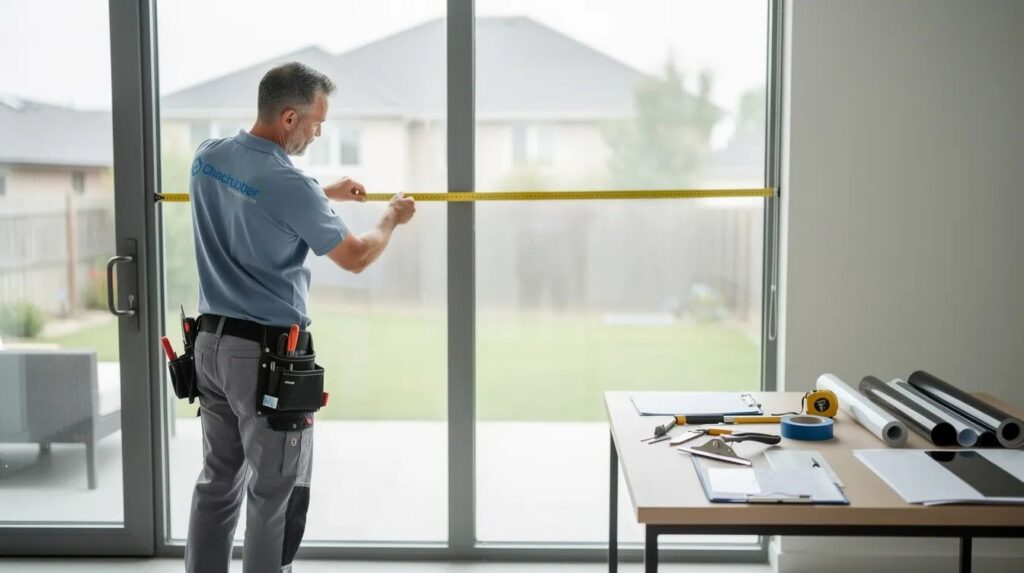
In-home consultations. A reputable installer will measure windows, assess glass type and condition, discuss tint levels, and explain any potential for glass breakage or seal failure. Glass performance testing assesses window types to prevent thermal stress fractures – this step should never be skipped.
Avoid purely price-based decisions. Very low bids often signal cut corners on film quality or prep work. Obtain detailed quotes from multiple companies for transparency in costs before making a final choice.
Home Window Tinting Costs, Energy Savings, and ROI
Costs vary by film type, window size, access difficulty, and region, but here are realistic 2026 ranges:
| Project Size | Typical Installed Cost |
|---|---|
| Per square foot (standard film) | $6 – $15 |
| Per square foot (premium nano-ceramic or security) | $18 – $45+ |
| Small home (~300 sq ft of glass) | $300 – $1,200 |
| Larger home (~600+ sq ft of glass) | $1,000 – $4,500 |
Home window tinting can enhance energy efficiency significantly. Cooling cost reductions typically land in the 10–30% range for sun-exposed rooms, and window films can yield significant energy savings over their lifespan. Many homeowners see payback periods of 3–7 years when factoring in lower energy bills and reduced fading damage to floors and furnishings.
Some utilities and municipalities offer rebates for qualifying energy-efficient films – check current local programs before your project begins. Security and decorative films deliver ROI in non-energy terms like safety, appearance, and privacy, which should also factor into your budget decision.
What to Expect During the Home Window Film Installation Process
The typical timeline from consultation to completion moves faster than most homeowners expect.
- Consultation (week 1–2): An installer visits your home, measures windows, reviews film samples, discusses your goals, and provides a written quote with a clear scope and schedule.
- Day-of installation: The crew protects furniture with drop cloths, thoroughly cleans each pane of glass, precision-cuts the film, and applies it using a slip solution for positioning. Window film installation requires specific tools like a heat gun and professional squeegees for proper adhesion. Window film must be applied smoothly without bubbles to ensure longevity.
- Timeline: Installation can take less than a day for most projects. A 15–20 window home is often completed in a single day by a two-person crew.
- Curing: Films may look hazy or slightly streaky for several days to a few weeks as moisture evaporates. Avoid cleaning for at least 7–14 days.
- Aftercare: Proper cleaning of tinted windows is easier after installation – use mild soap and a soft cloth. Avoid razor blades, abrasive pads, and ammonia-based cleaners.
Professional installation ensures the film’s efficiency and longevity. A quality crew will leave your place clean, remove all debris, and walk through the finished project with you before leaving.
FAQ: Home Window Tinting Questions Homeowners Ask Most
Here are concise answers to the concerns that come up most often about home window film.
How dark should my home window tint be?
Visible light transmission (VLT) ranges from 10% (very dark) to 90% (nearly clear). For living rooms and kitchens where you want natural light, aim for 50–70% VLT with a spectrally selective film. For street-facing bedrooms or bathrooms, darker or frosted options make more sense.
Will window films damage my home windows?
When the correct product is chosen and properly installed, damage is rare. Risks arise when reflective or absorbent films are applied to tempered or low-E double-pane glass without compatibility testing. Reputable installers assess this before recommending a product.
How long does home window film last?
Premium ceramic films typically last 20–25 years. Carbon or hybrid films average 15–20 years. Dyed or basic metallic films may fade or peel within 5–10 years. Lifespan depends on sun exposure, climate, and installation quality.
Can I remove or replace home window tint later?
Yes. Removal is straightforward – peel or use heat and solvent. Removal costs typically run $2–$5 per square foot. Many homeowners upgrade to newer spectrally selective or smart films as technology improves.
Is window tinting better than blinds or curtains?
Window film provides continuous, passive protection against UV, heat, and glare while preserving your view of the outdoors. Blinds and curtains only work when closed and do little for insulation or UV blocking.
Does window film void my window warranty?
It can, depending on the window manufacturer’s policy. Incompatible films on certain glass types may void coverage. Always check with your window manufacturer, and work with an installer who understands these issues and carries manufacturer authorization.
Why Choose Our Team for Local Home Window Tinting Services
Homeowners choose our team because we focus exclusively on residential window film – not as a side service, but as our core expertise.
- In-home consultations with precise measurements, glass-type assessment, and physical film samples so you see exactly what you are getting.
- Transparent pricing with written quotes and no hidden fees.
- Clear warranties covering both film materials and our labor, including protection against bubbling, peeling, and discoloration.
- High-performance products – we install nano-ceramic and spectrally selective films chosen for durability and comfort, not just low cost.
- Local climate knowledge – we understand the common window types in nearby neighborhoods and typical concerns like afternoon heat or street-facing privacy.
Our customer reviews consistently highlight punctuality, clean work areas, and noticeable comfort improvements. We invite you to compare this service standard with what you find elsewhere in your search.
Conclusion: Next Steps to Get Your Home Windows Tinted
Home window film improves comfort, privacy, and energy performance without the expense of full window replacement. Choosing a skilled local installer is the difference between a film that lasts two decades and one that peels within a year.
Ready to move forward? Contact us to request a free in-home consultation or an online quote – reach out by phone, email, or through our website form. Before you do, gather your approximate window count, identify your main problem rooms, and note any HOA restrictions to speed up the quoting process.
Professional advice helps you pick the right window films for your home windows the first time, so you can enjoy the benefits for years without costly trial and error.