If you manage a commercial building and your energy bills keep climbing, your employees complain about glare, or your storefront glass feels like a liability, window film might be the most practical upgrade you haven’t considered yet. This guide breaks down exactly what commercial window tinting does, what it costs, and how to find the right local installer for your project.
Quick Answer: What to Know Before You Book Business Window Tinting Near You
If you’ve been searching for business window tinting near me, here’s the short version: commercial window tinting is a thin, engineered film applied directly to your existing glass that modifies how your windows handle heat, light, and impact – without replacing a single pane.
Office window tinting and storefront film share the same core technology: a polyester or ceramic laminate bonded to the interior surface of your existing windows. The result is a measurable upgrade in performance across several categories.
The main benefits at a glance:
- Lower energy costs by reducing solar heat gain and easing the load on air conditioning systems
- Improved occupant comfort through glare reduction of up to 90%
- Enhanced privacy by limiting visibility into your business’s interior
- Added safety and security by holding glass fragments in place during impacts or break-ins
- Protection for furniture, flooring, and merchandise by blocking harmful UV rays
- A clean, uniform appearance across all glass surfaces and glass doors
Commercial window tinting provides financial and operational returns for businesses of nearly every size. Most professional commercial window tinting services offer free on-site consultations and customized film recommendations based on your building’s specific needs.
Ready to see what film can do for your space? Contact us today for a free estimate tailored to your building.
Table of Contents
- How Commercial Window Tinting Works
- Energy Efficiency & Lower Energy Costs
- Safety and Security Window Films
- Decorative Films & Office Branding
- Our Installation Process Step by Step
- How to Choose the Best Local Tint Company
- Why Choose Our Team for Commercial Window Tinting
- Frequently Asked Questions
How Commercial Window Tinting Works for Offices & Storefronts
Commercial window film is an ultra-thin polyester or multi-layer polymer laminate applied to the interior side of existing glass. It comes in different shades, finishes, and performance levels – from nearly invisible ceramic films to bold decorative tints. The goal is to change how your windows manage heat, light, and impact without altering your building’s structure.
Three categories of film cover most commercial needs:
- Solar films reject infrared heat and reduce glare. High-performance options like carbon 2-ply film block up to 40% of infrared heat, ceramic 2-ply film block up to 98% of infrared heat, and nano ceramic IR plus 2-ply film blocks up to 99% of infrared heat.
- Security films are thick, multi-layer laminates that bond to glass and hold fragments together during breakage, deterring forced entry and reducing injury risk.
- Decorative films add privacy, branding, and design elements – frosted looks, gradients, patterns, and custom graphics.
Modern office window film can block up to 78% of incoming solar heat and over 99% of harmful UV rays while maintaining comfortable natural light levels. High-grade films should meet metrics like Solar Heat Gain Coefficient (SHGC), and visible light transmission percentages dictate how much light enters a space. Tinting also blocks glare by up to 90%, making screen-heavy workspaces far more comfortable.
Buildings that benefit most include offices, retail storefronts, restaurants, medical facilities, schools, and warehouses. Professional installers measure your glass, recommend the right tint for your goals, and provide a written quote before the installation process begins. And unlike window replacement, window tinting is a reversible, non-structural upgrade – it can be removed or updated as needs change.
Energy Efficiency & Lower Energy Costs for Your Business
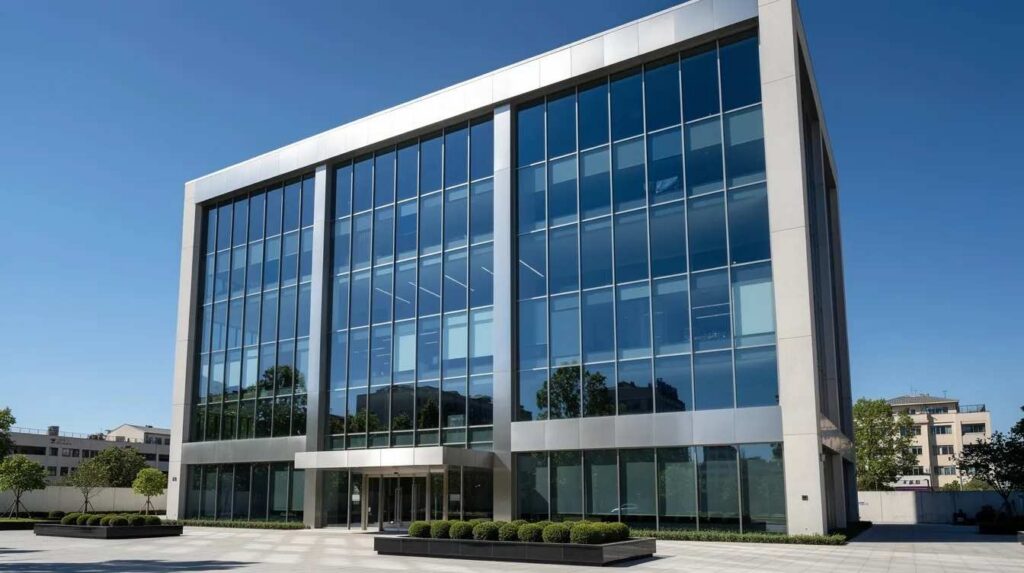
Solar control commercial window tinting works by rejecting infrared heat before it enters your building in summer, while certain films also reduce heat loss through glass in winter. The net effect is a significant reduction in the workload your HVAC system carries year-round – which translates directly into lower energy bills.
Here’s how the numbers break down:
- Window tinting can reduce energy costs by up to 30%
- Buildings with window film can save 5-15% on energy annually, depending on climate and building design
- Up to 70% of air conditioning costs come from heat gain through windows
- Window film blocks up to 98% of solar energy entering through glass
- Payback for window tinting costs typically occurs in 2 to 3 years
Example scenario: A mid-sized office building running $20,000 per year in cooling costs installs ceramic solar film across its south- and west-facing windows. With a 30% reduction in cooling load, that’s roughly $6,000 in annual energy savings – plus reduced wear on the HVAC system. The total investment pays for itself well within three years.
Beyond energy consumption, film improves comfort at perimeter workstations by eliminating hotspots and cold drafts near windows, reducing the need for blinds or shades that block natural light entirely.
UV protection is another significant factor. Most quality window films block over 99% of harmful UV rays, protecting flooring, furniture, and merchandise from fading – commercial window tinting reduces fading of furniture by up to 99%. The Skin Cancer Foundation recommends window tinting for UV protection, noting that UV rays can cause skin damage and premature aging even through untreated glass.
For maximum impact, integrate film into a broader energy-efficient strategy: pair it with LED lighting, smart thermostats, and automated window treatments. Commercial installations often qualify as a tax-deductible expense, and some utility providers offer rebates for NFRC-certified films.

Safety and Security: Protecting Glass, People & Property
Safety and security window films are engineered for a specific job: keeping glass intact and people protected when something goes wrong. Whether you manage a storefront, an office tower, or a school building, these films add a layer of defense that standard glass simply doesn’t provide.
Safety and security films protect against break-ins and vandalism by bonding directly to existing glass. When the glass breaks, the film holds shards in place – tinted windows can reduce the risk of injury from shattered glass and significantly slow down forced entry attempts. Window tinting can also deter break-ins by obscuring interior views, making it harder for would-be thieves to case your space.
Primary threats these films help mitigate:
- Smash-and-grab theft and vandalism
- Windborne debris during storms – safety and security films protect against break-ins and storms
- Everyday accidental impact on glass doors and partitions
- Natural disaster damage to large glass surfaces
For higher-risk environments, thicker security films can be paired with edge attachment systems that anchor the film to the window frame for added resistance. Armorcoat films reinforce glass against impacts and natural disasters, while DefenseLite can withstand up to 40 minutes of sustained attack – a level of protection that gives first responders meaningful response time.
Security films are typically clear or lightly tinted, maintaining your building’s existing appearance while substantially upgrading protection. A major retail chain, for example, rolled out 8-mil security film with anchoring caulk across 905 store locations to combat smash-and-grab incidents – all installed after hours to avoid any disruption to daily operations.
Decorative Films & Office Branding Options
Decorative films turn plain glass into a design element while solving real privacy and branding challenges. Unlike permanent solutions like sandblasting or etched glass, decorative tints are affordable, removable, and easy to update when your brand or tenant changes.
Popular styles include:
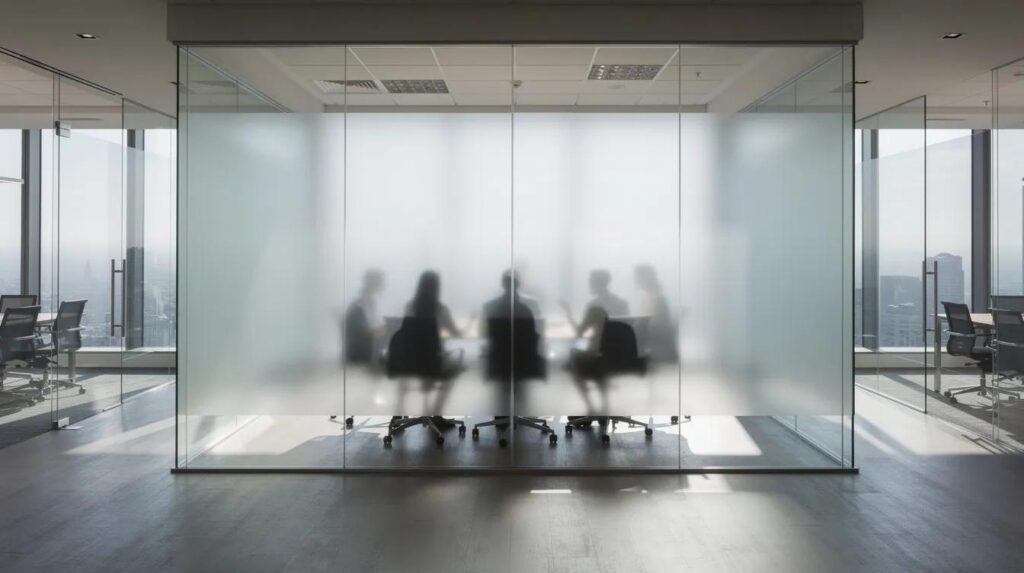
- Frosted privacy film for a clean, modern look
- Gradient films that transition from opaque to clear
- Patterned designs for visual interest
- Custom-printed graphic films with logos, messaging, or artwork – decorative films can create patterns and graphic designs tailored to your brand
Common use cases across commercial spaces:
- Conference room privacy bands that maintain natural light while limiting visibility
- Lobby and reception branding on glass partitions
- Open-plan office dividers that feel spacious but defined
- Retail display windows with seasonal or promotional graphics
For businesses with specific compliance needs, decorative film works well in HIPAA-sensitive areas of medical offices, providing visual privacy without sacrificing daylight. Commercial window tinting enhances privacy across virtually every building type.
Decorative options also deliver functional benefits: commercial window tinting protects interior furnishings from UV rays, and many decorative safety films block 95% or more of UV. Combining decorative films with solar control or security films in different zones of the same building gives you a complete solution – aesthetics, energy performance, and protection in one project.
Our Commercial Window Tinting Installation Process
Our installation process is designed to be clean, efficient, and minimally disruptive to your daily operations. Most businesses stay fully operational throughout the project.
Here’s how it works, step by step:
- On-site assessment and measurements – Installation companies should conduct on-site glass inspections to evaluate glass type, orientation, sun exposure, and existing conditions. We document everything and discuss your goals.
- Product recommendations and quote – Based on the assessment, we recommend specific film types and provide a detailed written proposal covering materials, labor, timeline, and cost.
- Scheduling – We work around your business hours, often completing installations during evenings, weekends, or in phased segments to keep disruption near zero.
- Preparation – Furniture is moved as needed, floors are protected, and every glass surface is deep-cleaned to remove dirt, old adhesive, and contaminants.
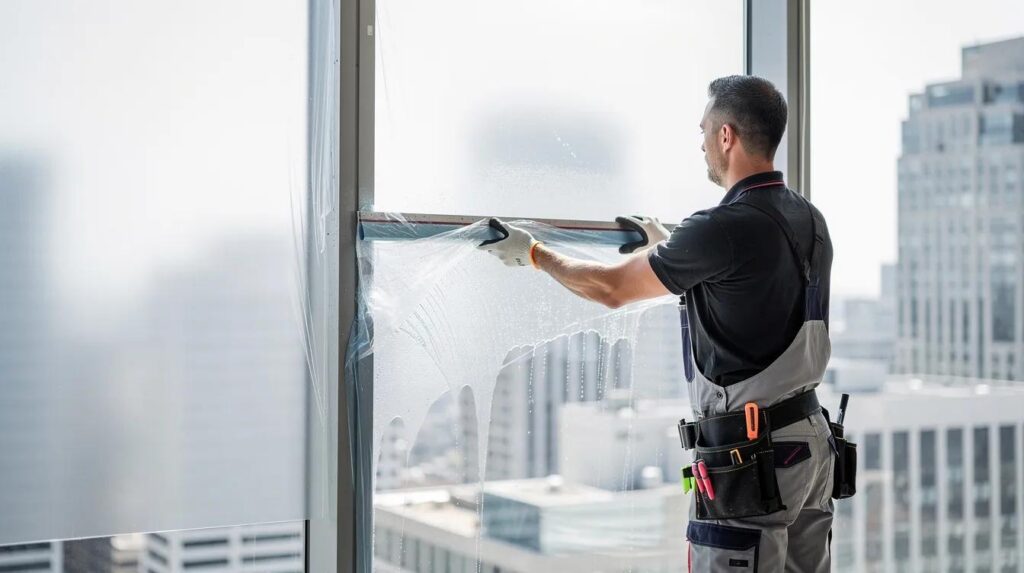
- Film application – Film is precision-cut, applied with a slip solution, and squeegeed smooth to eliminate water and air pockets. Edges are trimmed for a clean finish.
- Final walkthrough – We inspect every pane with you, confirm quality, and answer any questions before wrapping up.
Timelines vary by project size:
| Project Type | Typical Duration |
|---|---|
| Small retail storefront | A few hours to one day |
| Mid-size office (800–2,500 sq ft glass) | 1–3 days |
| Large multi-story building | Several days to 2+ weeks |
After installation, film may appear slightly hazy or show small water pockets – this is normal. Full curing takes several days to a few weeks depending on humidity and temperature. Clients receive detailed care instructions for cleaning and maintaining their new office window tinting to ensure long-term performance. Use soft cloths and non-ammonia, pH-neutral cleaners – never razor blades or abrasive materials.
Selecting the right commercial window tinting service impacts energy efficiency and long-term results, so the quality of the installation matters as much as the film itself.
How to Choose the Best Commercial Window Tinting Services Near You
When you search online for a commercial tinting provider, the number of options can feel overwhelming. Not all window tinting services are created equal, and the wrong choice can mean bubbling film, voided glass warranties, or underwhelming performance.
Key factors to evaluate:
- Years of experience specifically with commercial projects – not just automotive or residential work
- Proper licensing and insurance (liability and workers’ comp)
- Manufacturer certifications from brands that back their products with real warranties
- Product warranties that cover both film performance and installation quality
Request case studies or references from previous commercial projects. Ask to see photos of completed work in offices, retail, medical, or educational buildings from the last 2–3 years.
Check online reviews to assess service quality – pay attention to comments about professionalism, cleanliness, meeting deadlines, and responsiveness after the job is done. Ask for recommendations from friends or family who have had commercial tinting done.
When comparing proposals, go beyond price:
- Compare film specs: total solar energy rejected, visible light transmission, heat rejection, and warranty length
- Get free estimates from multiple service providers
- Look for companies with a nationwide warranty
- Avoid “$99 Tint Specials” – these almost never use high-quality window films or provide adequate coverage
- Ensure the service provider understands local building codes about film reflectivity and local regulations that may apply to your area
Always schedule an on-site consultation rather than relying solely on phone or email estimates. An in-person visit lets the installer assess glass type, orientation, shading, and accessibility – all of which affect both performance and cost.
Why Choose Our Team for Commercial & Office Window Tinting
We specialize exclusively in commercial and office window tinting – not automotive, not residential side jobs. That focus means every project gets the expertise, materials, and attention that commercial spaces demand.
What sets us apart:
- Certified window tinting experts trained and authorized by leading film manufacturers
- High-quality window films selected for real-world commercial performance, not just price
- Detailed proposals with transparent pricing, film specifications, and projected energy savings
- Flexible scheduling that works around your business operations – evenings, weekends, and phased rollouts
- Written warranties backed by both our installation team and the film manufacturer
- Responsive post-install support including follow-up inspections and care guidance
Our focus areas include energy efficiency upgrades for high-exposure buildings, glare control for screen-heavy offices, privacy solutions for medical and legal environments, and safety and security film for retail storefronts and public-facing buildings.
Recent project example: We upgraded a local office building’s conference rooms and storefront glass with ceramic solar film and frosted privacy bands. The result was a measurable drop in cooling usage, elimination of afternoon glare complaints, and a polished, uniform appearance across all exterior glass – all completed over a single weekend with zero disruption to Monday operations.
Ready to see what we can do for your space? Contact us today to request a free commercial window tinting estimate or schedule an on-site consultation.
Frequently Asked Questions About Business Window Tinting
This FAQ covers the questions we hear most often from office managers, facility teams, and business owners evaluating commercial tinting for the first time.
How much does commercial window tinting cost per square foot?
Most installed commercial window tinting ranges between $6–$18 per square foot for standard solar and decorative films. Security or specialty films typically run $15–$25+ per square foot. Several factors drive the final price: film type, glass accessibility (high-rise vs. ground level), removal of old film, and total project size. Small storefronts may cost $2,500–$6,000 total, while mid-size offices range from $8,000–$25,000.
How long does commercial window film last?
Standard solar films last 10–15 years under normal conditions. Premium ceramic and security films often carry warranties of 15–20 years or more. Lifespan depends on sun exposure, climate, and proper maintenance.
Will window film void my glass warranty?
Not typically – but compatibility matters. Certain coatings (low-e, tempered, insulated double-pane) may have manufacturer restrictions. Reputable installers review glass documentation and confirm compatibility before recommending any film.
How dark can office window tinting be?
Visible light transmission levels for commercial spaces usually range from 35–70%, keeping interiors bright and comfortable. Building codes and local regulations may restrict reflectivity or darkness, especially for storefronts or historical districts. Your installer should confirm compliance before film selection.
How do I clean tinted windows?
Use soft microfiber cloths and mild, non-ammonia cleaners. Avoid razor blades, abrasive pads, or bleach-based products. Clean gently near film edges. Annual visual inspections help catch any early signs of edge lift or discoloration.
What’s the difference between residential and commercial window film?
Commercial films are engineered for larger glass surfaces, higher performance demands, and more rigorous warranty requirements. They’re designed to handle the various types of glass found in commercial buildings – including tempered, laminated, and insulated units – with performance specs that residential-grade products can’t match.
Is commercial window tinting really cost-effective?
Yes. Between energy savings of 5–15% annually, reduced HVAC maintenance, UV protection for interiors, and potential tax deductions, most businesses recover their investment within 2–3 years. It’s one of the most cost-effective upgrades available compared to full window replacement, which can run $40–$100+ per square foot.
Conclusion: Get Started With Local Business Window Tinting
Commercial window tinting delivers measurable improvements in comfort, privacy, safety, and energy efficiency – making it one of the smartest investments a building owner or manager can make. Whether you need to reduce heat, cut glare, protect against break-ins, or simply give your space a more polished look, the right window film delivers results from day one.
Upgrading with commercial window film is a fast, non-invasive way to modernize your existing windows without the cost or disruption of full glass replacement. It’s an informed decision backed by real data: lower energy consumption, longer-lasting interiors, and a safer environment for everyone inside.
Contact us today for a site visit and tailored proposal that includes film options, realistic timelines, and projected savings for your building. Schedule your consultation this week and start reducing glare and energy costs immediately.