If your office feels hot by 2 p.m., your storefront gets harsh afternoon sun, or your team keeps closing blinds just to see their screens, the glass may be doing more than letting in natural light. It may be driving up energy costs, reducing comfort, and exposing your interior to damaging UV.
That is why business window tint has become a practical upgrade for offices, retail spaces, schools, medical facilities, and other commercial properties.
Table of Contents
- Benefits of Commercial Window Tinting
- Key Benefits of Commercial Window Tinting for Businesses
- Types of Commercial Window Film
- Cost & ROI
- Installation Process
- Window Graphics & Branding
- FAQ
- Why Choose Our Team
- Conclusion & Next Steps
What Is Business Window Tint and Why It Matters Right Now
Commercial window tinting uses a thin commercial window film applied to the interior side of glass. Depending on the product, the layer can reflect, absorb, or filter sunlight, solar heat, glare, and UV exposure before they affect the space inside.
This matters more now because many businesses are dealing with higher energy costs, uncomfortable hot spots, screen glare, and privacy needs in conference rooms, medical areas, and street-facing offices. Compared with replacing windows, commercial window tint is fast, clean, and non-intrusive.
Commercial window tints address challenges like heat regulation, glare, privacy, and security. Typical spaces that benefit include:
- Office buildings and coworking spaces
- Storefront and retail glass
- Schools, clinics, and government facilities
- Older buildings where replacing every window is not realistic
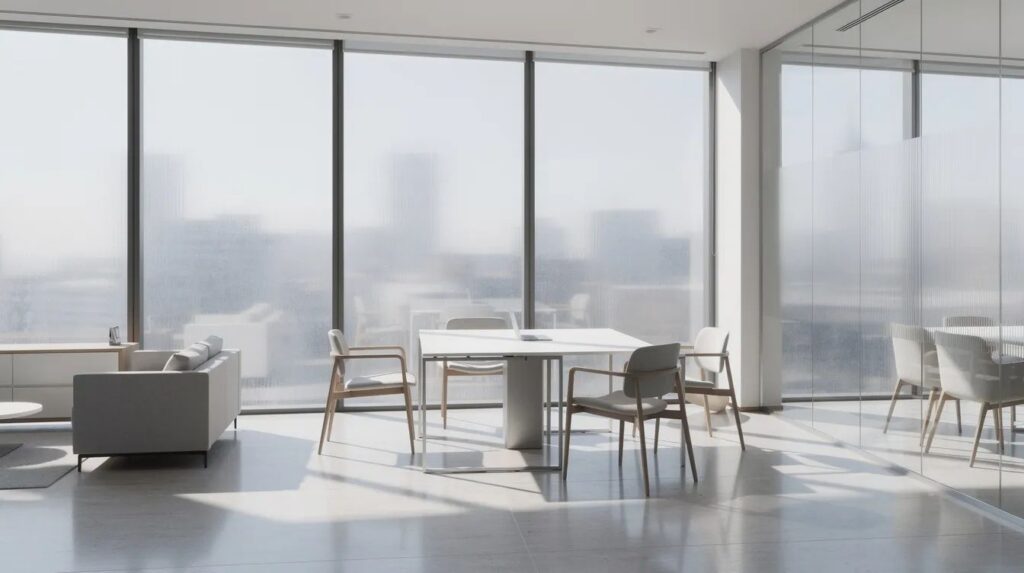
Key Benefits of Commercial Window Tinting for Businesses
Window film gives businesses several performance benefits in one upgrade: better comfort, improved appearance, protection for interiors, and lower energy demand.
Energy savings. Solar heat gain through windows accounts for roughly one-third of a building’s cooling load, and up to 70% of air conditioning costs come from heat gain through windows. Solar window film blocks up to 80% of the sun’s heat, helping reduce heat and cooling demand during peak hours. Window tinting can lower energy costs by up to 30%, while tinted windows can reduce energy bills by up to 15%. In many retrofitted buildings, facility teams see an overall 5% to 15% drop in total monthly utility bills.
Year-round comfort. Some films help stabilize temperatures in winter by reflecting indoor warmth back into the building. That can reduce heating costs, lower heating costs in colder months and make perimeter workstations feel less drafty.
UV protection. Solar control film blocks up to 99% of UV rays, and quality tint can help protect people, flooring, furniture, merchandise, and artwork from harmful UV rays. Window film can reduce fading of interior furnishings by up to 99%, extending the life of finishes that would otherwise fade under sunlight.
Glare reduction. Glare on screens causes eye strain and pushes employees to close shades or blinds. The right window tint can reduce glare while preserving light, visibility, and a comfortable office environment.
Privacy and appearance. Window tinting increases privacy by obscuring visibility from outside. Tinted windows make it nearly impossible to see inside during the day, although night privacy depends on interior lighting. Tinted windows offer a sleek, uniform look for businesses, and window tinting enhances the overall appearance of commercial properties.
Security and safety. Security films reinforce windows against break-ins and vandalism. A thicker security film can help hold glass together during impacts, storms, attempted break-ins, or smash-and-grab incidents, improving safety for customers and staff.
Types of Commercial Window Film and How to Choose
Not all window films are the same. Commercial window films are engineered for specific functional outcomes, so the best choice depends on your building, exposure, budget, and goals.
Solar control and heat-rejecting films are used when the main issue is sun exposure, solar heat, and air conditioning demand. Neutral films keep a subtle look. Reflective film reflects sunlight for excellent heat rejection, especially on facades that get intense afternoon sun. Dual-reflective films can balance outside reflectivity with better interior views.
Ceramic films are a strong option when you want performance without a mirrored look. Ceramic window film offers superior heat rejection without reflectivity, making it popular for offices, healthcare spaces, and high-end retail where style matters.
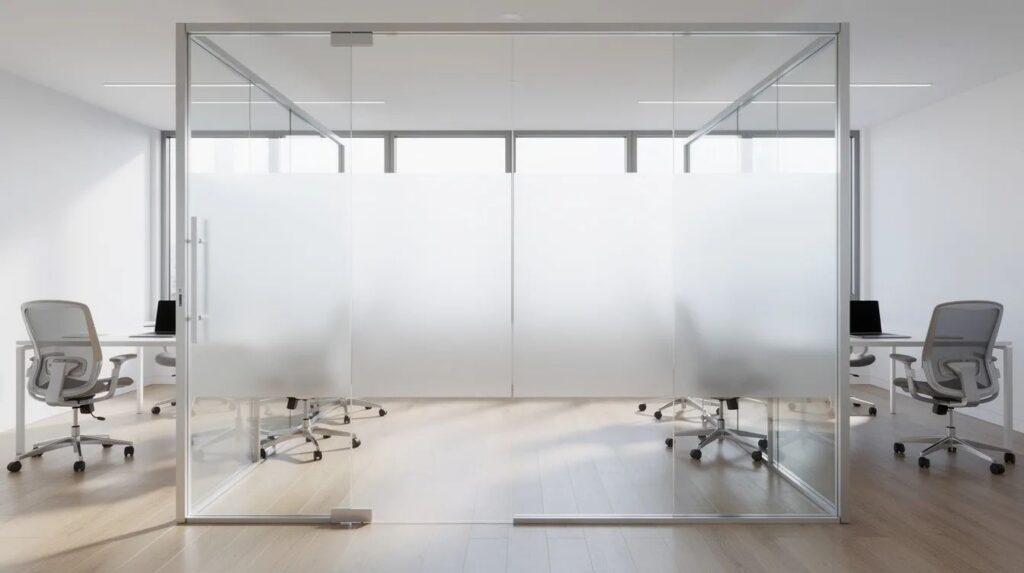
Decorative and privacy films include frosted, patterned, gradient, and textured designs. Decorative film adds privacy and customizable patterns for branding, while decorative films can add unique styles to retail spaces. They can mimic etched glass at a lower price than replacing glass.
Safety and security films use thicker construction and may include anchoring systems. Security film reinforces windows against break-ins and vandalism, making it useful for a storefront, ground-floor office, doors, and public-facing glass.
Specialty films include low-e films for insulation, anti-graffiti films for vandal-prone glass, exterior-grade films for hard-to-access windows, and products designed for a specific environment. A professional should review your glass before recommending tint because certain building codes restrict the use of highly reflective or overly dark tinted glass.
Visible Light Transmission (VLT) measures how much light passes through the film. A good installer will evaluate orientation, existing glazing, local climate, desired natural light, and whether the west or south side gets more heat than other areas. The process should be based on performance data, not just “dark vs. light.”
Cost, ROI, and Energy Savings from Business Window Tint
Commercial window tint is usually a capital improvement with measurable payback, not just an aesthetic expense. The total cost depends on square footage, film type, access, glass condition, removal of old film, and whether installation must happen after hours.
As a general guide, standard solar films often cost less than ceramic, safety, or specialty films. High floors, lifts, unusual shapes, and tight scheduling can increase the price. Larger projects may receive volume pricing, so a full-building estimate is often more useful than guessing from a single pane.
Energy savings are typically estimated by looking at sun-exposed glass, cooling load, utility rates, air conditioning run time, and film performance. The Whole Building Design Guide notes that high-efficiency window films can reduce solar heat gain substantially, which explains why the strongest ROI often comes from treating west- and south-facing windows first.
For example, a mid-size office or retail store may install solar control film on its hottest glass and notice shorter HVAC run time within the first season. In sunny climates, payback periods of three to five years are common, while milder regions may take longer but still benefit from comfort, protection, and appearance improvements.
Some utilities periodically offer rebates for energy-efficient upgrades, including solar window film that improves building efficiency. Ask for a site-specific estimate, so your proposal reflects your actual windows, energy bills, and business hours.

Professional Installation Process for Commercial Window Tint
Professional installation is important for warranty coverage, film performance, and a clean finish. Professional installation ensures a polished and professional look, preventing avoidable problems like peeling edges, debris, distorted visibility, or persistent bubbles.
The first step is a consultation. A technician visits the site, checks glass type, measures windows, reviews goals such as heat, glare reduction, privacy, branding, or security, and recommends the right commercial window film.
Planning comes next. The team schedules around your business, coordinates lift equipment if needed, estimates the installation timeline, and protects staff, customers, and surrounding surfaces.
On installation day, the basic steps are simple but detail-sensitive:
- Clean the glass thoroughly
- Apply mounting solution
- Position and trim the film
- Squeegee out moisture
- Inspect the finished tint
After installation, window film needs time to cure. Small bubbles, light haze, or moisture patterns can appear during this period and usually clear as the adhesive dries.
For aftercare, wait until the recommended cure time has passed before cleaning. Use soft cloths and ammonia-free cleaners, and avoid blades, abrasives, or harsh chemicals that could damage the surface.
Window Graphics, Branding, and Specialty Uses
Window graphics turn plain glass into advertising, wayfinding, privacy, and design. A storefront can use printed graphics for logos, hours, seasonal promotions, or partial coverage that also doubles as shade and glare control.
Inside the office, glass walls and doors can be upgraded with company colors, privacy bands, etched-look film, or custom artwork. This helps create separation in open-plan spaces without blocking all light.
Combining commercial window film with window graphics can solve several needs at once. For example, solar film can reduce heat on exterior glass, while decorative film adds privacy in HR, finance, or medical consultation rooms.
Films can also support compliance by adding visible safety markers to clear glass in corridors and meeting rooms. If your brand changes, many graphics can be professionally removed and replaced without replacing the glass.
Frequently Asked Questions About Business Window Tint
Here are common questions from building owners, facility managers, and tenants considering commercial window tinting.
How long does commercial window tinting last?
Many films last 10–15+ years. Lifespan depends on product quality, sun exposure, maintenance, installation quality, and whether the film is installed on interior or exterior glass.
Will window tint make my office too dark?
Not necessarily. Modern office window film comes in a wide range of VLT levels, so you can cut heat and glare without losing too much natural light. Ceramic and spectrally selective films are especially useful when you want comfort without a dark appearance.
Can business window tint be installed on existing windows?
Yes, most commercial glass can accept film. Some insulated glass units, damaged seals, specialty coatings, or historic restrictions require special product selection, which is why a professional survey matters.
Does window film really block harmful UV rays?
Yes. Many films block up to 99% of UV exposure, supporting UV protection for occupants, merchandise, flooring, furniture, and interior finishes.
How do I clean tinted windows?
Use a microfiber cloth or soft towel with an ammonia-free cleaner after the film cures. Avoid scrapers, abrasive pads, and harsh solvents.
Is commercial window film removable?
Yes. Film can usually be professionally removed and replaced if your performance goals, branding, or lease requirements change, often without damaging the underlying glass.
Why Choose Our Team for Commercial Window Film Installation
Our team helps businesses choose and install practical window tint solutions for offices, retail, healthcare, education, government, and mixed-use buildings. We focus on matching the film to the actual problem: heat, glare, privacy, security, branding, or long-term energy savings.
Our technicians are trained in current film technology, surface preparation, precise cutting, clean edges, and polished finish work. We work with quality products that provide strong UV protection, documented energy performance, and long-term warranty options.
You can expect clear communication, detailed proposals, transparent pricing, and scheduling that respects your operations. We also understand local building styles, intense afternoon sun, open-office glare issues, and the difference between commercial and residential or house applications.
If you want to compare options, request a site visit, sample viewing, or energy savings estimate. Seeing the film on your actual glass is often the fastest way to choose with confidence.
Conclusion: Next Steps to Improve Your Building with Window Tint
Commercial window tint, window films, and window graphics can reduce energy costs, protect interiors from harmful UV rays, improve privacy, and modernize the look of your business space.
The right professional installation protects performance, appearance, warranty coverage, and your investment while minimizing disruption to daily operations.
Contact our team for a customized commercial window tinting proposal with film recommendations, projected energy savings, and a clear project timeline.